
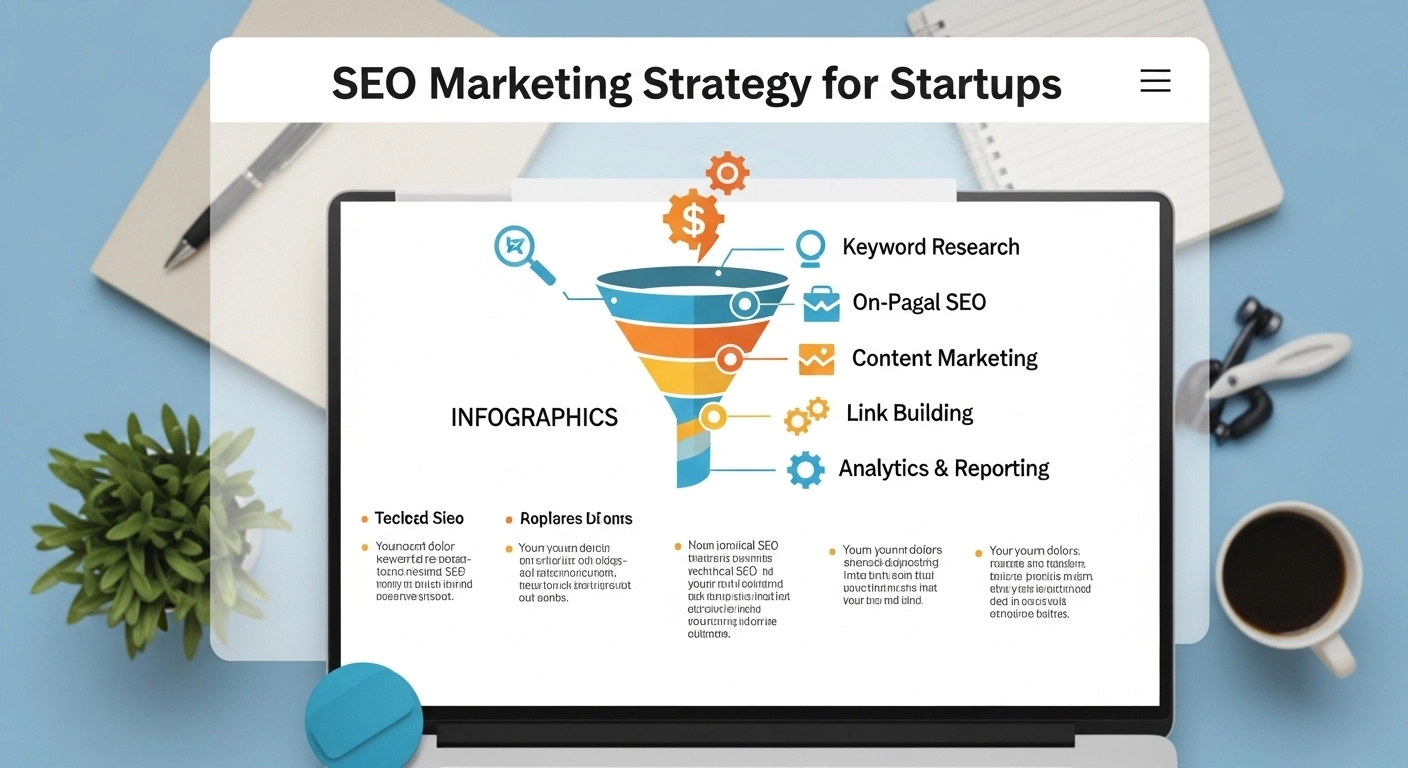
Starting a business is hard. Getting people to find it online is even harder. Most startups don’t fail because the product is bad—they fail because no one sees it.
That’s where a strong SEO marketing strategy for startups changes everything. Done right, SEO becomes your most cost-effective growth channel, bringing in consistent traffic, leads, and customers without relying heavily on paid ads.
This guide breaks everything down in a simple, practical way so you can actually use it—not just read it.
Why SEO Matters for Startups
Unlike established brands, startups don’t have:
- Big advertising budgets
- Strong brand awareness
- Large social media followings
SEO helps level the playing field.
When your website ranks on Google, you get:
- Free, consistent traffic
- High-intent visitors (people already searching for your solution)
- Long-term visibility without ongoing ad spend
In simple terms: SEO helps startups grow while saving money.
Step 1: Understand Your Target Audience First
Before thinking about keywords, think about people.
Ask:
- Who is my ideal customer?
- What problem are they trying to solve?
- What words do they use when searching online?
For example, if you’re launching a SaaS tool for freelancers, your audience might search:
- “best invoicing tool for freelancers”
- “how to track freelance income”
- “simple accounting software for beginners”
Understanding intent is the foundation of your entire SEO strategy.
Step 2: Build a Keyword Strategy That Matches Real Search Intent
A strong SEO marketing strategy for startups starts with keyword planning, but not just any keywords.
Focus on 3 types:
1. Informational Keywords
People are learning.
- “how to start an online business”
- “what is project management software”
2. Commercial Keywords
People are comparing options.
- “best CRM for startups”
- “top email marketing tools”
3. Transactional Keywords
People are ready to buy.
- “buy project management tool”
- “SEO software pricing”
Pro Tip:
Startups should focus heavily on long-tail keywords (longer, specific phrases). They are easier to rank for and bring more qualified traffic.
Step 3: Create SEO-Friendly Content That Actually Helps
Google rewards content that solves problems.
Your blog posts should:
- Answer real questions
- Be easy to read
- Include examples
- Avoid unnecessary complexity
Instead of writing:
“Our platform optimizes workflow efficiency…”
Write:
“This tool helps startups manage tasks, deadlines, and team communication in one place.”
Content ideas for startups:
- Beginner guides
- Comparison posts
- “How-to” tutorials
- Problem-solving articles
- Case studies
Each article should target one primary keyword and a few related terms naturally.
Step 4: Optimize On-Page SEO the Right Way
On-page SEO is what helps Google understand your content.
Focus on:
Title Tags
Make them clear and keyword-focused:
- “SEO Marketing Strategy for Startups (Step-by-Step Guide)”
Break content into sections for readability.
Meta Descriptions
Keep it compelling:
- “Learn how startups can build a powerful SEO strategy to attract traffic, leads, and growth without heavy ad spend.”
Internal Linking
Link your articles together. For example:
This helps search engines understand your site structure.
Step 5: Build Authority with Backlinks
Backlinks are votes of trust from other websites.
For startups, you don’t need thousands—just high-quality ones.
Simple ways to get backlinks:
- Guest posting on industry blogs
- Writing useful data-driven content
- Reaching out to relevant websites
- Listing your startup in directories
- Creating shareable resources (templates, tools, guides)
The goal is to build credibility, not spam links.
Step 6: Focus on Technical SEO Early
Many startups ignore technical SEO, but it matters.
Make sure your site has:
- Fast loading speed
- Mobile-friendly design
- Secure HTTPS connection
- Clean URL structure
- No broken links
Even the best content won’t rank if your website is slow or hard to crawl.
Step 7: Use Content Clusters for Faster Growth
Instead of random blog posts, build topic clusters.
Example:
Main Topic (Pillar Page):
- “SEO Marketing Strategy for Startups”
Supporting Content:
- Keyword research for startups
- On-page SEO checklist
- Startup content marketing guide
- How to get backlinks as a new business
This structure signals authority to Google and improves rankings faster.
Step 8: Track, Improve, and Repeat
SEO is not a one-time task. It’s a cycle.
Use tools like Google Search Console or analytics platforms to track:
- Which pages get traffic
- Which keywords are ranking
- Where users drop off
Then improve:
- Update old content
- Add missing information
- Improve titles and meta descriptions
- Strengthen internal linking
Small improvements compound over time.
Common Mistakes Startups Make in SEO
Avoid these early:
- Targeting overly competitive keywords
- Publishing content without strategy
- Ignoring search intent
- Expecting fast results
- Skipping technical SEO
SEO is a long-term investment, not a quick win.
FAQ: SEO Marketing Strategy for Startups
1. How long does SEO take for startups?
Usually 3–6 months to see noticeable results, depending on competition and consistency.
2. Do startups need a big budget for SEO?
No. SEO is one of the most cost-effective marketing channels. You mainly invest time and consistency.
3. What is the most important SEO factor for startups?
High-quality, useful content that matches search intent.
4. Should startups focus on blogs or backlinks first?
Start with content. Without valuable pages, backlinks won’t help much.
5. Can SEO work without ads?
Yes. SEO can generate consistent organic traffic without paid advertising.
Conclusion
A strong SEO marketing strategy for startups is not about shortcuts—it’s about clarity, consistency, and value.
Startups that win in SEO don’t try to do everything at once. They focus on:
- Understanding their audience
- Targeting the right keywords
- Creating helpful content
- Building authority over time
If you stay consistent, SEO becomes more than a marketing channel—it becomes a long-term growth engine for your startup.
