
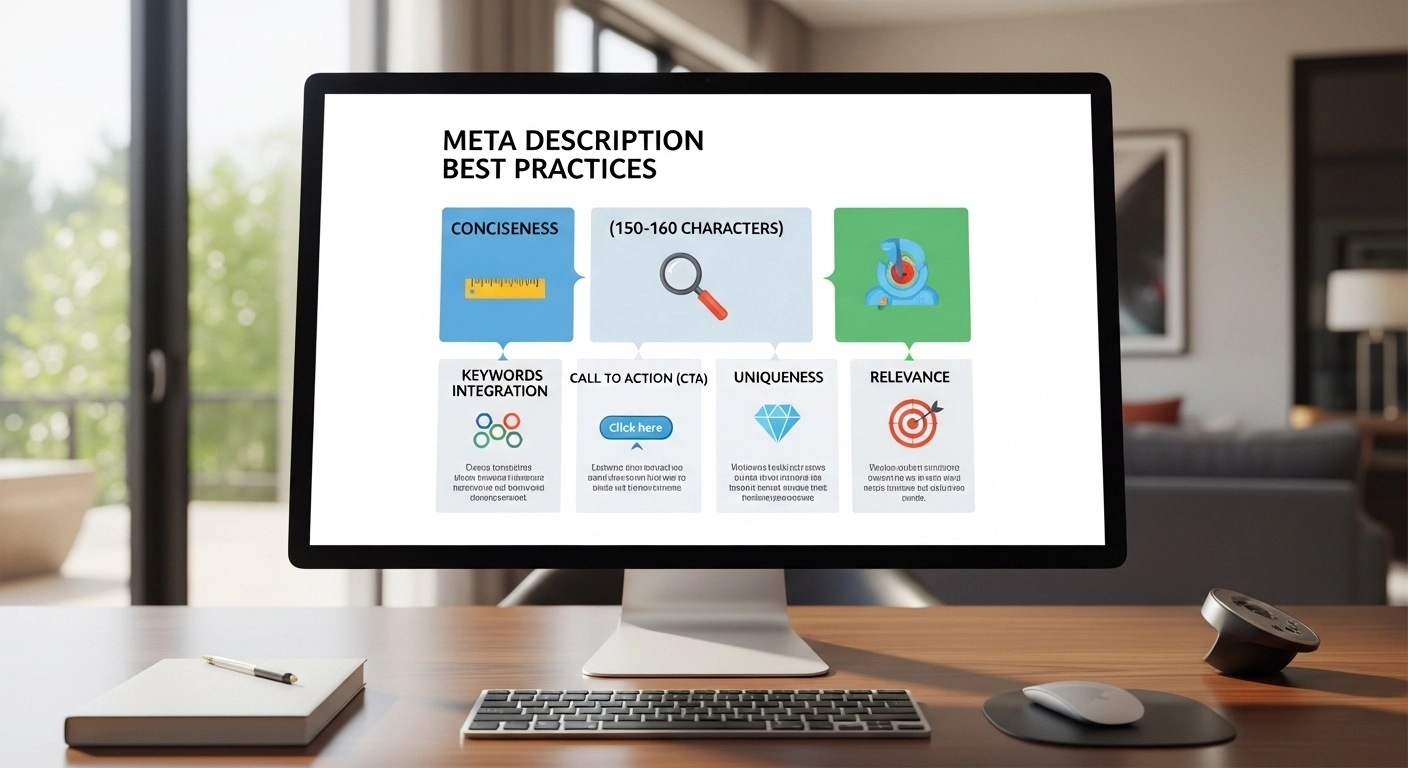
A meta description may look like a small SEO detail, but it plays a big role in how users interact with your content on search engines. It doesn’t directly boost rankings, but it strongly influences click-through rate (CTR), which can impact your overall SEO performance.
In this guide, you’ll learn meta description best practices that help your pages stand out on Google, attract more clicks, and improve organic traffic.
What Is a Meta Description?
A meta description is a short HTML tag (usually 150–160 characters) that summarizes a webpage. It appears under the page title in search engine results pages (SERPs).
Example:
“Learn meta description best practices to improve CTR, write compelling snippets, and boost SEO performance with proven tips and examples.”
Think of it as your advertising copy for search engines.
Why Meta Descriptions Matter for SEO
While Google has confirmed that meta descriptions are not a direct ranking factor, they still matter because they influence:
- Click-through rate (CTR)
- User engagement
- First impression of your page
- Search result visibility
A strong meta description can be the difference between someone clicking your page or your competitor’s.
Meta Description Best Practices
1. Keep It Within the Ideal Length
Aim for:
- 150–160 characters (desktop)
- Around 120–155 characters (mobile)
If it’s too long, Google may cut it off. If it’s too short, you lose valuable context.
2. Include Your Primary Keyword Naturally
Your main keyword should appear naturally in the description.
Example:
“Discover meta description best practices to improve CTR and write SEO-friendly snippets that attract more clicks.”
Google often bolds matching keywords in search results, making your listing more visible.
3. Write for Humans, Not Just Search Engines
Avoid keyword stuffing or robotic phrasing.
❌ Bad:
Meta description best practices SEO meta description SEO tips meta description guide
✅ Good:
Learn how to write compelling meta descriptions that increase clicks and improve your SEO performance.
4. Add a Clear Value Proposition
Tell users exactly what they will gain.
Ask yourself:
- What problem does this page solve?
- Why should someone click this result?
Example:
“Step-by-step guide to writing meta descriptions that boost CTR and bring more organic traffic.”
5. Use Action-Oriented Language
Strong verbs improve engagement.
Try using:
- Learn
- Discover
- Improve
- Boost
- Get
- Find out
Example:
“Discover proven meta description tips to boost your search rankings and attract more visitors.”
6. Match Search Intent
Your meta description must align with what the user is searching for.
For example, if someone searches “meta description best practices,” they expect:
- Tips
- Guidelines
- Examples
- SEO advice
Not unrelated or overly promotional content.
7. Make Each Meta Description Unique
Every page should have a unique description. Duplicate meta descriptions confuse search engines and reduce SEO value.
Tip: Use tools like Google Search Console to identify duplicate or missing meta descriptions.
8. Include a Subtle Call-to-Action (CTA)
A soft CTA encourages clicks without sounding spammy.
Examples:
- “Learn more today”
- “Read the full guide”
- “Start improving your SEO now”
Common Mistakes to Avoid
Here are the most common meta description mistakes:
- Writing nothing (Google auto-generates it)
- Overusing keywords
- Writing too long descriptions
- Being too vague (“This is a great article…”)
- Copying the first paragraph of your content
Meta Description Example Templates
Here are ready-to-use templates:
1. Informational blog
Learn [topic] with this simple guide. Discover tips, examples, and strategies to improve your results.
2. SEO-focused article
Explore proven [keyword] strategies to boost rankings, increase CTR, and drive more organic traffic.
3. How-to guide
Step-by-step guide to [topic]. Learn how to improve your skills and get better results fast.
FAQ: Meta Description Best Practices
1. Do meta descriptions affect SEO rankings?
Not directly, but they influence CTR, which can impact performance indirectly.
2. How long should a meta description be?
Between 150–160 characters is ideal for most search results.
3. Should every page have a meta description?
Yes, every important page should have a unique and optimized description.
4. What happens if I don’t write one?
Search engines like Google will generate one automatically, which may not be optimized.
5. Can I use keywords in meta descriptions?
Yes, but naturally. Avoid keyword stuffing.
Conclusion
Meta descriptions may be small, but they have a big impact on how users interact with your website in search results. When written properly, they improve visibility, increase clicks, and help you stand out from competitors.
Focus on clarity, relevance, and user intent—not just keywords—and your SEO performance will steadily improve.
