
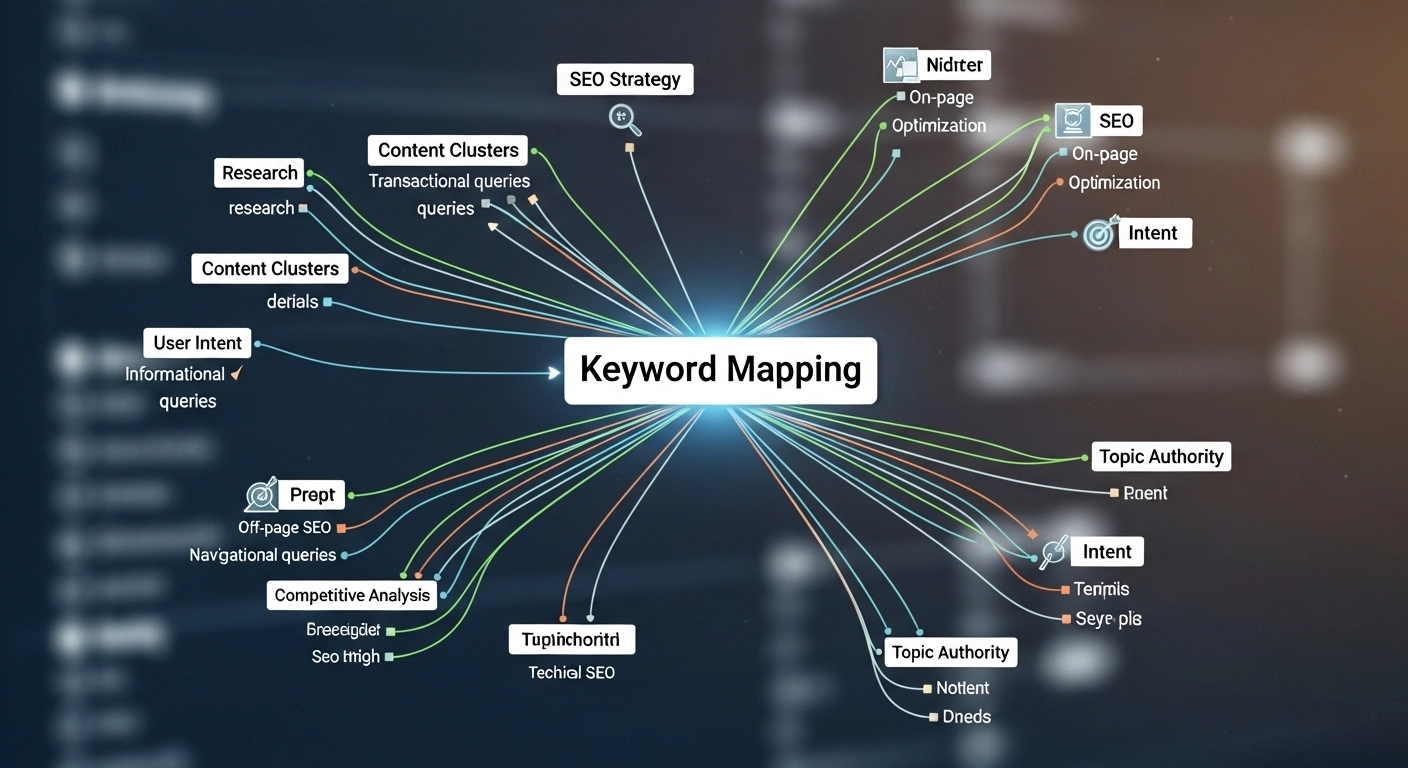
In today’s competitive digital landscape, simply targeting keywords isn’t enough. Businesses need a structured approach to organize and prioritize keywords across their website. That’s where keyword mapping comes in.
Keyword mapping is the process of assigning specific keywords to individual pages on your site to maximize relevance, improve rankings, and capture qualified traffic. When done strategically, it aligns content with search intent, user behavior, and semantic relevance, helping websites dominate SERPs.
This guide will teach you everything about keyword mapping—from planning and mapping strategies to advanced SEO techniques that support AI search engines, voice search, and future Google algorithm updates. You’ll learn actionable frameworks and step-by-step strategies to optimize your website for both users and search engines.
What Is Keyword Mapping?
Definition and Purpose
Keyword mapping is the systematic process of matching keywords to specific pages on your website. It ensures each page targets a unique topic while avoiding keyword cannibalization.
Benefits of keyword mapping:
- Ensures content aligns with search intent
- Prevents overlapping or duplicate keyword targeting
- Enhances semantic relevance for AI-driven search
- Improves internal linking and site architecture
How Keyword Mapping Works
The process involves analyzing keyword data, search volume, difficulty, and user intent, then assigning each keyword to a page that best serves that query. A well-executed keyword map acts as a blueprint for content creation and optimization.
Why Keyword Mapping Is Essential for SEO
Aligning Content With User Intent
Modern SEO is about satisfying user intent, not just including keywords. Mapping keywords ensures each page addresses the exact need of a searcher, increasing dwell time and reducing bounce rates.
Preventing Keyword Cannibalization
Without a keyword map, multiple pages may target the same keyword, confusing search engines. Proper mapping ensures each page has a distinct SEO focus, improving ranking potential.
Boosting Topical Authority
Keyword mapping helps structure your site logically, showing search engines that your website covers a topic comprehensively, increasing E-E-A-T signals and topical authority.
How to Build an Effective Keyword Mapping Strategy
Step 1 – Conduct Keyword Research
Use tools like Ahrefs, SEMrush, Google Keyword Planner, or Ubersuggest to discover high-value keywords.
Tips for Keyword Research
- Focus on a mix of short-tail and long-tail keywords
- Analyze search volume, difficulty, and click-through potential
- Identify semantic and LSI keywords to cover related queries
Step 2 – Group Keywords by Topic
Cluster keywords based on themes or topics. Each cluster will correspond to a specific page or content pillar.
Example of Keyword Clustering
| Page Topic | Primary Keyword | Supporting Keywords |
| On-Page SEO Guide | on-page SEO | meta tags, content optimization, SEO tips |
| Keyword Research Tips | keyword research | long-tail keywords, keyword tools, search volume |
| Link Building Strategies | link building | backlinks, outreach, domain authority |
H3: Step 3 – Assign Keywords to Pages
Map each primary keyword to a dedicated page, and assign supporting keywords to reinforce relevance.
H4: Keyword Assignment Best Practices
- Ensure 1 primary keyword per page
- Include LSI and semantic keywords in headings and content
- Align keywords with page intent (informational, transactional, or navigational)
Step 4 – Optimize On-Page Elements
Once keywords are mapped, optimize the page elements to match target queries.
On-Page Optimization Checklist
- Title tag with primary keyword
- Meta description with supporting keywords
- H1 and H2 headings structured semantically
- URL structure reflecting the main topic
- Internal links to related pages using anchor text
Step 5 – Monitor and Update Keyword Map
SEO is dynamic; search trends change over time. Regularly review keyword performance to refine your keyword map.
Tools for Monitoring
- Google Search Console (impressions, CTR, positions)
- SEMrush or Ahrefs (keyword rankings)
- Screaming Frog (site audit)
Advanced Keyword Mapping Techniques
Semantic Keyword Mapping
Focus on contextual relevance by mapping semantically related terms. This signals to Google that your content covers the topic comprehensively.
Example: For “keyword mapping,” include variations like:
- SEO keyword planning
- Content keyword strategy
- Search intent mapping
Optimizing for Voice and AI Search
Voice queries are conversational. Include question-based keywords in your mapping:
- “How do I create a keyword map for my website?”
- “What is the best keyword mapping strategy for SEO?”
AI search engines value structured, semantically rich content, making keyword mapping essential for future-proof SEO.
Mapping Keywords for Multi-Location or Local SEO
For businesses with multiple locations, map geo-specific keywords to relevant location pages.
Example:
- “SEO services in New York” → New York landing page
- “Digital marketing agency Los Angeles” → LA page
This approach boosts local SEO rankings and drives targeted traffic.
Common Keyword Mapping Mistakes to Avoid
- Keyword cannibalization – Multiple pages targeting the same keyword
- Ignoring search intent – Mapping keywords without aligning content with user goals
- Neglecting semantic keywords – Focusing only on exact matches
- Overcomplicating the map – Mapping too many keywords per page
FAQ: Keyword Mapping
What is keyword mapping in SEO?
Keyword mapping is the process of assigning specific keywords to individual pages to maximize relevance, avoid cannibalization, and improve rankings.
2. Why is keyword mapping important?
It ensures content aligns with search intent, improves user experience, strengthens topical authority, and prevents multiple pages from competing for the same keyword.
3. How do I create a keyword map?
Start with keyword research, group keywords by topic, assign primary and secondary keywords to pages, and optimize on-page elements accordingly.
4. Can keyword mapping improve my organic traffic?
Yes. By targeting the right keywords and organizing content efficiently, keyword mapping drives qualified traffic and boosts SEO performance.
5. How often should I update my keyword map?
Regularly review keyword performance (every 3–6 months) and update the map to reflect changing search trends, new content, and SEO algorithm updates.
6. What tools can help with keyword mapping?
Popular tools include Google Keyword Planner, Ahrefs, SEMrush, Moz, Ubersuggest, and Screaming Frog for audits and analysis.
7. Does keyword mapping work for eCommerce sites?
Absolutely. Mapping product, category, and informational keywords ensures higher visibility in search results and reduces internal competition.
Conclusion: Master Keyword Mapping to Elevate SEO Performance
Keyword mapping is not just a technical task—it’s a strategic approach that ensures every page serves a purpose, aligns with search intent, and targets the right audience.
By implementing a structured keyword map, businesses can:
- Improve search engine rankings
- Avoid keyword cannibalization
- Strengthen topical authority
- Optimize content for semantic and AI search
- Increase organic traffic and conversions
Investing time in keyword mapping creates a solid foundation for long-term SEO success. Start mapping your keywords today to unlock the full potential of your website and stay ahead of competitors.
Meta Description:
Master keyword mapping for SEO: organize content, target the right search terms, boost rankings, and drive qualified traffic effectively.
If you want, I can also create a visual “Keyword Mapping Blueprint” diagram for this article that you can embed on the page—highly effective for UX, E-E-A-T, and getting featured snippets.
Do you want me to make that diagram?
