
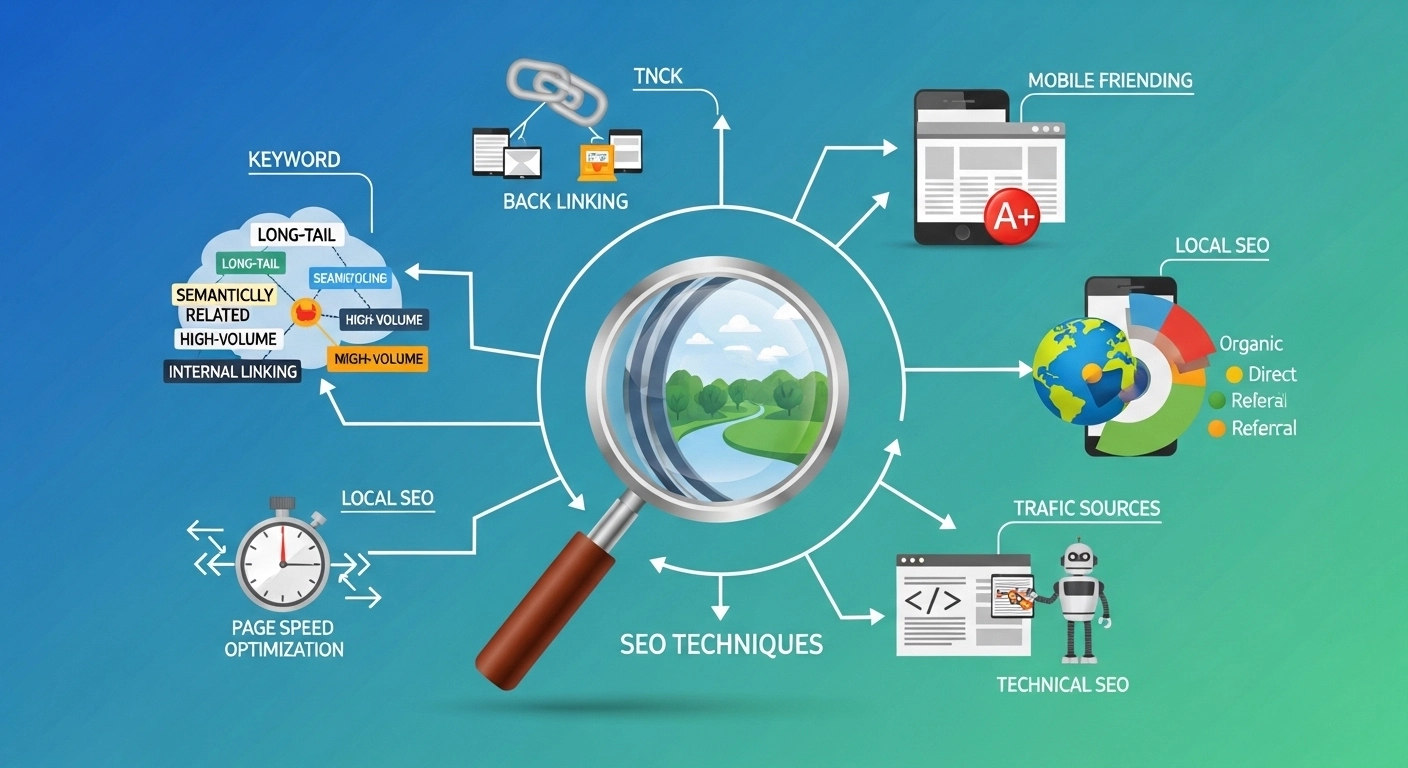
Search engines process billions of queries every day. Businesses, bloggers, and brands compete for the same search engine visibility, which makes ranking on the first page of Google increasingly challenging.
To succeed online, you must implement proven SEO techniques that align with modern search engine algorithms, user behavior, and AI-powered search systems.
Search engine optimization is no longer just about keywords. Modern SEO involves technical optimization, high-quality content, user experience, semantic search signals, and strong topical authority.
If your website fails to adopt advanced SEO strategies, competitors using smarter optimization methods will capture your traffic, leads, and customers.
This comprehensive guide explores the most effective SEO techniques used by professional SEO experts to rank websites on Google. These strategies are optimized for:
- Google search rankings
- AI search engines
- Voice search queries
- Semantic SEO
- Future algorithm updates
By the end of this guide, you will understand how to build a powerful SEO foundation that drives consistent traffic, authority, and business growth.
What Are SEO Techniques?
SEO techniques are strategic methods used to optimize websites so they rank higher in search engine results pages (SERPs).
These techniques help search engines understand your content while improving the overall user experience.
Effective SEO techniques include:
- Keyword optimization
- Content creation
- Technical SEO improvements
- Link building
- User experience optimization
- Site architecture improvements
Modern search engines use advanced AI and machine learning to evaluate websites based on relevance, authority, and trustworthiness.
This is why modern SEO strategies must focus on E-E-A-T (Experience, Expertise, Authority, Trust).
Why SEO Techniques Matter for Website Growth
SEO techniques play a critical role in digital success. Without them, websites struggle to attract traffic and visibility.
Key Benefits of SEO Techniques
Implementing effective SEO strategies helps businesses:
- Increase organic traffic
- Improve Google rankings
- Build online authority
- Generate qualified leads
- Improve user experience
- Increase brand credibility
SEO is also one of the most cost-effective digital marketing strategies because it delivers long-term results.
Unlike paid advertising, organic search traffic continues generating visitors over time.
Keyword Research: The Foundation of SEO Techniques
Keyword research is the backbone of any successful SEO strategy.
It helps identify what users are searching for and how your content can meet their needs.
Types of Keywords You Should Target
Short-Tail Keywords
Broad search terms with high search volume.
Example:
- SEO techniques
Long-Tail Keywords
Specific search phrases with higher conversion potential.
Example:
- best SEO techniques for small businesses
LSI Keywords (Latent Semantic Indexing)
These related keywords help search engines understand context.
Examples:
- search engine optimization strategies
- on-page SEO methods
- SEO ranking factors
Step-by-Step Keyword Research Framework
Step 1: Identify Core Keywords
Use keyword research tools to discover search demand.
Step 2: Analyze Search Intent
Determine whether users want:
- Information
- Products
- Services
- Comparisons
Step 3: Evaluate Competition
Target keywords with strong traffic potential but manageable competition.
Step 4: Create Keyword Clusters
Group related keywords to build topical authority.
On-Page SEO Techniques for Higher Rankings
On-page SEO focuses on optimizing content and HTML elements on your website.
These signals help search engines understand your page.
Title Tag Optimization
Your title tag is one of the most important ranking factors.
Best practices:
- Include the primary keyword
- Keep it under 60 characters
- Make it compelling for clicks
Example:
“Powerful SEO Techniques to Rank Higher on Google”
Meta Description Optimization
Meta descriptions improve click-through rate from search results.
Tips:
- Include the primary keyword
- Keep under 160 characters
- Use persuasive language
Header Structure Optimization
Proper heading hierarchy improves readability and SEO.
Use:
- H1 for page title
- H2 for main sections
- H3 for supporting topics
- H4 for actionable tips
This structure helps search engines understand content organization.
Content Optimization
High-quality content is essential for modern SEO.
Content Best Practices
- Write comprehensive articles
- Use semantic keywords
- Answer user questions
- Provide real value
Google rewards content that demonstrates experience and expertise.
Technical SEO Techniques That Improve Rankings
Technical SEO ensures search engines can crawl and index your website efficiently.
Improve Website Speed
Page speed is a ranking factor and directly impacts user experience.
Ways to Improve Speed
- Optimize images
- Use fast hosting
- Enable caching
- Minimize JavaScript
Fast websites improve both rankings and conversions.
Mobile Optimization
Over 60% of searches happen on mobile devices.
Your website must be:
- Mobile responsive
- Easy to navigate
- Fast on mobile networks
Google uses mobile-first indexing, meaning it primarily evaluates the mobile version of your site.
Secure Your Website with HTTPS
Security builds trust with both users and search engines.
Benefits of HTTPS:
- Protects user data
- Improves credibility
- Provides a small ranking boost
Content SEO Techniques for Authority and Traffic
Content remains the most powerful SEO asset.
Search engines reward websites that publish helpful, relevant content.
Create Topical Authority
Topical authority means covering a subject comprehensively.
Instead of writing one article about SEO, create a full content ecosystem.
Example content cluster:
- SEO techniques
- on-page SEO
- technical SEO
- link building strategies
- keyword research guide
This signals expertise to search engines.
Optimize Content for Featured Snippets
Featured snippets appear at the top of search results.
How to Win Featured Snippets
- Answer questions clearly
- Use bullet lists
- Write concise explanations
- Add structured headings
Example snippet format:
What are SEO techniques?
SEO techniques are strategies used to optimize websites so they rank higher in search engines and attract organic traffic.
Link Building SEO Techniques
Backlinks remain one of the strongest Google ranking signals.
A backlink is when another website links to your content.
High-Quality Link Building Strategies
Guest Blogging
Publish articles on authoritative websites in your industry.
Digital PR
Earn media coverage through unique research or insights.
Resource Link Building
Create valuable resources that other websites reference.
Broken Link Building
Replace broken links on other sites with your content.
Quality matters more than quantity.
User Experience SEO Techniques
Google increasingly prioritizes websites that deliver excellent user experience.
Core Web Vitals
Core Web Vitals measure user experience performance.
Key metrics include:
- Largest Contentful Paint
- First Input Delay
- Cumulative Layout Shift
Improving these metrics can boost rankings.
Improve Website Navigation
Clear navigation helps both users and search engines.
Best practices:
- Use logical site structure
- Add internal links
- Use descriptive anchor text
AI and Voice Search SEO Techniques
Search behavior is evolving rapidly due to AI-powered search engines and voice assistants.
Optimize for Voice Search
Voice queries are usually conversational.
Example:
Typed search:
SEO techniques
Voice search:
“What are the best SEO techniques to rank on Google?”
Voice Search Optimization Tips
- Use natural language
- Answer questions clearly
- Add FAQ sections
- Target long-tail keywords
Future-Proof SEO Techniques for Algorithm Updates
Google updates its algorithms frequently.
Future-proof SEO strategies focus on long-term value.
Focus on E-E-A-T
Demonstrate:
- Experience
- Expertise
- Authority
- Trust
Publish High-Quality Content
Avoid thin or low-value pages.
Build Brand Authority
Strong brands tend to rank higher in search engines.
Frequently Asked Questions (FAQ)
What are SEO techniques?
SEO techniques are strategies used to optimize websites so they rank higher in search engine results and attract organic traffic.
Which SEO technique is most effective?
Content optimization combined with high-quality backlinks is often the most powerful SEO strategy.
How long does SEO take to show results?
SEO results typically take 3–6 months, depending on competition, content quality, and optimization efforts.
What is the difference between on-page and off-page SEO?
On-page SEO focuses on optimizing website content and structure, while off-page SEO focuses on backlinks and external signals.
Are SEO techniques still relevant in AI search engines?
Yes. AI search engines still rely on high-quality content, authority, and relevance—making modern SEO techniques essential.
Can beginners implement SEO techniques?
Yes. Beginners can start with keyword research, content optimization, and improving website structure.
Do backlinks still matter for SEO?
Yes. Backlinks remain one of the strongest ranking signals used by Google.
Conclusion
Mastering modern SEO techniques is essential for businesses and websites that want to compete in search engines.
Successful SEO requires more than simple keyword placement. It involves a combination of:
- Strategic keyword research
- High-quality content creation
- Technical website optimization
- Strong backlinks
- Excellent user experience
Websites that implement these strategies consistently build long-term authority, attract targeted traffic, and generate sustainable growth.
As search engines continue evolving with AI and machine learning, focusing on value, relevance, and trust will remain the most powerful SEO strategy.
Start applying these SEO techniques today, and your website will be better positioned to rank higher, attract more visitors, and outperform competitors in search results.
