
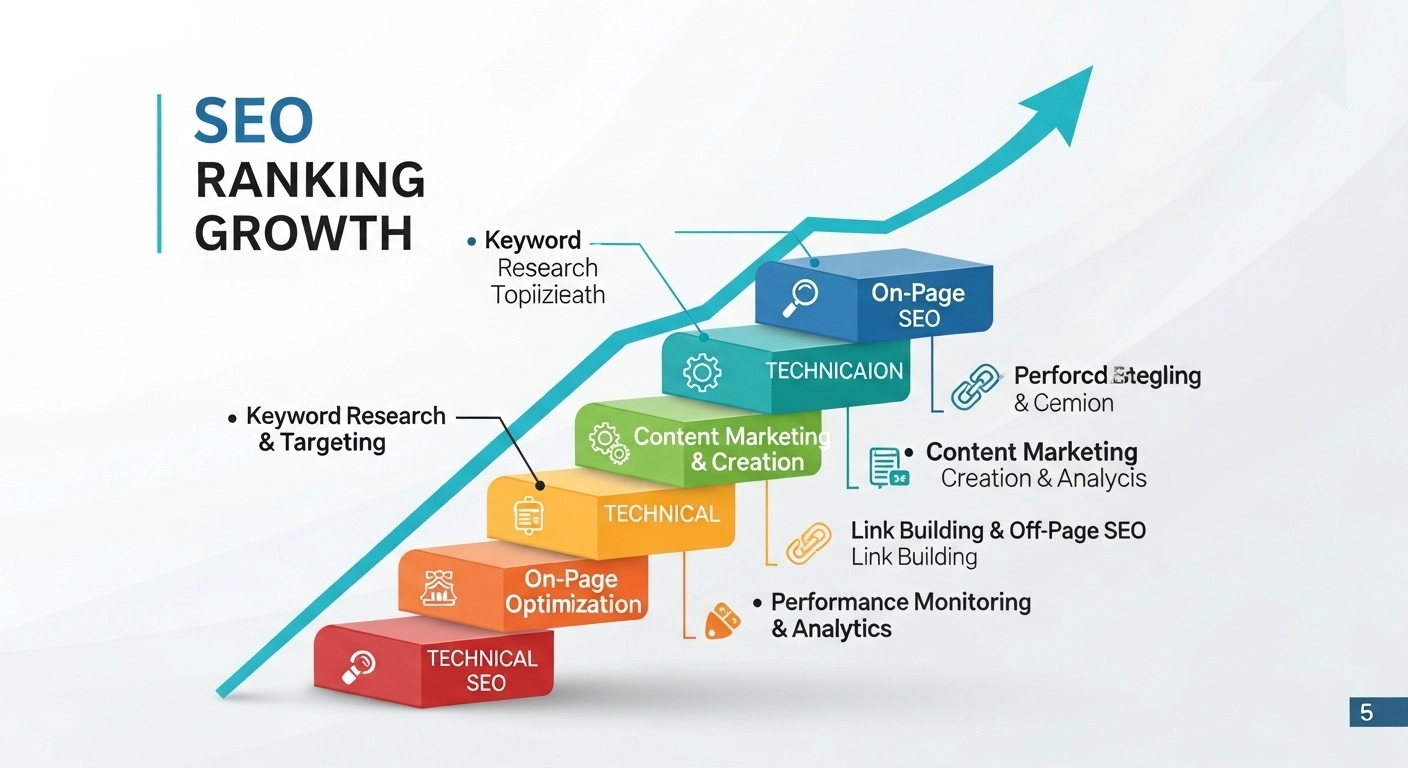
Improving your website’s visibility on Google is not about quick tricks or shortcuts. It’s about building a clear, consistent, and well-planned SEO ranking growth strategy that helps your content earn trust, relevance, and authority over time.
In this guide, you’ll learn how real SEO growth works, what actually moves rankings, and how to build a strategy that brings long-term organic traffic—not just temporary spikes.
What Is an SEO Ranking Growth Strategy?
An SEO ranking growth strategy is a structured plan to improve your website’s position in search engines like Google. It focuses on increasing organic visibility by improving:
- Content quality and relevance
- Keyword targeting and search intent
- Technical website health
- Backlink authority
- User experience signals
Instead of chasing random SEO tactics, you follow a system that steadily builds your rankings over time.
Step 1: Understand Search Intent First
Before writing or optimizing anything, you need to understand what users actually want when they search.
There are four main types of search intent:
- Informational: “how to improve SEO rankings”
- Navigational: “Google Search Console login”
- Transactional: “buy SEO tools”
- Commercial investigation: “best SEO strategy tools”
If your content doesn’t match intent, it won’t rank—no matter how well it’s optimized.
👉 Example:
If someone searches “SEO ranking growth strategy,” they want a step-by-step method, not a definition or sales pitch.
Step 2: Build Keyword Clusters (Not Just Single Keywords)
Modern SEO is not about targeting one keyword per page. It’s about building topic authority.
Instead of focusing only on “SEO ranking growth strategy,” you should also include related terms like:
- organic traffic growth
- keyword optimization
- on-page SEO
- technical SEO audit
- link building strategy
- content optimization
- domain authority
This helps Google understand your page as a complete resource.
Step 3: Create High-Quality, Helpful Content
Content is still the core of SEO success—but quality matters more than ever.
Strong SEO content should:
- Fully answer the search query
- Be easy to scan and read
- Include real examples or steps
- Avoid unnecessary filler words
- Provide actionable insights
👉 Instead of saying:
“SEO is important for growth.”
Say:
“Improving SEO helps your pages appear higher in search results, which increases organic traffic without paying for ads.”
Small clarity improvements make a big difference.
Step 4: Optimize On-Page SEO Properly
On-page SEO ensures search engines can understand your content structure.
Key elements include:
1. Title Tag Optimization
Include your main keyword naturally and make it compelling.
2. Headings (H1, H2, H3)
Organize content into clear sections for readability and SEO.
3. Meta Description
Write a short summary that improves click-through rates.
4. Internal Linking
Link to related pages on your site to distribute authority.
5. Image Optimization
Use descriptive file names and alt text.
Step 5: Improve Technical SEO Foundation
Even great content can struggle if your website has technical issues.
Focus on:
- Fast page speed
- Mobile-friendly design
- Secure HTTPS connection
- Clean URL structure
- Proper indexing in Google Search Console
If Google can’t crawl your site efficiently, rankings will stay limited.
Step 6: Build High-Quality Backlinks
Backlinks remain one of the strongest ranking signals.
But quality matters more than quantity.
Good backlink sources include:
- Industry blogs
- Guest posting on relevant sites
- Digital PR mentions
- High-authority directories
- Useful resource pages
Avoid spammy or low-quality links—they can hurt your rankings instead of helping.
Step 7: Improve User Experience (UX Signals)
Google tracks how users interact with your page.
Important UX signals include:
- Time spent on page
- Bounce rate
- Mobile usability
- Content readability
- Navigation structure
If users quickly leave your page, rankings often drop—even if your SEO is perfect.
Step 8: Update and Refresh Old Content
SEO is not a one-time job. Content must be updated regularly.
You can improve old posts by:
- Adding new data or insights
- Expanding missing sections
- Updating outdated information
- Improving headings and structure
- Adding internal links
This is one of the fastest ways to increase rankings without starting from scratch.
Step 9: Track Performance and Adjust Strategy
A real SEO ranking growth strategy is data-driven.
Use tools like:
- Google Search Console
- Google Analytics
- Keyword tracking tools
Monitor:
- Keyword positions
- Organic traffic growth
- Click-through rates
- Top-performing pages
Then refine your strategy based on real results—not assumptions.
Simple SEO Growth Formula
Here’s a simple way to remember it:
Great Content + Search Intent + Technical SEO + Backlinks + UX = Ranking Growth
If one part is missing, growth slows down.
FAQ: SEO Ranking Growth Strategy
1. How long does SEO ranking growth take?
Usually 3–6 months to see noticeable results, depending on competition and content quality.
2. Can I rank without backlinks?
Yes, but it’s harder. Backlinks significantly improve authority and ranking speed.
3. Is keyword density still important?
Not really. Focus on natural keyword usage and topic relevance instead.
4. What is the fastest way to improve SEO rankings?
Improving existing content and fixing technical issues often brings the quickest results.
5. Do small websites have a chance to rank?
Yes. With strong content and a focused niche, small websites can compete effectively.
Conclusion
A successful SEO ranking growth strategy is not built on shortcuts—it’s built on consistency, relevance, and continuous improvement. When you align your content with search intent, strengthen your site structure, and build authority through backlinks and updates, rankings improve naturally over time.
SEO is less about “hacking Google” and more about becoming the best answer for your audience.
