
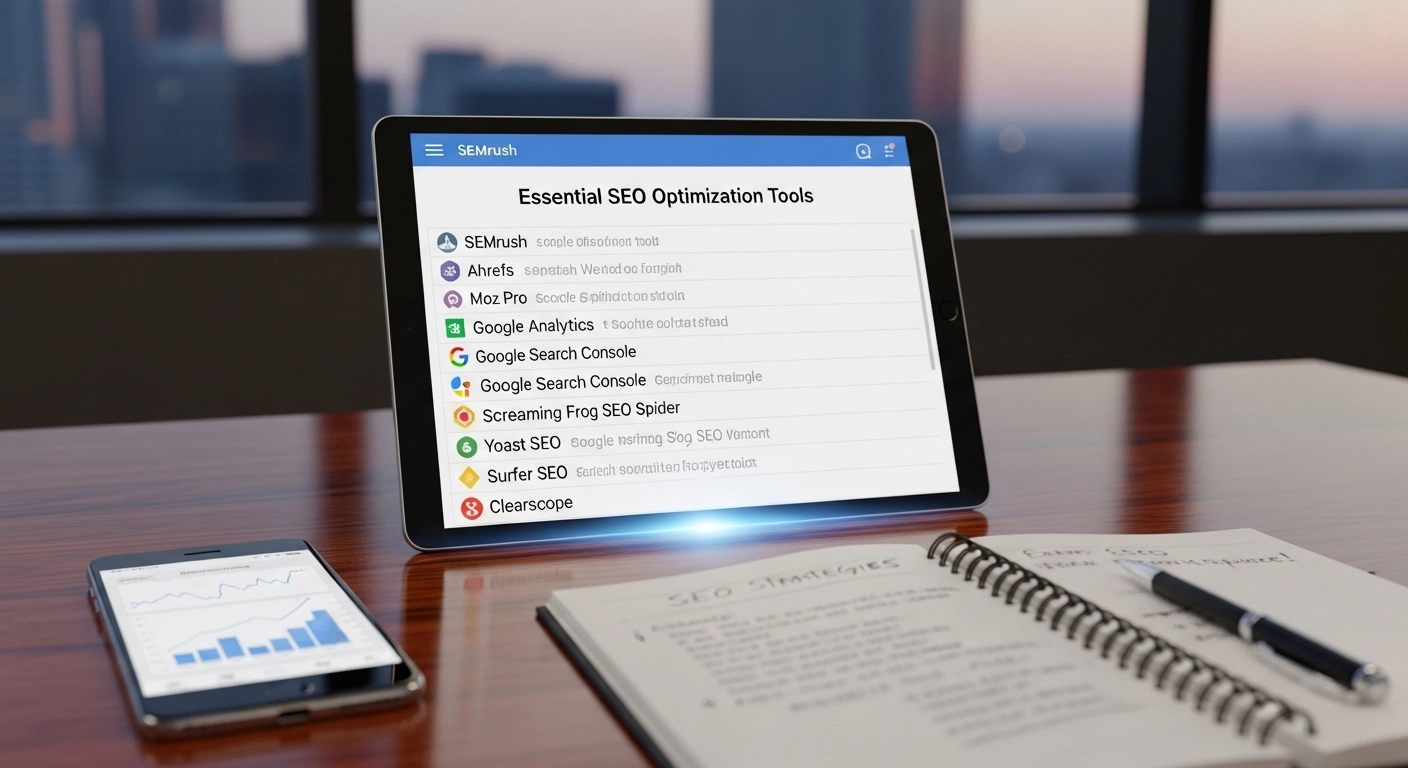
If you want your website to rank higher on Google, you can’t rely on guesswork anymore. SEO today is driven by data, and the right tools can make a huge difference in how fast you grow, how well you optimize, and how clearly you understand your competition.
In this guide, you’ll find a complete SEO optimization tools list covering keyword research, technical SEO, content optimization, backlinks, and performance tracking—all explained in a simple, practical way.
Why SEO Tools Matter
SEO tools help you see what’s actually happening behind your website. Instead of guessing, you can:
- Find keywords people are searching for
- Fix technical issues affecting rankings
- Track backlinks and competitors
- Improve page speed and user experience
- Optimize content for higher visibility
In short, they turn SEO from trial-and-error into a clear strategy.
1. Keyword Research Tools
Keyword research is the foundation of SEO. These tools help you discover what your audience is searching for.
Google Keyword Planner
A free tool from Google that shows keyword ideas and search volume. Great for beginners and advertisers.
Ahrefs
One of the most powerful SEO platforms. It gives keyword difficulty, traffic potential, and competitor analysis.
SEMrush
An all-in-one SEO suite with strong keyword research, topic ideas, and competitor insights.
Ubersuggest
A beginner-friendly tool that provides keyword suggestions, SEO difficulty, and content ideas.
2. Technical SEO Tools
Technical SEO ensures your website is crawlable, fast, and error-free.
Google Search Console
Essential for monitoring indexing issues, search performance, and site health directly from Google.
Screaming Frog SEO Spider
A powerful crawler that scans your website for broken links, duplicate content, and technical errors.
GTmetrix
Helps analyze website speed and provides actionable recommendations for performance improvement.
Google PageSpeed Insights
Shows how fast your pages load and what you can improve for better user experience.
3. Content Optimization Tools
These tools help you write SEO-friendly content that ranks better.
Surfer SEO
Optimizes your content based on top-ranking pages, giving real-time SEO scoring.
Yoast SEO
A popular WordPress plugin that helps optimize titles, meta descriptions, and readability.
Rank Math
An advanced SEO plugin offering schema markup, keyword optimization, and on-page SEO guidance.
4. Backlink Analysis Tools
Backlinks are one of the strongest ranking factors in SEO.
Ahrefs
Excellent for analyzing backlinks, checking referring domains, and spying on competitors’ link strategies.
SEMrush
Provides backlink audits, toxic link detection, and link-building opportunities.
Moz Pro
Known for Domain Authority metrics and simple backlink tracking features.
5. All-in-One SEO Platforms
If you want everything in one place, these tools are ideal:
- SEMrush
- Ahrefs
- Moz Pro
They combine keyword research, site audits, backlink analysis, and competitor tracking in a single dashboard.
Simple SEO Tools Stack (Beginner Example)
If you’re just starting out, here’s a simple setup:
- Google Search Console → Monitor performance
- Google Analytics → Track traffic behavior
- Ubersuggest → Keyword research
- Yoast SEO → On-page optimization
This combination is enough to start ranking small websites effectively.
FAQ: SEO Optimization Tools List
1. What is the best SEO tool for beginners?
Google Search Console and Ubersuggest are great starting points because they are simple and either free or low-cost.
2. Do I need paid SEO tools?
Not always. Free tools can help you start, but paid tools like Ahrefs or SEMrush offer deeper insights and faster growth.
3. Which SEO tool is best for keyword research?
Ahrefs and SEMrush are considered the most accurate and powerful.
4. What tools help improve website speed?
Google PageSpeed Insights and GTmetrix are the most commonly used tools for performance optimization.
Conclusion
Using the right SEO tools is the difference between guessing and growing strategically. Whether you’re running a blog, eCommerce store, or business website, these tools help you understand what’s working and what needs improvement.
Start small, focus on the basics, and gradually expand your SEO toolkit as your website grows.
