
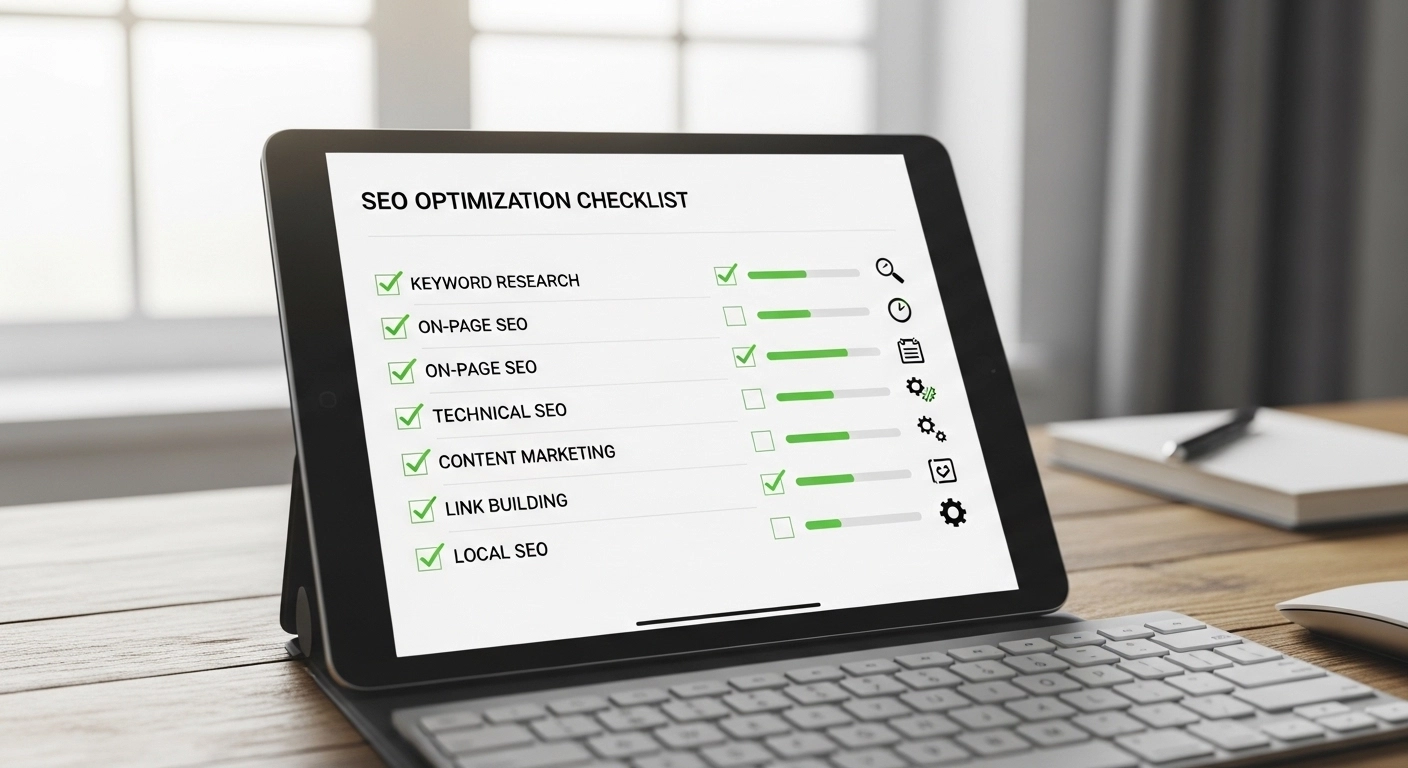
If your website isn’t ranking, it’s rarely because of one big mistake. More often, it’s a collection of small gaps. This SEO optimization checklist brings everything together—technical health, content quality, and authority—so you can systematically improve visibility, traffic, and conversions.
Whether you run a blog, business site, or eCommerce store, this checklist will help you fix what matters most.
1. Keyword Research & Search Intent
Before optimizing anything, make sure you’re targeting the right keywords.
Checklist:
- Identify primary keyword (e.g., SEO optimization checklist)
- Find related keywords (LSI/semantic terms)
- Analyze search intent (informational, transactional, navigational)
- Use long-tail variations for easier ranking
- Check keyword difficulty and search volume
Example:
If someone searches “SEO optimization checklist,” they want a step-by-step guide, not a sales page.
👉 Tip: Always match your content format to what’s already ranking on page one.
2. On-Page SEO Essentials
This is where most quick wins happen.
Checklist:
- Include keyword in title tag (preferably near the start)
- Write a compelling meta description (120–155 characters)
- Use one H1 tag with your main keyword
- Add H2/H3 headings with variations
- Optimize URL (short, clean, keyword-focused)
- Use internal links to relevant pages
- Add external links to authoritative sources
Example Title:
SEO Optimization Checklist: 15 Steps to Rank Higher in 2026
3. Content Quality & Depth
Google rewards helpful, complete content.
Checklist:
- Cover the topic thoroughly (no thin content)
- Answer common user questions
- Use simple, clear language
- Break text into short paragraphs
- Add examples, data, or case insights
- Avoid keyword stuffing
Pro Tip:
Write like you’re explaining to a beginner—but include enough depth for experts.
4. Technical SEO Health
If search engines can’t crawl your site, nothing else matters.
Checklist:
- Ensure site is mobile-friendly
- Improve page speed (Core Web Vitals)
- Fix broken links (404 errors)
- Use HTTPS (secure website)
- Create and submit XML sitemap
- Optimize robots.txt file
- Use clean site architecture
Example Issue:
A slow-loading page can lose rankings—even if the content is great.
5. Image & Media Optimization
Images can drive traffic too—if optimized correctly.
Checklist:
- Compress images for faster loading
- Use descriptive file names (e.g., seo-checklist.png)
- Add ALT text with keywords
- Use modern formats (WebP)
- Enable lazy loading
6. Internal Linking Strategy
Internal links help search engines understand your site structure.
Checklist:
- Link to relevant pages naturally
- Use descriptive anchor text
- Avoid orphan pages (pages with no links)
- Build topic clusters (pillar + supporting content)
Example:
Link this post to related topics like:
- On-page SEO guide
- Technical SEO audit
- Keyword research strategy
7. Backlinks & Authority Building
Backlinks are still one of the strongest ranking factors.
Checklist:
- Earn links from high-authority websites
- Use guest posting
- Create link-worthy content (guides, data, tools)
- Monitor backlinks regularly
- Avoid spammy or low-quality links
Quick Win:
Publish original research or case studies—these naturally attract links.
8. User Experience (UX) Signals
Google tracks how users interact with your site.
Checklist:
- Improve page load speed
- Reduce bounce rate
- Use clear navigation
- Add call-to-action (CTA)
- Make content easy to scan
Example:
Use bullet points, headings, and short paragraphs to keep users engaged.
9. Local SEO (If Applicable)
If you run a local business, don’t skip this.
Checklist:
- Create/optimize Google Business Profile
- Add NAP (Name, Address, Phone)
- Get local reviews
- Use location-based keywords
- Add schema markup
10. SEO Tracking & Analytics
You can’t improve what you don’t measure.
Checklist:
- Set up Google Analytics
- Use Google Search Console
- Track keyword rankings
- Monitor traffic sources
- Analyze top-performing pages
Bonus: Quick SEO Audit Checklist
If you’re short on time, focus on this:
- Keyword in title, URL, H1
- Fast-loading page
- Mobile-friendly design
- Internal links added
- High-quality, helpful content
- No broken links
- Indexed in Google
FAQ: SEO Optimization Checklist
Q1: How often should I update my SEO checklist?
At least every 3–6 months, or whenever Google updates its algorithm.
Q2: What is the most important SEO factor?
Content quality and search intent alignment are the most critical.
Q3: Can I rank without backlinks?
Yes, but it’s harder. Backlinks significantly boost authority and rankings.
Q4: How long does SEO take to work?
Typically 3–6 months, depending on competition and consistency.
Final Thoughts
SEO isn’t about tricks—it’s about consistency. When you follow a structured SEO optimization checklist, you eliminate guesswork and focus on what actually drives results.
Start with the basics, fix technical issues, create valuable content, and build authority over time. Small improvements across multiple areas can lead to massive growth.
