
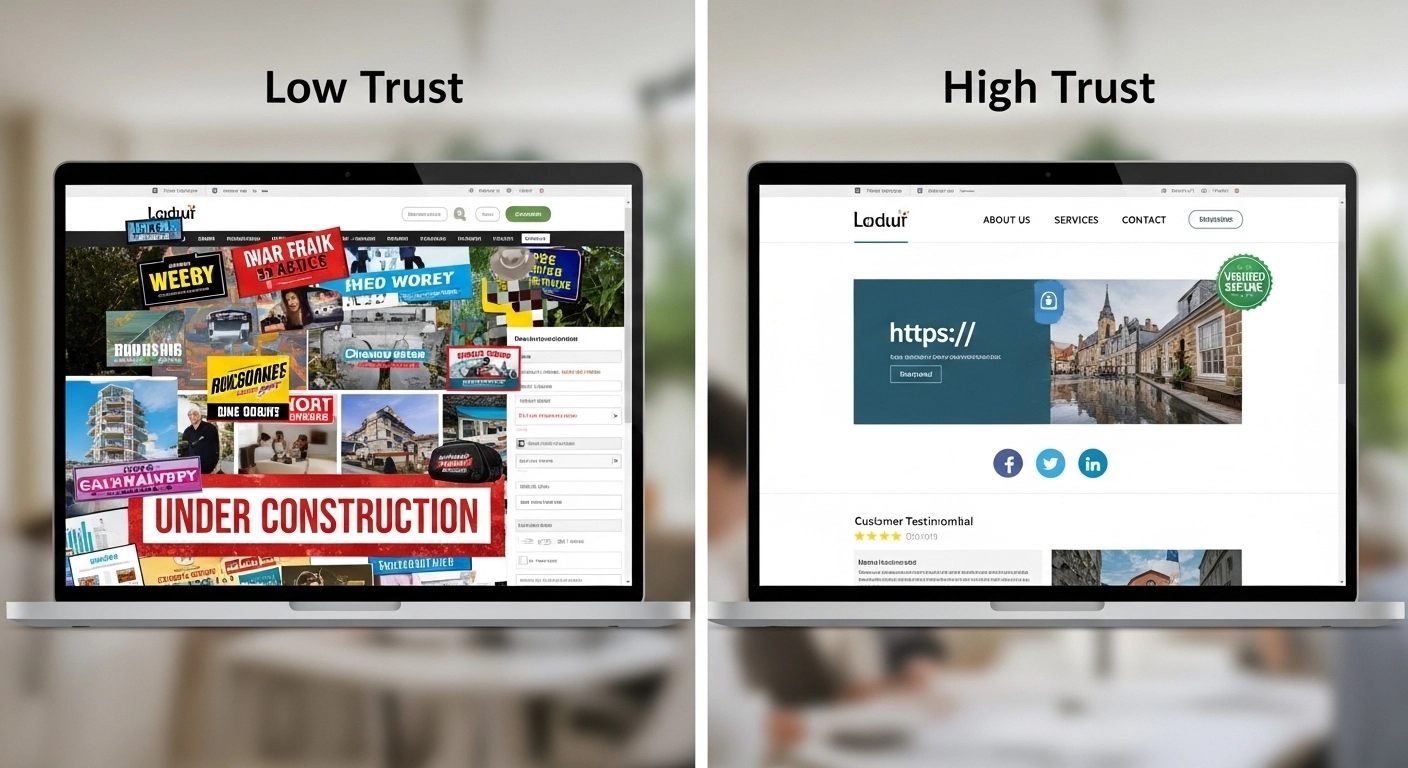
If you want your website to rank higher in Google and actually convert visitors into customers, you can’t ignore SEO website trust signals. Search engines have become very good at judging whether a site is credible, useful, and safe—and users do the same within seconds of landing on your page.
Trust signals are the bridge between “just another website” and “a brand people believe in.” In this guide, we’ll break down what they are, why they matter for SEO, and how you can strengthen them with practical, real-world steps.
What Are SEO Website Trust Signals?
SEO website trust signals are indicators that help search engines and users determine whether your website is reliable, authoritative, and safe to use.
Think of them as digital reputation markers. They tell Google:
- “This site is legitimate”
- “This content is accurate”
- “People trust this brand”
And they tell users:
- “You’re in the right place”
- “Your data is safe here”
- “This information is worth your time”
Trust signals don’t come from a single factor. They’re a combination of technical SEO, content quality, branding, and user experience.
Why Trust Signals Matter for SEO
Google’s algorithm is designed to prioritize helpful, reliable content. That means websites with strong trust signals are more likely to:
- Rank higher in search results
- Earn more organic traffic
- Have lower bounce rates
- Convert visitors more effectively
Without trust, even great content struggles to perform. Users hesitate, click away, or never return.
In short: no trust = no rankings = no conversions.
Key Types of SEO Website Trust Signals
Let’s break down the most important trust signals you should focus on.
1. Website Security (HTTPS)
One of the most basic trust signals is site security.
If your website still uses HTTP instead of HTTPS, you’re already behind. Browsers may even label your site as “Not Secure,” which instantly kills trust.
Why it matters:
- Protects user data
- Improves SEO rankings
- Builds instant credibility
2. High-Quality, Helpful Content
Content is still one of the strongest trust signals in SEO.
Google looks for content that:
- Solves real user problems
- Is accurate and well-researched
- Demonstrates expertise and clarity
Thin, generic, or AI-spammy content damages trust quickly.
Good example:
A detailed guide explaining step-by-step how to fix a specific issue.
Bad example:
A vague 300-word article stuffed with keywords.
3. Author Authority and Transparency
People trust people, not faceless websites.
Adding clear author information builds credibility, especially for YMYL (Your Money or Your Life) topics like finance, health, or legal content.
Strong author trust signals include:
- Real author names
- Credentials or experience
- Author bio pages
This shows Google and users that real experts are behind the content.
4. Backlinks from Trusted Websites
Backlinks are still one of the strongest SEO trust signals.
But not all links are equal.
High-value backlinks come from:
- Reputable news sites
- Industry blogs
- Educational (.edu) or government (.gov) domains
These act like votes of confidence. The more credible the source, the stronger the trust signal.
5. User Experience (UX)
Google closely tracks how users interact with your site.
Poor UX sends negative trust signals.
Key UX trust factors include:
- Fast page loading speed
- Mobile-friendly design
- Easy navigation
- Clean layout without intrusive ads
If users leave quickly, search engines interpret that as a lack of trust or relevance.
6. Reviews and Social Proof
People trust what others say about you.
Strong social proof includes:
- Customer reviews
- Testimonials
- Case studies
- Ratings (Google Reviews, Trustpilot, etc.)
These signals show that real users have had positive experiences with your brand.
7. Clear Contact and Business Information
A legitimate website should never feel anonymous.
Trust increases when users can easily find:
- Contact page
- Physical address (if applicable)
- Phone number
- Support email
This is especially important for e-commerce and service-based websites.
8. Consistent Brand Presence
A strong brand presence across the web reinforces credibility.
This includes:
- Active social media profiles
- Mentions on other websites
- Consistent branding (logo, name, messaging)
Inconsistency creates doubt, and doubt reduces trust.
How to Improve SEO Website Trust Signals
Now let’s turn strategy into action.
Step 1: Secure Your Website
Install an SSL certificate and ensure all pages redirect to HTTPS.
Step 2: Upgrade Your Content Strategy
Focus on:
- Depth over quantity
- Real expertise over keyword stuffing
- Clear structure with headings and examples
Step 3: Strengthen Author Profiles
Add author bios with:
- Experience
- Qualifications
- Links to social or professional profiles
Step 4: Build High-Quality Backlinks
Avoid spammy link schemes. Instead:
- Guest post on reputable sites
- Create link-worthy content (guides, tools, research)
- Build relationships in your niche
Step 5: Improve User Experience
Audit your site for:
- Mobile responsiveness
- Page speed (use tools like PageSpeed Insights)
- Broken links or cluttered design
Step 6: Collect and Display Reviews
Encourage satisfied customers to leave reviews and showcase them strategically on your site.
Common Mistakes That Hurt Trust Signals
Avoid these if you want strong SEO performance:
- Using fake or outdated testimonials
- Publishing low-quality AI content without editing
- Ignoring mobile optimization
- Hiding contact information
- Building spam backlinks
These mistakes don’t just reduce rankings—they actively damage credibility.
FAQ: SEO Website Trust Signals
What are the most important trust signals for SEO?
The most important include HTTPS security, high-quality content, backlinks from trusted sites, and positive user experience.
Do trust signals directly affect Google rankings?
Yes, indirectly. Google uses trust-related factors like backlinks, engagement, and content quality as ranking signals.
How long does it take to build trust signals?
It varies. Some improvements (like HTTPS or UX fixes) are instant, while others (like backlinks and authority building) take months.
Can small websites compete with big brands?
Yes. Strong content quality, niche expertise, and targeted backlinks can help smaller sites build strong trust signals over time.
Conclusion: Trust Is the Real SEO Advantage
At the end of the day, SEO isn’t just about keywords or backlinks—it’s about trust.
When users trust your website, they stay longer, engage more, and convert better. When Google trusts your website, it rewards you with visibility.
The strongest SEO website trust signals come from a mix of security, content quality, authority, user experience, and reputation.
