
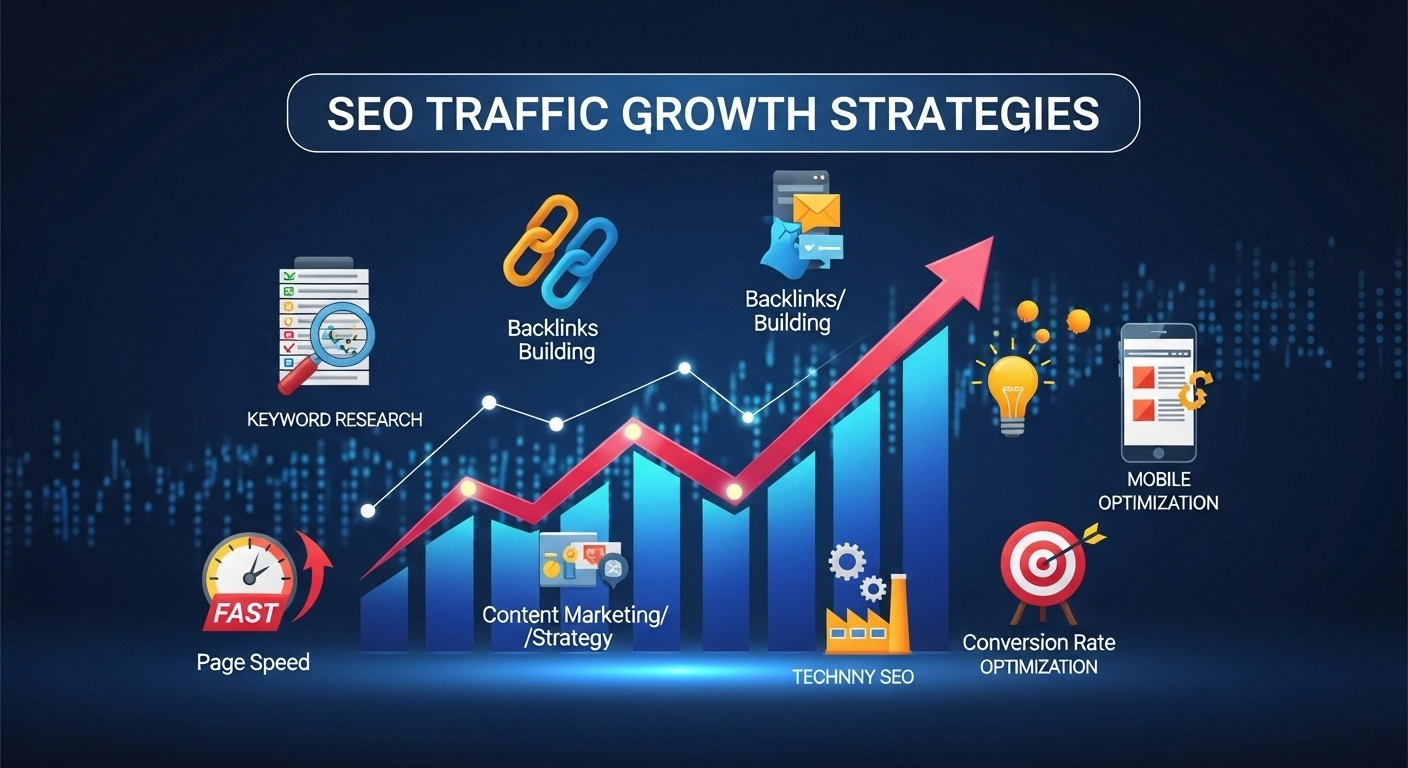
Growing website traffic from search engines is not about quick hacks anymore. It’s about building a solid system that consistently brings the right visitors to your site. When done correctly, SEO traffic becomes one of your most reliable and cost-effective growth channels.
In this guide, you’ll learn practical and proven SEO traffic growth strategies that actually work in 2026—without fluff, shortcuts, or outdated tactics.
Understand Search Intent Before Anything Else
If you want more SEO traffic, you must first understand why people search.
Search intent usually falls into four categories:
- Informational (learning something)
- Navigational (finding a specific site)
- Transactional (ready to buy or take action)
- Commercial investigation (comparing options)
For example, someone searching “best SEO tools” is not just looking for a list—they want comparisons, pros and cons, and recommendations.
Why this matters:
If your content doesn’t match intent, it won’t rank—no matter how well it’s optimized.
Build Topic Clusters Instead of Random Articles
One of the strongest SEO traffic growth strategies is organizing content into topic clusters.
Instead of writing isolated blog posts, you:
- Create a main “pillar page” on a broad topic
- Write supporting articles around subtopics
- Internally link everything together
Example:
Pillar topic: SEO strategy guide
Cluster content:
- Keyword research techniques
- On-page SEO checklist
- Link building methods
- Technical SEO basics
This structure helps search engines understand your authority on a subject, which improves rankings across multiple pages.
Focus on High-Quality Keyword Research
Traffic growth starts with choosing the right keywords—not just high-volume ones.
Look for:
- Long-tail keywords (easier to rank)
- Low competition opportunities
- Search queries with clear intent
- Questions users actually ask
Instead of targeting only “SEO,” aim for phrases like:
- “SEO traffic growth strategies for beginners”
- “how to increase organic traffic fast”
- “best SEO techniques for small websites”
These bring more qualified visitors who are more likely to engage or convert.
Improve On-Page SEO Without Over-Optimizing
On-page SEO is still a major ranking factor, but it should feel natural—not forced.
Focus on:
- Clear and descriptive titles
- Proper heading structure (H1, H2, H3)
- Short, readable paragraphs
- Internal links to related content
- Optimized images with alt text
- Naturally placed keywords
Important:
Avoid repeating keywords too often. Google is smarter now—it understands context and meaning.
Create Content That Solves Real Problems
Search engines prioritize content that fully satisfies user needs.
To do this:
- Answer the full question, not just part of it
- Add real examples or case studies
- Break down complex ideas into simple steps
- Include actionable tips users can apply immediately
For example, instead of saying “build backlinks,” explain how to actually do it:
- Guest posting strategies
- Outreach templates
- Resource page link building
- Broken link replacement
Helpful content naturally earns better rankings and shares.
Strengthen Internal Linking Structure
Internal linking is one of the most underrated SEO traffic growth strategies.
It helps:
- Distribute page authority
- Guide users through your content
- Improve crawlability for search engines
Best practices:
- Link from high-traffic pages to newer pages
- Use descriptive anchor text
- Avoid overloading a single page with too many links
Think of it as creating a roadmap for both users and Google.
Optimize for Featured Snippets and AI Search
Search results are changing. Featured snippets and AI-generated answers now take a big share of visibility.
To win these spots:
- Use question-based headings
- Provide short, direct answers
- Add lists, steps, and tables
- Keep explanations simple and structured
Example:
Question: How can I increase SEO traffic?
Answer: Focus on keyword research, publish helpful content regularly, build internal links, and improve page speed.
Clear structure increases your chances of appearing in position zero.
Improve Page Speed and User Experience
Even great content won’t rank well if your website is slow or hard to use.
Key improvements:
- Optimize images
- Use fast hosting
- Reduce unnecessary scripts
- Improve mobile responsiveness
- Make navigation simple
Google tracks user behavior. If visitors leave quickly, rankings drop.
Build Authority Through Backlinks
Backlinks are still one of the strongest ranking signals in SEO.
But quality matters more than quantity.
Focus on:
- Guest posting on relevant websites
- Creating link-worthy content (guides, statistics, tools)
- Digital PR and outreach
- Getting mentions from trusted sources
One strong backlink can be more powerful than 50 low-quality ones.
Refresh and Update Old Content
Many websites lose traffic because they ignore old posts.
Regular updates can:
- Improve rankings
- Increase click-through rates
- Keep content relevant
Update:
- Outdated statistics
- Broken links
- Old examples
- Weak sections
Sometimes updating existing content brings faster results than creating new posts.
Track Performance and Adjust Strategy
SEO is not “set and forget.”
Use tools like Google Search Console or analytics platforms to track:
- Which pages bring traffic
- What keywords you rank for
- Which pages lose visibility
- Click-through rates
Then improve based on real data—not guesses.
FAQ: SEO Traffic Growth Strategies
1. How long does it take to grow SEO traffic?
Usually 3 to 6 months to see noticeable results, depending on competition and content quality.
2. What is the fastest way to increase organic traffic?
Improving existing content, targeting long-tail keywords, and fixing on-page SEO issues often brings the quickest wins.
3. Do backlinks still matter for SEO?
Yes. High-quality backlinks remain one of the strongest ranking factors.
4. Can small websites compete with big ones?
Yes, by targeting niche keywords and building strong topic clusters.
5. How often should I publish content?
Consistency matters more than frequency. Even 2–4 high-quality posts per month can work if optimized well.
Conclusion
Effective SEO traffic growth strategies are not about shortcuts—they’re about building a strong foundation of useful content, smart keyword targeting, and a structured website.
When you combine search intent, topic clusters, technical optimization, and authority building, your traffic doesn’t just increase—it becomes stable and scalable.
