
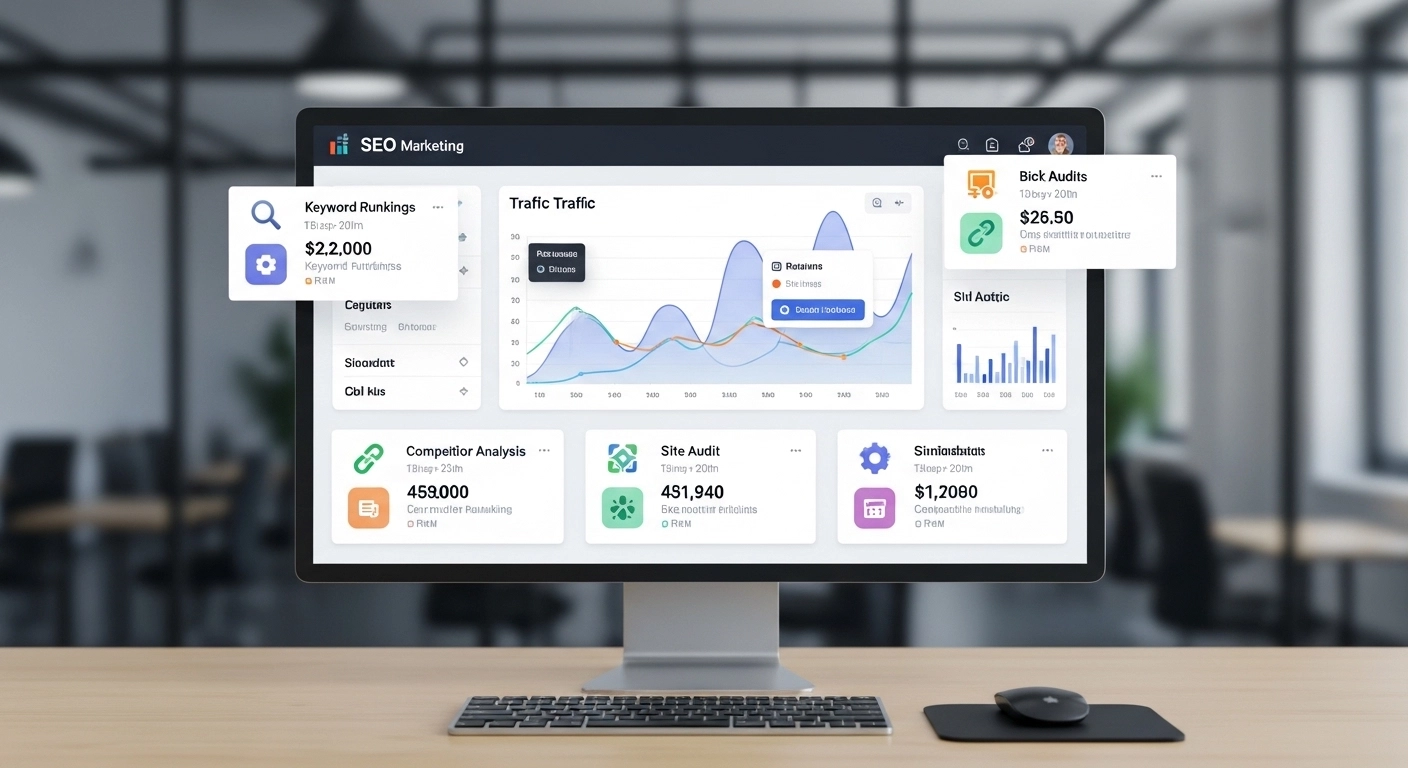
Search engine optimization has become more complex than ever. Google now evaluates hundreds of ranking factors including content quality, backlinks, user experience, technical performance, and search intent. Without the right tools, analyzing and improving these factors becomes extremely difficult.
Professional marketers, agencies, and businesses rely on powerful SEO tools to uncover keyword opportunities, audit websites, track rankings, analyze competitors, and optimize content for search engines.
But not all tools are equal.
Some tools specialize in keyword research, others focus on technical SEO audits, while advanced platforms help with content optimization, link building, and competitor analysis.
In this comprehensive guide, you will discover the best SEO tools used by industry experts to dominate search rankings. You’ll also learn how to use them strategically to improve organic traffic, search visibility, and lead generation.
Whether you’re a beginner, marketer, or business owner, this guide will help you build a powerful SEO toolkit for long-term success.
What Are SEO Tools and Why They Matter
SEO tools are software platforms that help website owners analyze, monitor, and improve their search engine performance.
They provide valuable insights that allow marketers to make data-driven decisions rather than guessing what works.
Key Benefits of Using SEO Tools
SEO tools help businesses:
- Discover profitable keywords
- Track search rankings
- Identify technical SEO problems
- Analyze backlinks
- Research competitors
- Improve content optimization
- Monitor website traffic
Without these insights, ranking on competitive keywords becomes extremely difficult.
Types of SEO Tools Every Marketer Should Use
Different SEO tasks require specialized tools.
Keyword Research Tools
These tools help you find keywords people are searching for on Google.
Popular examples include:
- Ahrefs
- SEMrush
- Ubersuggest
- Google Keyword Planner
They reveal important data like:
- Search volume
- Keyword difficulty
- CPC
- Search intent
- Keyword trends
Technical SEO Tools
Technical SEO tools analyze website structure and performance.
They help identify problems such as:
- Broken links
- Crawl errors
- Page speed issues
- Mobile usability problems
- Indexing errors
These insights ensure search engines can properly crawl and index your website.
Backlink Analysis Tools
Backlinks remain one of the strongest ranking factors.
Backlink tools help you:
- Monitor link profiles
- Discover new backlinks
- Identify toxic links
- Analyze competitor backlinks
Rank Tracking Tools
Rank tracking tools monitor how your website ranks for target keywords.
They allow you to:
- Track keyword positions
- Monitor ranking changes
- Measure SEO progress
- Compare competitors
Best SEO Tools for Keyword Research
Keyword research is the foundation of every successful SEO strategy.
Ahrefs Keyword Explorer
Ahrefs is one of the most powerful SEO tools for keyword research and competitive analysis.
Key features include:
- Massive keyword database
- Keyword difficulty analysis
- Click metrics
- SERP overview
It helps marketers identify high-value keywords with ranking potential.
SEMrush Keyword Magic Tool
SEMrush offers an advanced keyword research platform with millions of keyword suggestions.
Benefits include:
- Topic clusters
- Search intent analysis
- Keyword trends
- Competitive keyword research
This tool is widely used by agencies and SEO professionals.
Ubersuggest
Ubersuggest is a beginner-friendly SEO tool that provides:
- Keyword suggestions
- Content ideas
- SEO difficulty scores
- Domain analysis
It’s especially useful for small businesses and bloggers.
Best Technical SEO Tools
Technical SEO ensures your website performs well in search engines.
Google Search Console
Google Search Console is one of the most essential free SEO tools available.
It helps website owners:
- Monitor indexing
- Track search performance
- Identify technical errors
- Submit sitemaps
- Improve site visibility
Screaming Frog SEO Spider
Screaming Frog is a powerful website crawler used for technical audits.
It analyzes:
- Metadata
- Broken links
- Duplicate content
- Redirect chains
- Page titles
This tool is widely used by professional SEO specialists.
PageSpeed Insights
Website speed is a critical ranking factor.
PageSpeed Insights analyzes:
- Core Web Vitals
- Mobile performance
- Page load time
- Optimization opportunities
Faster websites improve both rankings and user experience.
Best SEO Tools for Backlink Analysis
Backlinks are essential for building domain authority and trust.
Ahrefs Backlink Checker
Ahrefs provides one of the largest backlink databases.
You can analyze:
- Referring domains
- Link quality
- Anchor text
- Competitor links
This helps identify new link-building opportunities.
Majestic SEO
Majestic focuses specifically on link intelligence.
Key metrics include:
- Trust Flow
- Citation Flow
- Link context
These metrics help evaluate link quality.
Best SEO Tools for Content Optimization
Content optimization tools ensure your pages match search intent and semantic relevance.
Surfer SEO
Surfer SEO analyzes top ranking pages and provides optimization recommendations.
It evaluates factors such as:
- Keyword density
- Content length
- headings
- NLP keywords
Clearscope
Clearscope helps writers create highly optimized content.
It provides:
- Semantic keyword suggestions
- Content grading
- readability analysis
These insights help improve topical authority.
How to Choose the Right SEO Tools
Choosing the best SEO tools depends on your goals, budget, and expertise level.
Key Factors to Consider
When selecting SEO tools, evaluate:
- Features and capabilities
- Data accuracy
- Ease of use
- Integration options
- Pricing
H4 Simple Framework for Choosing SEO Tools
Follow this framework:
- Define your SEO goals
- Identify essential tool categories
- Test tools using free trials
- Compare data accuracy
- Select tools that scale with your growth
This approach ensures you invest in tools that deliver real value.
How SEO Tools Improve Search Rankings
SEO tools support almost every part of your optimization strategy.
Keyword Strategy
Tools reveal:
- High traffic keywords
- Long-tail opportunities
- Search intent insights
Content Optimization
Content tools help you:
- Optimize semantic keywords
- Improve topical authority
- Align with user intent
Technical Improvements
Technical tools identify issues that affect rankings such as:
- crawl errors
- duplicate content
- slow loading pages
Competitive Intelligence
SEO tools allow you to study competitors and discover strategies that already work.
Advanced SEO Strategies Using SEO Tools
Professional SEOs combine multiple tools to create powerful strategies.
Competitor Gap Analysis
Identify keywords competitors rank for but you don’t.
Content Gap Strategy
Find missing topics and create high-value content.
Backlink Outreach Campaigns
Discover sites linking to competitors and build relationships.
SERP Feature Optimization
Use tools to target:
- Featured snippets
- People Also Ask results
- Voice search queries
Frequently Asked Questions (FAQ)
What are SEO tools?
SEO tools are software platforms used to analyze, monitor, and improve a website’s performance in search engines.
What are the best SEO tools for beginners?
Some beginner-friendly SEO tools include:
- Google Search Console
- Ubersuggest
- Ahrefs
- SEMrush
Are free SEO tools effective?
Yes. Many free SEO tools provide valuable insights for keyword research, site audits, and ranking analysis.
However, advanced paid tools often provide deeper data.
How do SEO tools improve rankings?
SEO tools help identify optimization opportunities such as:
- keyword gaps
- technical issues
- backlink opportunities
- content improvements
Which SEO tool is best for keyword research?
Popular keyword research tools include:
- Ahrefs
- SEMrush
- Ubersuggest
- Google Keyword Planner
Do SEO tools guarantee rankings?
No tool can guarantee rankings.
However, they provide insights that allow you to make smarter optimization decisions.
How many SEO tools should you use?
Most professionals use 3–5 core SEO tools covering:
- keyword research
- technical SEO
- backlink analysis
- content optimization
Conclusion
In today’s competitive digital landscape, SEO tools are essential for successful search engine optimization.
They help marketers uncover opportunities, analyze competitors, improve technical performance, and create optimized content that ranks on Google.
The most successful SEO strategies combine multiple tools to support every stage of optimization, including:
- keyword research
- technical SEO audits
- content optimization
- backlink analysis
- ranking tracking
By building the right SEO toolkit and using data-driven insights, businesses can dramatically improve organic traffic, visibility, and online growth.
Start exploring these powerful SEO tools today, and you’ll be one step closer to dominating search results.
