
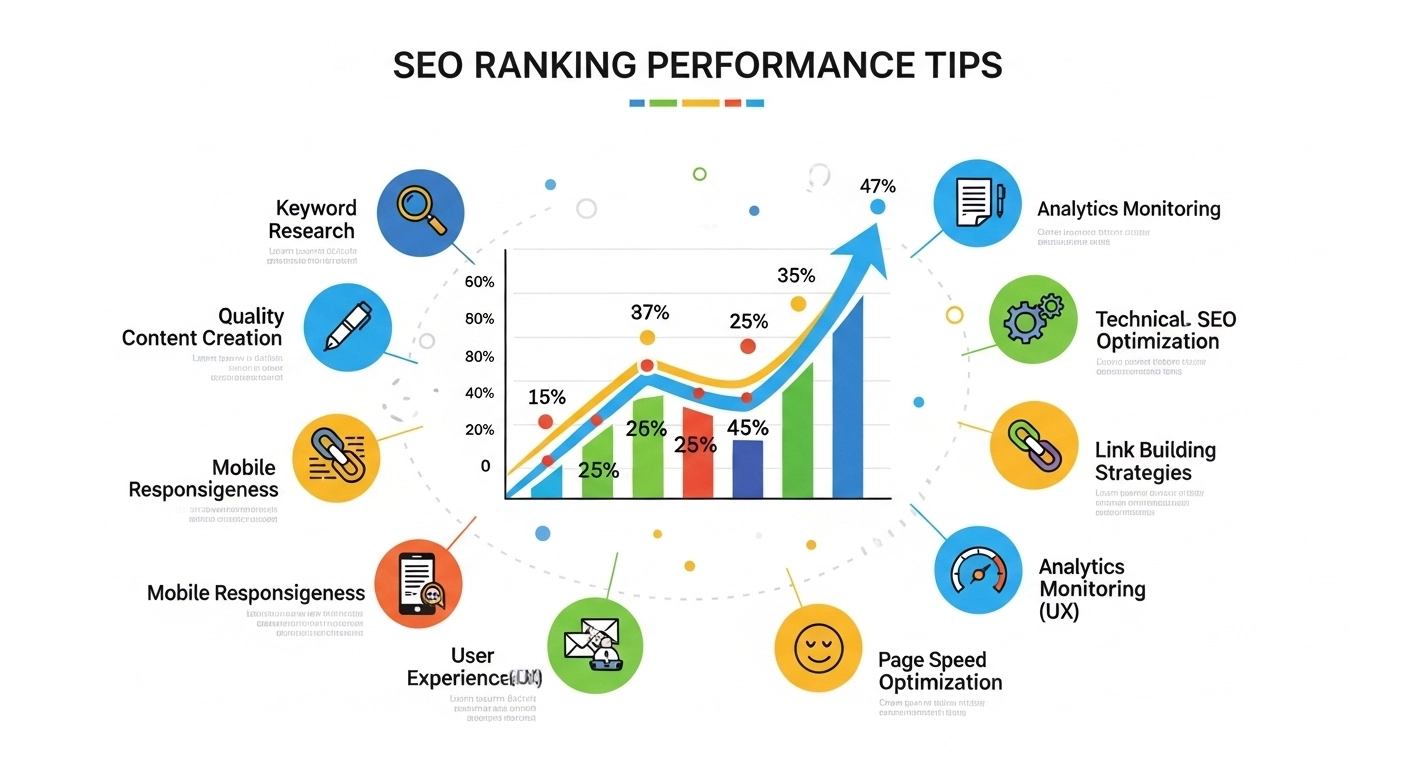
If your site isn’t climbing search results, it’s rarely because of one big mistake. More often, it’s a mix of small gaps—content that doesn’t match intent, slow pages, weak internal links, or poor structure. The good news: fixing these doesn’t require guesswork. This guide breaks down practical, proven SEO ranking performance tips you can apply right away.
1) Start With Search Intent, Not Just Keywords
Ranking isn’t about stuffing keywords—it’s about satisfying why someone searches.
How to do it:
- Google your target keyword and study the top results.
- Identify intent: informational, transactional, navigational, or commercial.
- Match your content format (guide, list, product page, comparison).
Example:
If people search “best SEO tools,” they expect comparisons—not a definition of SEO.
2) Build Content That Goes Beyond “Good Enough”
Thin content rarely ranks anymore. Google favors depth, clarity, and usefulness.
What high-performing content includes:
- Clear headings (H1, H2, H3) for structure
- Real examples and actionable steps
- Updated stats or insights
- Internal links to related pages
Pro tip: Aim to fully answer the query so users don’t need to go back to search results.
3) Optimize On-Page SEO (Without Overdoing It)
On-page optimization still matters—but it should feel natural.
Key areas to focus on:
- Title tag (include main keyword + benefit)
- Meta description (compelling and clear)
- URL (short and clean)
- Headers (use variations of your keyword)
- Image alt text
Example title:
“10 SEO Ranking Performance Tips to Boost Traffic Fast”
4) Improve Page Speed and Core Web Vitals
Slow websites lose rankings and users.
Quick wins:
- Compress images
- Use a fast hosting provider
- Enable caching
- Minimize scripts
Why it matters:
Google uses Core Web Vitals as ranking signals, especially for mobile users.
5) Strengthen Internal Linking
Internal links help search engines understand your site—and keep users engaged.
Best practices:
- Link to relevant pages using descriptive anchor text
- Build topic clusters (pillar + supporting content)
- Avoid orphan pages (pages with no links)
Example:
A guide on “SEO basics” should link to articles like “keyword research” and “technical SEO.”
6) Earn High-Quality Backlinks
Backlinks are still one of the strongest ranking factors.
How to get them:
- Publish original data or case studies
- Guest post on relevant websites
- Create shareable resources (guides, templates)
- Reach out for link placements
Focus on quality over quantity. One strong link beats dozens of weak ones.
7) Optimize for Featured Snippets
Featured snippets can skyrocket your visibility.
How to win them:
- Answer questions clearly in 40–60 words
- Use bullet points or numbered lists
- Include question-based headings (e.g., “What is SEO ranking?”)
8) Keep Content Fresh and Updated
Outdated content loses rankings over time.
Update regularly by:
- Adding new data or examples
- Fixing broken links
- Improving readability
- Expanding sections
Tip: Refresh old posts instead of always creating new ones—it’s faster and often more effective.
9) Focus on Mobile Optimization
Most users browse on mobile devices.
Make sure your site:
- Is responsive on all screen sizes
- Loads quickly on mobile networks
- Uses readable fonts and spacing
10) Track, Measure, and Adjust
SEO isn’t “set and forget.” You need data.
Use tools like:
- Google Search Console (for rankings and indexing)
- Google Analytics (for traffic and behavior)
Watch for:
- Keyword rankings
- Click-through rates (CTR)
- Bounce rate and time on page
Then refine your strategy based on what works.
11) Improve Click-Through Rate (CTR)
Even if you rank, you won’t get traffic without clicks.
Boost CTR by:
- Writing compelling titles (use numbers, power words)
- Adding emotional triggers (“easy,” “fast,” “proven”)
- Using structured data (rich snippets)
12) Build Topical Authority
Google prefers sites that deeply cover a subject.
How to do it:
- Create a pillar page (main topic)
- Add supporting articles (subtopics)
- Link everything together
Example structure:
- Pillar: “SEO Guide”
- Cluster: keyword research, on-page SEO, technical SEO, link building
Simple FAQ
What is the fastest way to improve SEO rankings?
Focus on search intent, improve on-page SEO, and update existing content. These often deliver quick wins.
How long does SEO take to show results?
Typically 3–6 months, depending on competition and consistency.
Do backlinks still matter in SEO?
Yes. High-quality backlinks remain a major ranking factor.
How often should I update my content?
Every 3–6 months for important pages, or sooner if trends change.
Is content length important for rankings?
Length matters less than quality. A shorter, helpful page can outrank a longer, weak one.
Final Thoughts
Improving SEO ranking performance isn’t about hacks—it’s about consistency, clarity, and value. When your content truly helps users, loads fast, and connects logically across your site, rankings follow.
Start with one or two of these tips today—optimize an existing page, improve internal links, or update outdated content. Small changes compound quickly in SEO.
