
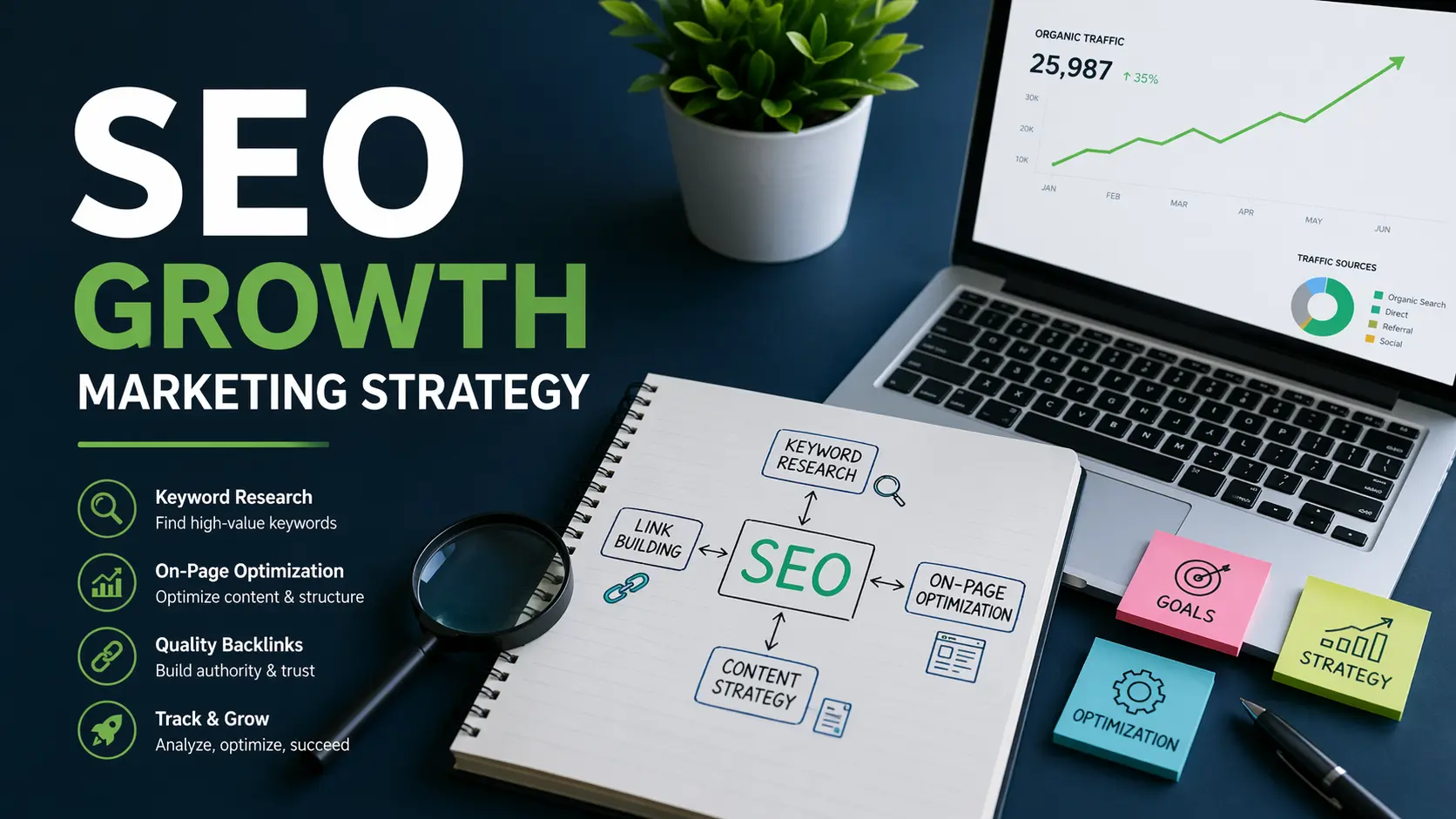
If you’re trying to grow your website traffic without relying heavily on paid ads, an SEO growth marketing strategy is one of the most powerful systems you can build. It’s not just about ranking a few keywords—it’s about creating a repeatable engine that brings consistent, qualified visitors over time.
In this guide, you’ll learn how SEO and growth marketing work together, and how to build a strategy that actually drives long-term results.
What Is an SEO Growth Marketing Strategy?
An SEO growth marketing strategy is a structured approach that combines search engine optimization with growth-focused marketing tactics.
Instead of treating SEO as a standalone task (like keyword stuffing or link building), it connects SEO with:
- Content marketing
- User behavior analysis
- Conversion optimization
- Funnel-based thinking
- Data-driven experimentation
The goal is simple:
Turn search traffic into real business growth, not just page views.
Why SEO Alone Is Not Enough Anymore
Traditional SEO focuses on rankings. Growth marketing focuses on outcomes.
You might rank #1 and still fail to grow your business if:
- Your content doesn’t match user intent
- Visitors don’t convert
- Your site lacks internal structure
- You’re targeting the wrong keywords
That’s why modern SEO needs a growth layer. It ensures every click has a purpose.
Core Pillars of an SEO Growth Marketing Strategy
Let’s break it down into practical components you can actually use.
1. Intent-Based Keyword Research
Forget just chasing high-volume keywords.
Instead, focus on search intent:
- Informational (learning stage)
- Commercial (comparing options)
- Transactional (ready to buy)
For example, instead of only targeting “SEO tools,” you also target:
- “best SEO tools for small business”
- “SEO tools comparison 2026”
- “how to choose SEO software”
This creates a full funnel of traffic, not just random visitors.
2. Topic Clusters Instead of Random Articles
Search engines now understand topics, not just keywords.
So instead of writing isolated blog posts, build topic clusters:
- One pillar page (main topic)
- Supporting blog posts (subtopics)
- Internal links connecting everything
Example:
Pillar: SEO Growth Marketing Strategy
Supporting content:
- Keyword research for growth marketing
- SEO funnel optimization
- Content strategy for organic growth
This improves authority and rankings across the entire topic.
3. Content Designed for Conversions
Traffic without conversions is wasted effort.
Every piece of content should include:
- Clear next step (CTA)
- Internal links to related pages
- Lead magnets (guides, checklists, tools)
- Trust signals (case studies, examples)
Think of SEO content as part of a sales funnel, not just information.
4. Technical SEO as the Foundation
Even the best content fails if your website is slow or poorly structured.
Focus on:
- Fast loading speed
- Mobile optimization
- Clean URL structure
- Proper indexing
- Schema markup
Technical SEO ensures your content is actually discoverable.
5. Continuous Testing and Optimization
Growth marketing is not “set and forget.”
You should constantly test:
- Headlines (CTR improvement)
- Meta descriptions
- Internal linking structure
- Content updates
- Conversion elements
Small improvements over time lead to massive growth.
Real Example of SEO Growth Strategy in Action
Let’s say you run a digital marketing agency.
Instead of only writing “SEO services” pages, you build:
- Blog: “SEO growth marketing strategy explained”
- Guide: “How to scale organic traffic in 6 months”
- Comparison: “SEO vs paid ads for long-term growth”
- Case study: “How we increased traffic by 300%”
Now your website attracts users at different stages:
- Beginners learning SEO
- Business owners comparing strategies
- Clients ready to hire
That’s real growth marketing through SEO.
Common Mistakes to Avoid
Many websites fail because they:
- Target keywords without intent
- Publish content without internal linking
- Ignore conversion optimization
- Focus only on traffic, not business goals
- Never update old content
Avoiding these mistakes alone can significantly improve results.
Simple FAQ
What is an SEO growth marketing strategy?
It’s a combination of SEO and growth marketing that focuses on turning organic traffic into measurable business growth.
Is SEO enough for business growth?
SEO helps bring traffic, but growth marketing ensures that traffic converts into leads or sales.
How long does SEO growth take?
Typically 3–6 months for early results, and 6–12 months for strong, consistent growth depending on competition.
Do small businesses need this strategy?
Yes. In fact, small businesses benefit the most because it reduces dependency on paid ads.
Conclusion
An SEO growth marketing strategy is not about chasing rankings—it’s about building a system that consistently attracts, engages, and converts your ideal audience.
When SEO is combined with growth-focused thinking, your website becomes more than just a traffic source. It becomes a predictable growth channel.
