
If you’ve ever published content that didn’t rank—no matter how good it was—you’ve already met the biggest challenge in SEO: authority.
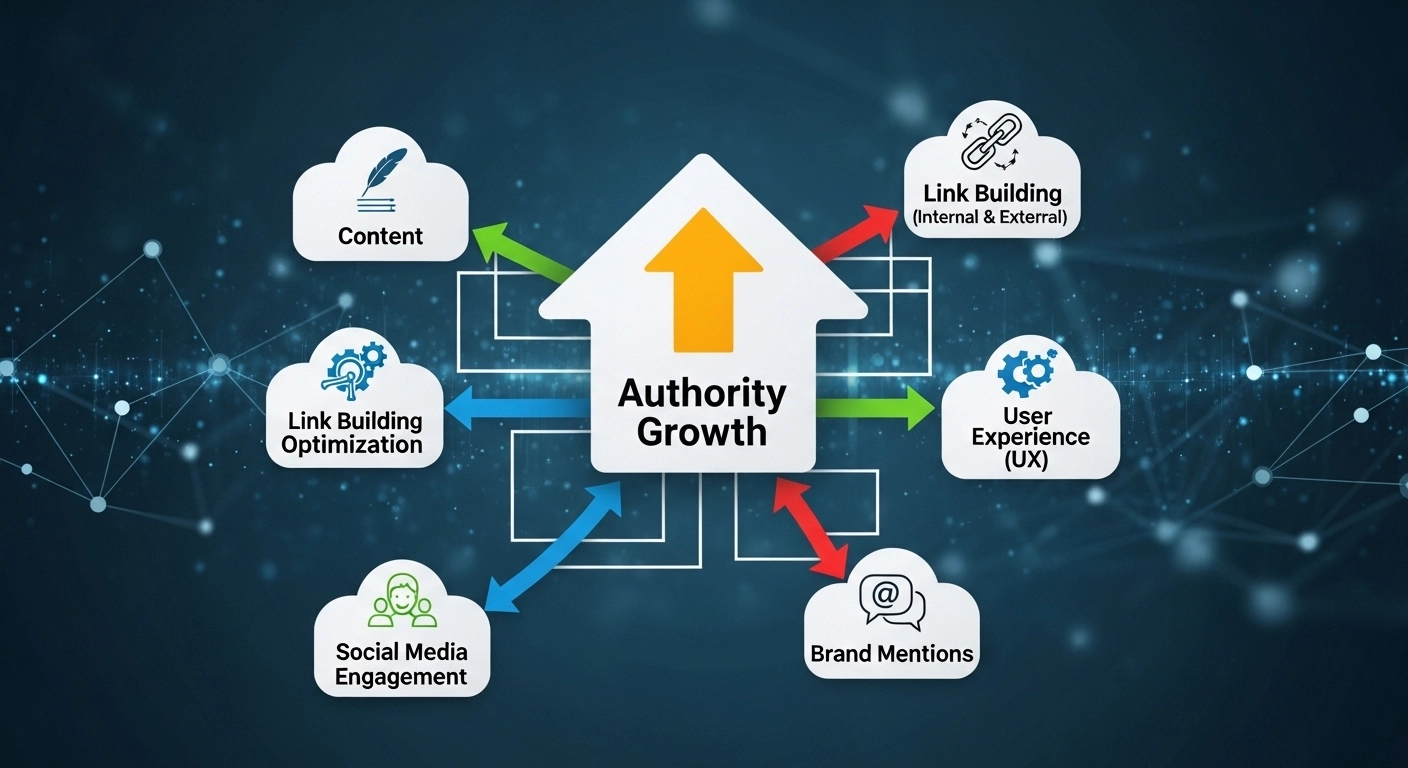
Search engines don’t just reward good content anymore. They reward trusted sources with proven expertise and consistency. That’s where a strong SEO authority building strategy comes in.
In this guide, you’ll learn exactly how to build real authority in Google’s eyes using practical, modern SEO methods—without fluff or outdated tricks.
What Is SEO Authority (And Why It Matters)?
SEO authority is how search engines measure the trustworthiness, expertise, and credibility of your website.
Think of it like reputation in real life:
- A random blog = unknown voice
- A trusted industry site = go-to expert
When your site builds authority, Google is more likely to:
- Rank your pages higher
- Index your content faster
- Trust your new posts more quickly
- Send you consistent organic traffic
In short: authority makes SEO easier and results more stable.
Core SEO Authority Building Strategy (Step-by-Step)
Let’s break down the most effective strategies used by high-ranking websites today.
1. Create Topical Authority, Not Random Content
One of the biggest mistakes websites make is publishing unrelated blog posts.
Instead, focus on topical clusters.
Example:
If your niche is digital marketing:
Instead of writing random topics like:
- “Email tips”
- “Logo design ideas”
- “Fitness marketing”
You build clusters like:
- SEO basics
- Keyword research
- On-page SEO
- Link building strategies
Then connect them through internal links.
This helps Google understand:
“This website is an expert in SEO.”
2. Publish Deep, Helpful, Problem-Solving Content
Thin content does not build authority anymore.
Your content must:
- Solve real problems
- Go deeper than competitors
- Include examples and steps
- Answer follow-up questions
Instead of writing:
“SEO authority is important”
Write:
“How to build SEO authority step-by-step with real examples and strategies”
Depth beats quantity every time.
3. Strengthen Internal Linking Structure
Internal linking is one of the most underrated SEO authority signals.
It helps:
- Distribute ranking power across pages
- Guide users through your content
- Show search engines your topic structure
Best practice:
- Link from high-traffic pages to new pages
- Use descriptive anchor text (not “click here”)
- Connect related blog posts naturally
A well-linked site looks like a knowledge map, not random articles.
4. Earn High-Quality Backlinks (Not Just Any Links)
Backlinks are still one of the strongest authority signals—but quality matters more than ever.
Focus on:
- Guest posting on relevant sites
- Digital PR mentions
- Industry collaborations
- Data-driven content people want to cite
Avoid:
- Spam directories
- Low-quality link farms
- Paid bulk backlinks
A single link from a trusted site is worth more than 100 weak ones.
5. Build E-E-A-T Signals (Experience, Expertise, Authority, Trust)
Google evaluates websites based on E-E-A-T.
Here’s how to improve it:
Show real expertise:
- Add author bios
- Mention real experience
- Use case studies
Build trust:
- Use HTTPS
- Add clear contact info
- Include transparent policies
Demonstrate authority:
- Get mentions from other websites
- Publish original insights or data
When users trust you, Google does too.
6. Improve Content Freshness and Updates
Old content loses authority over time if not maintained.
Update regularly:
- Statistics
- Examples
- Screenshots
- SEO practices
Refreshing content signals:
“This site is active and reliable.”
Even updating old posts can boost rankings faster than publishing new ones.
7. Optimize for User Experience (UX Signals Matter)
SEO authority is not just backlinks and keywords anymore.
Google also tracks how users behave on your site:
- Do they stay or leave quickly?
- Do they click deeper pages?
- Is the site easy to read on mobile?
Improve UX by:
- Using short paragraphs
- Clear headings
- Fast-loading pages
- Mobile-friendly design
A good experience builds trust naturally.
8. Build Brand Signals Beyond Your Website
Strong SEO authority is not only built on your site.
Google also looks at your brand presence:
- Mentions on social media
- Brand searches (people searching your name)
- Listings on trusted platforms
- Consistent branding across the web
The more your brand appears online, the more credible your site becomes.
Simple SEO Authority Checklist
Before publishing or optimizing content, ask:
- Is this part of a clear topic cluster?
- Does it solve a real user problem?
- Are internal links added properly?
- Does it show expertise and experience?
- Is it better than competing pages?
If the answer is yes to most of these, you’re building real authority.
FAQ: SEO Authority Building Strategy
1. How long does it take to build SEO authority?
Usually 3–6 months for early signals, but strong authority often takes 6–12 months depending on competition and consistency.
2. Do small websites can build authority?
Yes. Even new sites can rank if they focus on a specific niche and publish high-quality, focused content.
3. Are backlinks still important for SEO authority?
Yes, but quality matters more than quantity. Relevant, trusted backlinks have the biggest impact.
4. What is the fastest way to improve SEO authority?
Focus on:
- Topical clusters
- Internal linking
- Content depth
- Updating old posts
These give faster results than chasing backlinks alone.
Conclusion
Building SEO authority is not about shortcuts—it’s about consistency, structure, and trust.
When you combine:
- Strong topical focus
- High-quality content
- Smart internal linking
- Real backlinks
- Good user experience
You create a website that search engines naturally trust.
That’s when rankings become stable—and traffic becomes predictable.
