
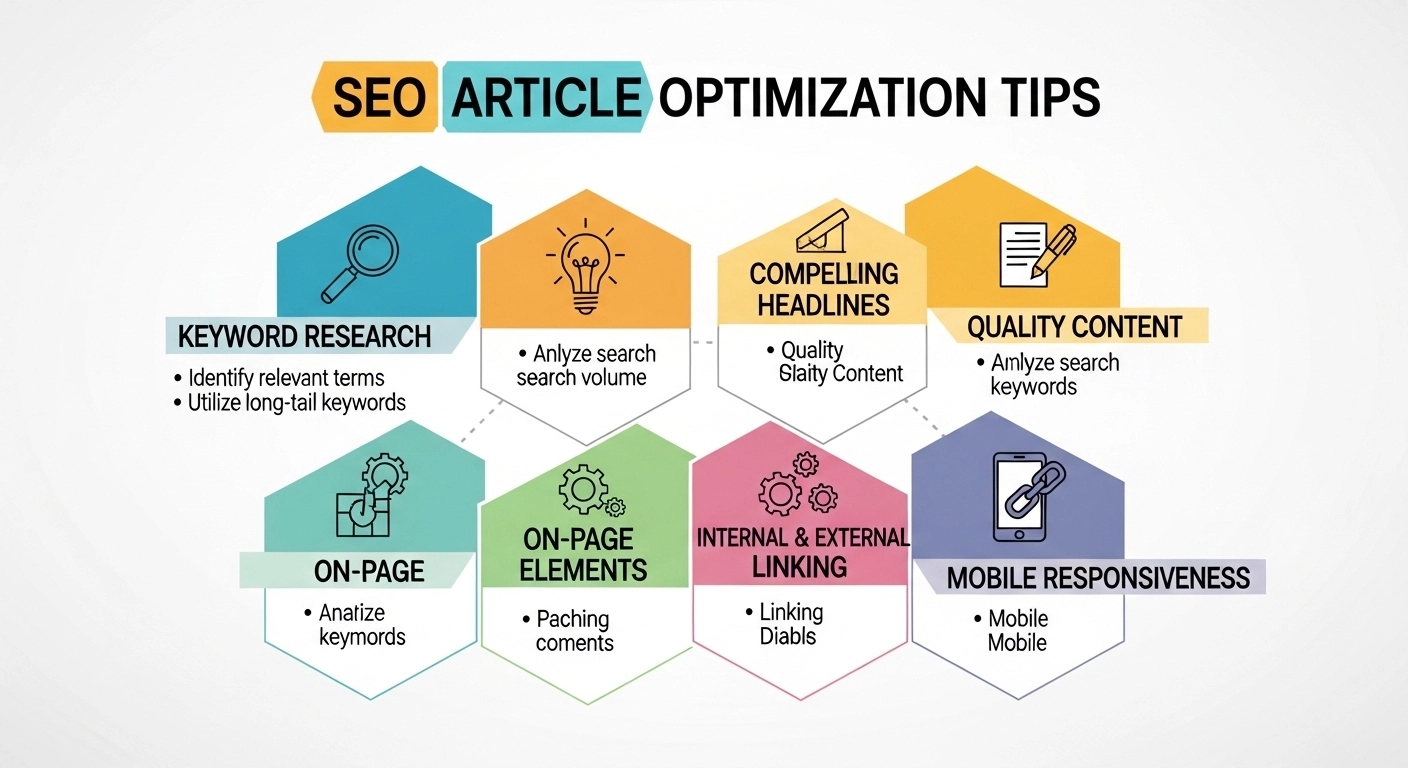
If you’re publishing content online, writing alone isn’t enough anymore. You also need to make sure your article is optimized for search engines and real people. That balance is what separates average content from high-ranking, traffic-driving articles.
In this guide, you’ll learn practical, easy-to-apply SEO article optimization tips that actually work in 2026—without stuffing keywords or writing robotic content.
Start With Search Intent (This Is Non-Negotiable)
Before writing a single word, ask: What does the reader actually want?
Search intent usually falls into four categories:
- Informational: “How to optimize SEO articles”
- Navigational: Looking for a specific site or brand
- Commercial: Comparing tools or services
- Transactional: Ready to take action (buy, sign up, hire)
For example, someone searching “SEO article optimization tips” wants clear strategies they can apply, not a vague definition of SEO.
👉 If your content doesn’t match intent, it won’t rank—no matter how well it’s written.
Do Smart Keyword Research (But Don’t Overdo It)
Good SEO starts with understanding how people search.
Instead of focusing only on one keyword, think in terms of topic clusters:
- SEO writing tips
- on-page SEO optimization
- content optimization techniques
- keyword placement strategy
- blog SEO checklist
These related terms help search engines understand your content depth.
Pro Tip:
Place your primary keyword naturally in:
- Title
- First 100 words
- One or two subheadings
- Conclusion
But never force it. Google is smarter than keyword stuffing.
Create a Clear, Scannable Structure
People don’t read online—they scan.
A well-structured SEO article should include:
- Short paragraphs (2–4 lines max)
- Clear headings (H2, H3)
- Bullet points where needed
- Logical flow from problem → solution
Example structure:
- Introduction (what and why)
- Key strategies
- Best practices
- Common mistakes
- FAQ
- Conclusion
This structure improves both user experience and time on page, which indirectly helps rankings.
Write Strong, Engaging Headlines
Your headings should do more than organize content—they should keep readers moving down the page.
Instead of:
- “Keyword Usage”
Try:
- “How to Use Keywords Without Overstuffing Your Content”
Instead of:
- “SEO Tips”
Try:
- “Proven SEO Article Optimization Tips That Actually Improve Rankings”
Good headlines are clear, specific, and benefit-driven.
Focus on On-Page SEO Elements
On-page optimization still matters a lot. Here’s what to get right:
1. Title Tag
Make it:
- Clear
- Keyword-rich (but natural)
- Under 60 characters if possible
2. Meta Description
Write a compelling summary that encourages clicks.
3. URL Structure
Keep it short and readable:
- example.com/seo-article-optimization-tips
4. Image Optimization
- Use descriptive file names
- Add alt text with context (not spam)
Improve Readability for Real Humans
If your content feels hard to read, users leave—and rankings drop.
Make it easy by:
- Using simple US English
- Writing short sentences
- Avoiding jargon unless explained
- Adding examples to clarify ideas
👉 A good rule: if a 10th grader can understand it, you’re on the right track.
Use Internal Linking Strategically
Internal links help search engines understand your site structure and keep users engaged longer.
Link to:
- Related blog posts
- Service pages
- Supporting guides
Example:
If you mention keyword research, link to your keyword strategy article.
This builds topical authority, which is a major ranking factor.
Add Real Value (Not Fluff)
Google prioritizes content that demonstrates:
- Experience
- Expertise
- Authority
- Trust (EEAT)
To strengthen your content:
- Share real examples
- Include actionable steps
- Avoid generic filler sentences
- Be specific, not vague
Instead of saying:
“SEO is important for rankings”
Say:
“Optimizing title tags and improving page speed can directly increase click-through rates and organic visibility.”
Common SEO Article Mistakes to Avoid
Even experienced writers make these mistakes:
- Overusing keywords unnaturally
- Writing for algorithms instead of humans
- Ignoring search intent
- Long, unbroken paragraphs
- Weak or missing headings
- No internal linking strategy
Fixing these alone can significantly improve rankings.
FAQ: SEO Article Optimization Tips
1. What is SEO article optimization?
It’s the process of improving your content so it ranks higher in search engines and attracts more organic traffic.
2. How long should an SEO article be?
There’s no fixed length, but most ranking articles are between 800–2000 words depending on topic depth.
3. How many keywords should I use?
Focus on 1 primary keyword and several related semantic keywords naturally throughout the content.
4. Does SEO writing still work in 2026?
Yes—but only if you focus on quality, user intent, and helpful content rather than keyword stuffing.
Conclusion
SEO article optimization isn’t about tricks—it’s about clarity, relevance, and usefulness. When you align your content with search intent, structure it properly, and write for real people, search engines naturally reward you.
The goal isn’t just to rank—it’s to keep readers engaged and turn traffic into results.
