
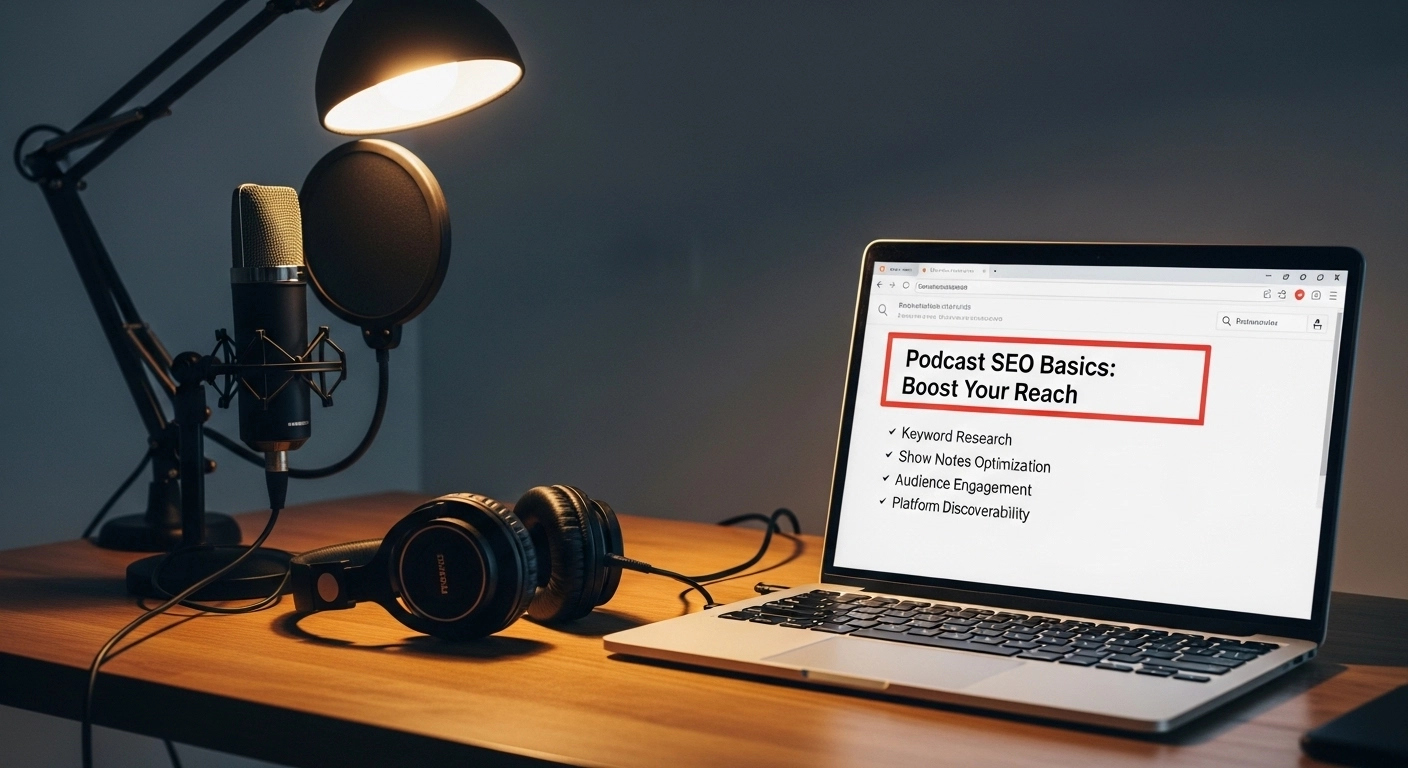
Podcasting is more competitive than ever. Great content alone isn’t enough anymore—people need to actually find your show. That’s where Podcast SEO (Search Engine Optimization) comes in.
Podcast SEO helps your episodes appear in Google results, podcast apps, and even YouTube searches. If done right, it turns your content into a long-term discovery engine instead of a one-time upload.
Here’s a clear, practical guide to the basics of podcast SEO and how to use it effectively.
What Is Podcast SEO?
Podcast SEO is the process of optimizing your podcast episodes so they rank higher in search results on platforms like:
- Apple Podcasts
- Spotify
- YouTube (if you repurpose episodes)
- Podcast directories
It includes optimizing your titles, descriptions, show notes, transcripts, and metadata so search engines understand what your content is about.
In simple terms:
👉 It helps the right audience find your podcast without paid ads.
Why Podcast SEO Matters
Most podcasts don’t grow because they rely only on platform algorithms or word-of-mouth.
SEO changes that.
With proper optimization, your episodes can:
- Show up in Google search results
- Attract long-term organic traffic
- Rank for niche topics (not just your podcast name)
- Bring new listeners months or even years later
Example:
A podcast episode titled “Beginner Home Workout Tips” can rank on Google when someone searches that exact phrase—bringing consistent traffic over time.
Step 1: Do Keyword Research for Podcasts
Just like blogs, podcasts need keywords.
Think about what your audience is already searching for:
- “how to start a podcast”
- “SEO tips for beginners”
- “best productivity habits”
- “fitness motivation at home”
Use these keywords naturally in:
- Episode titles
- Descriptions
- Show notes
💡 Tip: Focus on long-tail keywords (specific phrases). They’re easier to rank for and attract more targeted listeners.
Step 2: Optimize Your Podcast Title
Your episode title is one of the most important ranking factors.
Good podcast SEO titles are:
- Clear
- Searchable
- Benefit-focused
- Keyword-rich (but natural)
Example:
❌ Bad: Episode 12 – Let’s Talk SEO
✅ Good: Podcast SEO Basics: How to Grow Your Audience Organically
The second one tells both users and search engines exactly what the episode is about.
Step 3: Write SEO-Friendly Episode Descriptions
Your description should act like a mini blog post.
Include:
- Primary keyword (naturally)
- Key topics covered
- Value for the listener
Example:
“This episode covers podcast SEO basics including keyword research, optimizing titles, writing show notes, and improving discoverability on Spotify and Google.”
Keep it readable, not stuffed.
Step 4: Use Detailed Show Notes
Show notes are often overlooked—but they’re powerful for SEO.
They should include:
- Episode summary
- Key points or timestamps
- Links mentioned in the episode
- Keywords naturally placed in sentences
Think of show notes as a supporting blog article for each episode.
Step 5: Add Full Transcripts
Transcripts are one of the strongest SEO tools for podcasts.
Why?
Because search engines can’t “listen” to audio—but they can read text.
Benefits of transcripts:
- Improves Google indexing
- Increases keyword coverage
- Makes content accessible
- Boosts time on page
You can publish transcripts on your website under each episode.
Step 6: Optimize Your Podcast Website
If you have a podcast website, treat it like a blog.
Make sure:
- Each episode has its own page
- URLs are clean (e.g., /podcast-seo-basics)
- Titles and meta descriptions are optimized
- Internal links connect episodes
Also consider adding Podcast structured data (schema markup) so Google understands your content better.
Step 7: Repurpose for Extra SEO Reach
Don’t limit your podcast to audio platforms.
Repurpose it into:
- YouTube videos
- Blog posts
- Social media clips
- LinkedIn articles
This creates multiple entry points for search traffic.
Example:
A single podcast episode can rank on both Google and YouTube if optimized properly.
Common Podcast SEO Mistakes
Avoid these if you want real growth:
- Using vague episode titles
- Skipping transcripts
- Ignoring keywords completely
- Not publishing show notes
- Relying only on Spotify or Apple search
Simple Podcast SEO Checklist
Before publishing each episode, check:
- ✔ Keyword selected
- ✔ SEO-friendly title written
- ✔ Description optimized
- ✔ Show notes added
- ✔ Transcript published
- ✔ Episode page created (if applicable)
FAQ: Podcast SEO Basics
1. Is SEO important for podcasts?
Yes. It helps your episodes appear in Google and podcast app searches, increasing organic listeners.
2. How long does podcast SEO take to work?
Usually a few weeks to a few months, depending on competition and consistency.
3. Do podcasts rank on Google?
Yes, especially if you publish transcripts, show notes, and optimized episode pages.
4. What is the most important SEO factor for podcasts?
Titles and transcripts are the most impactful for discoverability.
Conclusion
Podcast SEO is not complicated, but it is powerful. Small improvements—like better titles, keyword-focused descriptions, and transcripts—can significantly increase your reach over time.
Instead of relying only on platform algorithms, SEO gives your podcast long-term visibility across search engines.
If you want your podcast to grow steadily and attract the right audience, SEO is not optional—it’s essential.
