
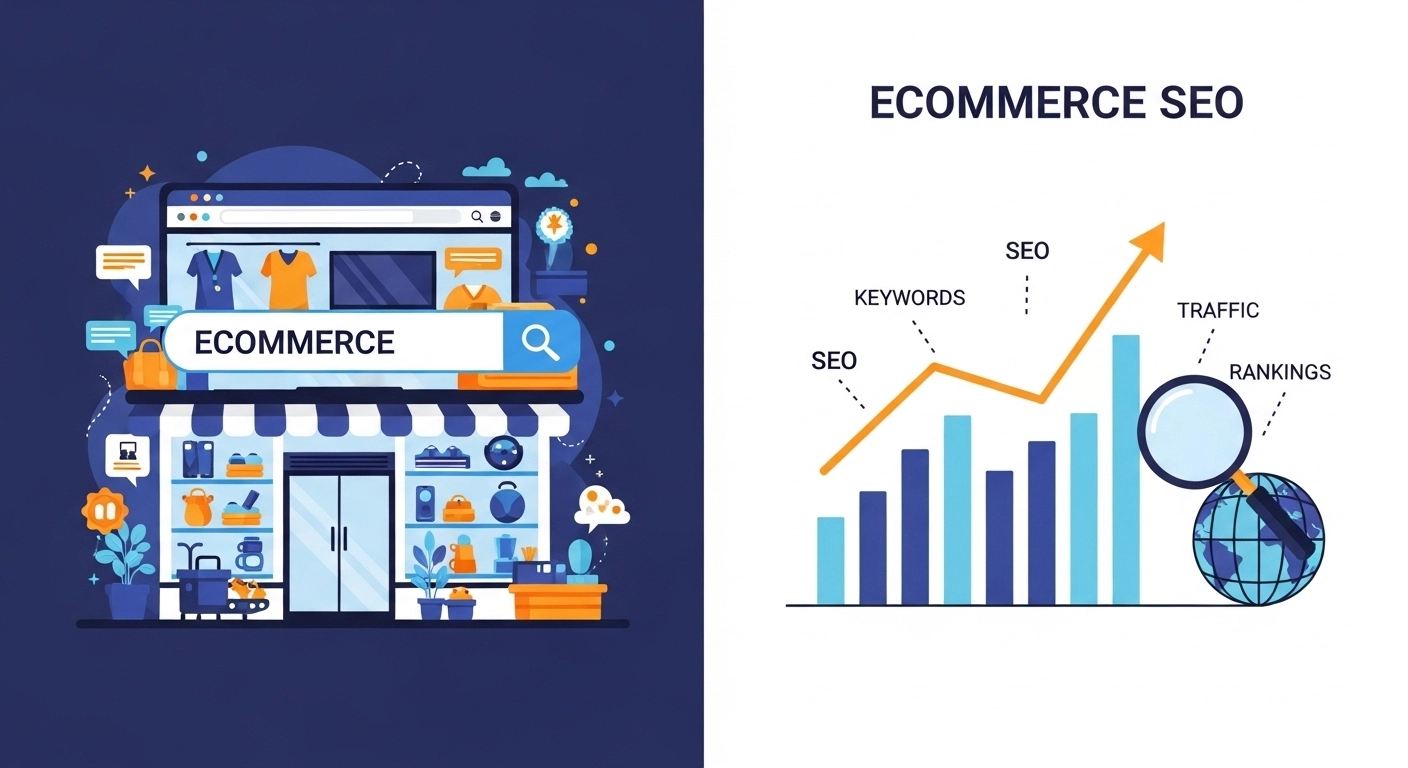
Running an online store is easier than ever, but getting customers to find your products is a completely different challenge. With millions of products competing in search results, simply launching an online store does not guarantee traffic or sales.
This is where eCommerce SEO becomes essential.
eCommerce SEO is the process of optimizing an online store to rank higher in search engines like Google, attract qualified shoppers, and convert visitors into customers. When implemented correctly, it can dramatically increase organic traffic, product visibility, and online revenue.
Unlike traditional SEO, eCommerce SEO strategies focus heavily on product pages, category structures, technical performance, and buyer-focused keywords. Search engines must clearly understand what your products are, why they are valuable, and why your store should rank above competitors.
In this complete guide, you’ll learn modern eCommerce SEO strategies designed for Google’s current algorithms, semantic search, voice search, and AI-driven search engines. Whether you run a small Shopify store or a large online marketplace, these strategies will help you build sustainable search visibility and grow your online business.
What Is eCommerce SEO and Why It Matters
eCommerce SEO refers to optimizing an online store so that product and category pages rank higher in search engine results.
The goal is simple: increase organic traffic and drive more product sales without relying entirely on paid advertising.
Key Benefits of eCommerce SEO
A well-optimized online store can achieve:
- Higher rankings for product keywords
- Increased organic traffic
- Better product discoverability
- Lower customer acquisition costs
- Improved user experience
- Higher conversion rates
Unlike paid ads that stop when the budget ends, SEO provides long-term traffic growth.
How eCommerce SEO Works
Search engines evaluate multiple factors to determine which online stores rank highest.
Important ranking signals include:
- Keyword relevance
- Website structure
- Product page optimization
- Backlink authority
- Technical SEO performance
- User experience signals
A successful eCommerce SEO strategy integrates all of these factors.
Keyword Research for eCommerce SEO
Keyword research is the foundation of every successful SEO campaign.
For eCommerce stores, keywords must match buyer intent, not just informational queries.
H3: Understanding Search Intent for Product Keywords
Search intent determines whether users are ready to buy, compare products, or simply research.
Main types of eCommerce search intent
- Transactional keywords – “buy running shoes online”
- Commercial keywords – “best laptops under $1000”
- Navigational keywords – “Nike official store”
- Informational keywords – “how to choose running shoes”
Transactional and commercial keywords are most valuable for online stores.
H3: Long-Tail Keywords for Product Pages
Long-tail keywords often convert better than broad keywords.
Examples:
- best wireless headphones for gaming
- affordable office chairs for back pain
- waterproof hiking boots for women
These keywords bring high-intent shoppers who are closer to making a purchase.
H3: Tools for eCommerce Keyword Research
Popular tools include:
- Google Keyword Planner
- Ahrefs
- SEMrush
- Ubersuggest
- Google Search Console
These tools reveal search volume, keyword difficulty, and competitor rankings.
Optimizing Product Pages for SEO
Product pages are the heart of any eCommerce website.
Each product page should be optimized to rank independently in search engines.
H3: Writing SEO-Friendly Product Titles
Product titles must clearly describe the product and include the target keyword.
Example:
Bad:
Wireless Headphones
Better:
Noise Cancelling Wireless Bluetooth Headphones
H3: Optimizing Product Descriptions
Search engines prefer unique product descriptions rather than manufacturer content.
H4 Best Practices for Product Descriptions
- Write original content
- Include target keywords naturally
- Highlight product benefits
- Use bullet points for features
- Answer buyer questions
Well-written descriptions also improve conversion rates.
H3: Optimizing Product Images
Images play a huge role in eCommerce SEO.
H4 Image SEO Checklist
- Use descriptive file names
- Add keyword-rich alt text
- Compress images for faster loading
- Use high-quality product visuals
Optimized images can also rank in Google Image Search, bringing additional traffic.
Category Page Optimization
Category pages are powerful SEO assets because they target broader product keywords.
For example:
- Running shoes
- Gaming laptops
- Office chairs
These pages often attract large amounts of search traffic.
H3: Creating SEO-Optimized Category Content
Each category page should include:
- A short introduction
- Keyword-rich headings
- Internal links to products
- Helpful buying guides
This improves semantic relevance and search rankings.
H3: Optimizing Category URLs
Clean URLs improve SEO and user experience.
Example:
Good URL structure:
example.com/running-shoes
Poor structure:
example.com/category?id=1234
Technical SEO for eCommerce Websites
Technical SEO ensures that search engines can crawl, index, and rank your store efficiently.
H3: Site Speed Optimization
Page speed is critical for both rankings and conversions.
Slow websites lead to:
- Higher bounce rates
- Lower rankings
- Poor user experience
H4 Ways to Improve Site Speed
- Optimize images
- Use caching
- Reduce unnecessary scripts
- Use a fast hosting provider
- Implement a CDN
H3: Mobile Optimization
More than half of online shopping happens on mobile devices.
Google uses mobile-first indexing, meaning your mobile site determines your rankings.
Ensure your store has:
- Responsive design
- Fast mobile loading
- Easy navigation
- Mobile-friendly checkout
H3: Fixing Duplicate Content Issues
Many eCommerce websites suffer from duplicate content due to:
- Product variations
- Filtered URLs
- Multiple category paths
Using canonical tags helps search engines identify the correct page.
Internal Linking for eCommerce SEO
Internal links help distribute authority across your website.
They also help search engines understand your site structure.
H3: Smart Internal Linking Strategies
Effective strategies include:
- Linking from blog posts to product pages
- Linking category pages to related categories
- Creating product recommendation sections
Example:
Related products and “customers also bought” sections improve both SEO and conversions.
Content Marketing for eCommerce SEO
Content marketing is one of the most powerful ways to increase traffic.
Blogs attract informational searches and guide users toward products.
H3: Blog Content Ideas for Online Stores
Examples include:
- Product comparison guides
- Buying guides
- How-to tutorials
- Product reviews
- Industry trends
Example:
“Best Running Shoes for Beginners”
These articles attract search traffic and direct readers to product pages.
Link Building for eCommerce SEO
Backlinks remain a strong ranking factor.
Quality links signal authority and trust to search engines.
H3: Effective eCommerce Link Building Strategies
- Guest blogging
- Influencer collaborations
- Digital PR campaigns
- Product reviews from bloggers
- Industry directories
The focus should always be on high-quality, relevant backlinks.
eCommerce SEO for Voice Search
Voice search is growing rapidly with smart assistants.
Voice queries tend to be longer and conversational.
Examples:
- “What are the best running shoes for beginners?”
- “Where can I buy affordable wireless headphones?”
Optimizing content for natural language queries helps capture voice traffic.
Common eCommerce SEO Mistakes
Many online stores struggle with SEO because of avoidable mistakes.
Common issues include:
- Duplicate product descriptions
- Poor site structure
- Thin category pages
- Slow website speed
- Weak internal linking
Fixing these problems can dramatically improve rankings.
FAQ: eCommerce SEO
What is eCommerce SEO?
eCommerce SEO is the process of optimizing online stores to rank higher in search engines and attract organic traffic that converts into sales.
How long does eCommerce SEO take to work?
Most stores begin seeing results within 3–6 months, depending on competition, site authority, and optimization quality.
What are the most important ranking factors for eCommerce SEO?
Key ranking factors include:
- Keyword optimization
- High-quality product pages
- Backlinks
- Site speed
- Mobile optimization
Is eCommerce SEO better than paid ads?
Both strategies are valuable. SEO provides long-term traffic, while paid ads deliver immediate visibility.
Do product descriptions affect SEO?
Yes. Unique, keyword-optimized product descriptions help search engines understand your products and improve rankings.
What platform is best for eCommerce SEO?
Popular SEO-friendly platforms include:
- Shopify
- WooCommerce
- Magento
- BigCommerce
Each platform offers different SEO capabilities.
How many keywords should a product page target?
Ideally one primary keyword and several related long-tail keywords.
Conclusion
In today’s competitive digital marketplace, eCommerce SEO is essential for online success.
Without proper optimization, even the best products may remain invisible in search results.
A successful eCommerce SEO strategy includes:
- Strategic keyword research
- Optimized product pages
- Strong category page structure
- Technical SEO improvements
- Content marketing
- High-quality backlinks
By implementing these strategies, online stores can build sustainable organic traffic, improve search visibility, and increase sales.
SEO is not a one-time effort—it is an ongoing process that evolves with search engine algorithms and customer behavior.
Businesses that invest in strong SEO today will gain a powerful competitive advantage tomorrow.
