
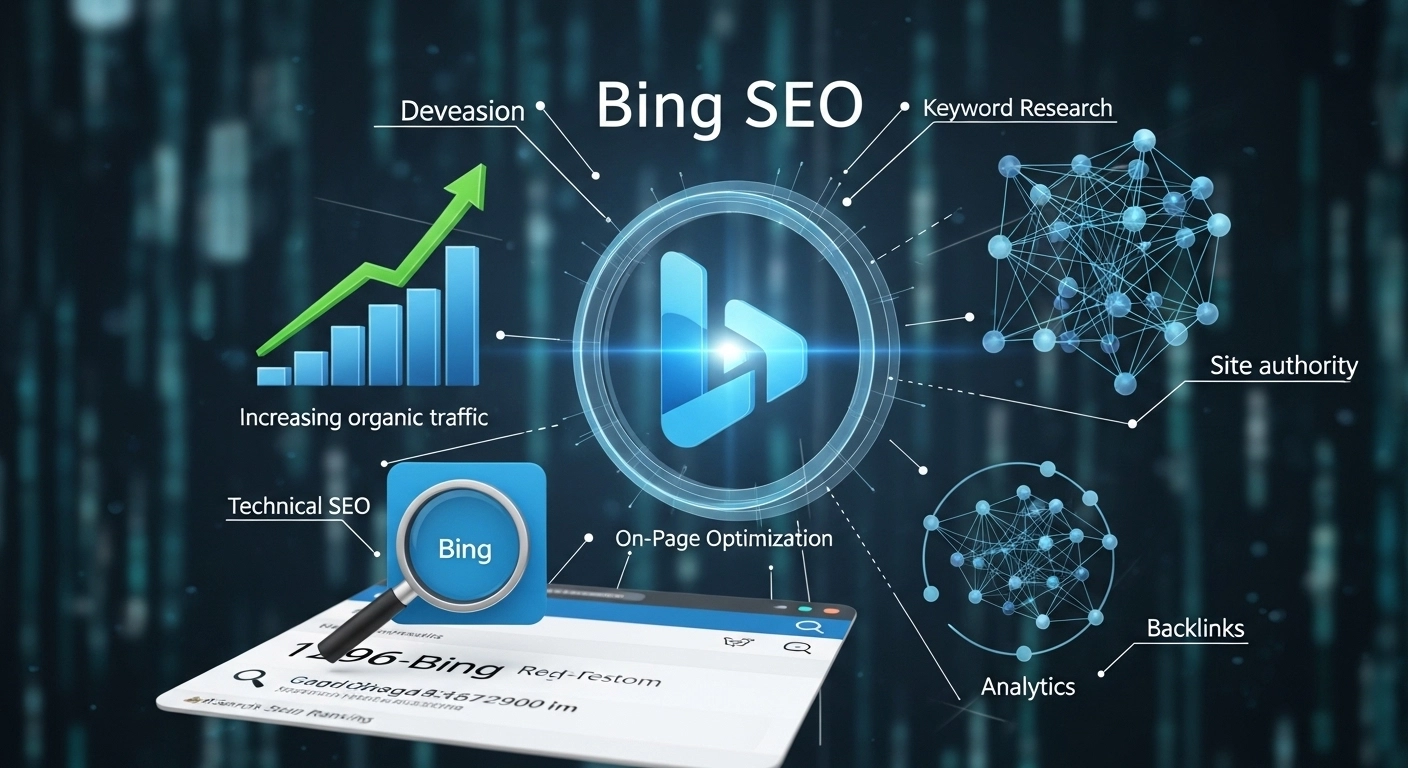
While Google dominates search, Bing SEO remains an untapped opportunity for many businesses. With over 1 billion searches per month, Bing powers Microsoft products, voice search via Cortana, and even AI-driven search experiences like ChatGPT integration.
Optimizing for Bing is not just about keywords—it’s about understanding its ranking signals, search intent, semantic relevance, and AI-driven results. Businesses that neglect Bing miss out on highly qualified traffic that is often less competitive and more conversion-focused.
In this guide, we’ll explore Bing SEO strategies, from keyword research to content optimization, structured data, voice search, and AI search readiness, helping you dominate both Bing and emerging AI-powered search engines.
Why Bing SEO Matters for Businesses
H3: Less Competition, Higher Opportunities
Many marketers focus exclusively on Google. Optimizing for Bing allows businesses to capture traffic that is easier to rank for, often at lower cost than Google search.
H3: Strong Integration with Microsoft Ecosystem
Bing powers Microsoft Edge, Cortana, and LinkedIn, giving businesses unique opportunities to reach audiences across platforms.
H3: AI and Voice Search Optimization
Bing integrates AI-driven search answers, making semantic SEO and NLP keyword optimization essential for ranking in AI-generated responses.
Bing SEO Ranking Factors
Understanding how Bing ranks content is crucial to outperform competitors.
H3: On-Page Optimization
- Include primary and semantic keywords naturally in titles, headings, and meta descriptions
- Optimize URL structure and internal linking
- Use clear H1 and H2 hierarchies
H3: Backlink Quality and Authority
Bing prioritizes high-authority backlinks, especially from relevant domains.
H3: User Engagement Signals
Click-through rate, dwell time, and low bounce rates influence Bing rankings.
H3: Technical SEO
- Mobile responsiveness
- Fast page load speed
- Secure HTTPS protocol
H4: Actionable Technical Checklist
- Audit website for broken links and errors using Bing Webmaster Tools
- Ensure all pages are indexed correctly
- Submit XML sitemaps and robots.txt for Bing
- Optimize images with alt text and descriptive filenames
Keyword Research for Bing SEO
H3: Focus on Long-Tail Keywords
Bing favors long-tail, conversational queries that match search intent, especially for voice search.
H3: Leverage Semantic Keywords
Use related terms and synonyms to improve relevance in Bing’s semantic understanding.
H4: Example Approach
If targeting “Bing SEO services”:
- Semantic variations: Bing optimization, Microsoft search ranking, Bing organic traffic
- NLP-friendly phrases: “How to rank higher on Bing search”
H3: Tools for Bing Keyword Research
- Bing Webmaster Tools Keyword Research
- SEMrush (Bing-specific filters)
- AnswerThePublic for voice search phrases
Content Optimization for Bing
H3: Craft High-Authority, Semantic Content
Bing values authoritative content that satisfies user intent.
- Include LSI keywords and semantic terms
- Use structured headings
- Provide clear, concise, actionable answers
H3: Optimize Meta Tags
- Title: ≤ 60 characters, primary keyword first
- Meta description: ≤ 160 characters, compelling and actionable
- Alt tags: descriptive and keyword-optimized
H4: Actionable Content Tips
- Answer common user questions in your niche
- Include relevant multimedia (images, videos)
- Use bullet points and numbered lists for readability
Structured Data and Rich Snippets
H3: Leverage Schema Markup
Bing supports structured data for FAQs, recipes, products, and articles, which improves click-through rates and eligibility for rich results.
H3: Featured Snippets on Bing
Providing direct answers to queries increases chances of being highlighted in Bing’s AI and featured snippet results.
H4: Implementation Steps
- Use JSON-LD for schema markup
- Test pages in Bing Markup Validator
- Monitor performance in Bing Webmaster Tools
Voice Search and AI Optimization
H3: Target Conversational Queries
With Cortana and AI search integration, Bing SEO should include natural language queries:
- “What is the best Bing SEO strategy for small businesses?”
- “How do I optimize my website for Microsoft search?”
H3: Optimize for AI-Powered Results
- Answer questions clearly and concisely
- Include structured data for better AI comprehension
- Ensure content is up-to-date and authoritative
Link Building for Bing SEO
H3: Quality Over Quantity
Bing emphasizes authoritative and relevant backlinks over sheer volume.
H3: Strategies to Build Links
- Guest posts on high-authority sites
- Partnerships with relevant industry websites
- Create shareable guides and infographics
H4: Link Audit Tips
- Identify broken or low-quality links
- Disavow spammy links
- Focus on natural, contextual linking
Local Bing SEO
H3: Optimize for Bing Places
Claim and optimize Bing Places for Business to improve local rankings.
H3: Local Keyword Integration
- Include location in titles, meta descriptions, and headings
- Encourage reviews and manage NAP consistency (Name, Address, Phone)
Bing SEO Tools
- Bing Webmaster Tools – Indexing, keyword insights, and site diagnostics
- SEMRush – Bing keyword tracking
- Ahrefs – Backlink monitoring for Bing
- Screaming Frog – Technical SEO audits
FAQ: Bing SEO
1. What is Bing SEO?
Bing SEO is the process of optimizing your website to rank higher on Bing search results, including Microsoft search products.
2. How is Bing SEO different from Google SEO?
Bing places more emphasis on on-page optimization, semantic content, user engagement, and authoritative backlinks than Google.
3. Does Bing SEO include AI optimization?
Yes. Optimizing for voice search, AI-powered snippets, and structured data is essential for Bing SEO.
4. How can I improve my Bing rankings quickly?
Focus on on-page optimization, high-quality backlinks, structured data, and semantic keyword integration.
5. Does Bing support schema markup?
Absolutely. Bing supports JSON-LD structured data for articles, FAQs, products, and rich snippets.
6. Is local SEO important for Bing?
Yes. Bing Places and location-specific keywords help businesses dominate local search results.
Conclusion
Bing SEO is a strategic opportunity for businesses to capture qualified traffic with less competition than Google. By focusing on semantic SEO, structured data, AI readiness, voice search, and authoritative content, companies can gain a competitive advantage and drive measurable results.
Optimizing for Bing ensures your website is prepared for both traditional search and emerging AI-driven platforms, securing long-term visibility, traffic, and conversions.
Start implementing these strategies today to maximize your Bing presence and dominate search results.
Meta Description:
Boost visibility with expert Bing SEO strategies. Learn tips, tools, and best practices to rank higher, drive traffic, and optimize for AI search engines.
