
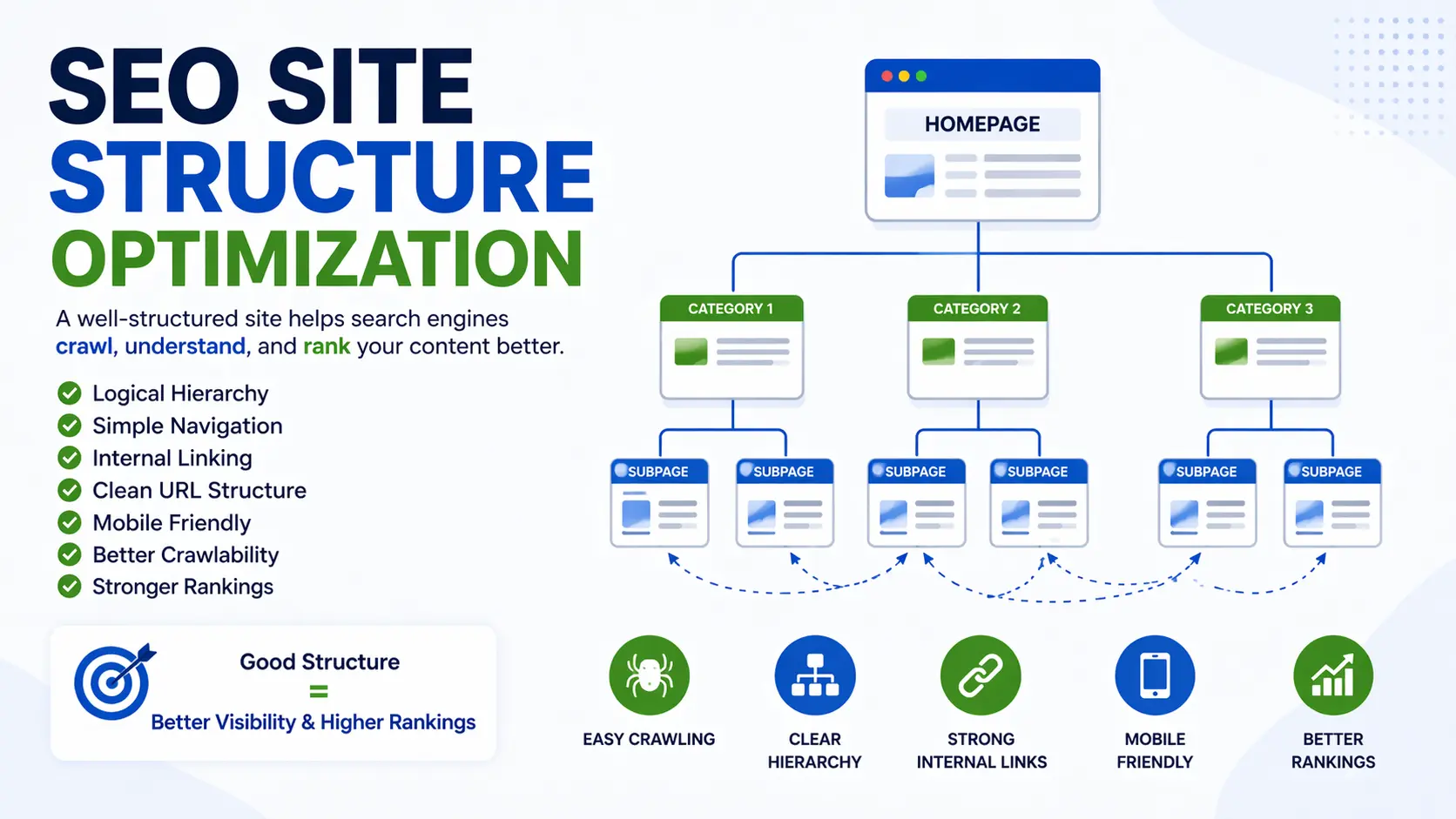
A well-optimized site structure is the backbone of strong SEO. It helps search engines crawl your content efficiently and makes it easier for users to find exactly what they need. When your structure is clear, logical, and scalable, rankings improve—and so does user experience.
In this guide, you’ll learn how to optimize your site structure for better visibility, higher rankings, and more conversions.
What Is SEO Site Structure Optimization?
SEO site structure optimization is the process of organizing your website’s pages in a way that improves crawling, indexing, and usability. It’s about how your content is grouped, linked, and presented.
A strong structure ensures:
- Search engines understand your content hierarchy
- Users can navigate easily
- Link equity flows efficiently across pages
Why Site Structure Matters for SEO
Without a clear structure, even great content can struggle to rank. Here’s why it’s critical:
1. Better Crawlability
Search engines rely on links to discover pages. A clean structure ensures all important pages are easily accessible.
2. Improved User Experience
Visitors stay longer when they can quickly find what they need. This reduces bounce rate and increases engagement.
3. Stronger Rankings
A logical structure helps distribute authority across your site, boosting key pages.
4. Faster Indexing
Organized websites get indexed more efficiently, helping new content rank faster.
The Ideal Website Structure (Simple and Scalable)
Think of your site like a pyramid:
- Homepage (top level)
- Category pages (main topics)
- Subcategory pages (optional)
- Individual content pages (blogs, products, services)
Example:
- Homepage
→ SEO Services
→ On-Page SEO
→ Technical SEO
→ Blog
→ SEO Tips
→ Keyword Research
This structure keeps everything organized and easy to navigate.
Key Elements of SEO Site Structure Optimization
1. Logical URL Structure
Keep URLs short, descriptive, and keyword-rich.
Good example:
- /seo/site-structure-optimization
Bad example:
- /page?id=12345
Clean URLs help both users and search engines understand your content.
2. Clear Navigation Menu
Your main menu should highlight your most important pages.
Tips:
- Keep it simple (5–7 main items)
- Use clear labels (no jargon)
- Ensure every page is reachable within 3 clicks
3. Internal Linking Strategy
Internal links connect your pages and pass SEO value.
Best practices:
- Link from high-authority pages to important pages
- Use descriptive anchor text
- Avoid over-linking
Example:
A blog post about keyword research should link to your SEO services page.
4. Topic Clusters and Content Silos
Group related content around a main topic.
- Pillar page → covers a broad topic
- Cluster content → covers subtopics
This builds topical authority and improves rankings.
5. XML Sitemap
An XML sitemap helps search engines discover your pages faster.
Include:
- All important pages
- Updated content
Submit it in Google Search Console for better indexing.
6. Breadcrumb Navigation
Breadcrumbs show users where they are on your site.
Example:
Home > Blog > SEO > Site Structure
Benefits:
- Improves navigation
- Enhances user experience
- Helps search engines understand hierarchy
7. Mobile-Friendly Structure
Most users browse on mobile devices.
Ensure:
- Fast loading speed
- Easy navigation on small screens
- Clickable elements are well-spaced
Common Site Structure Mistakes to Avoid
- Orphan pages (no internal links)
- Too many categories or cluttered navigation
- Deep page hierarchy (more than 3–4 clicks)
- Duplicate content across multiple URLs
- Ignoring internal linking
Practical Example: Optimizing a Blog Structure
Let’s say you run an SEO blog.
Instead of random posts, organize like this:
- Blog
→ SEO Basics
→ Technical SEO
→ Content SEO
→ Link Building
Each category contains related articles and links back to a pillar page.
Result:
- Better rankings
- Higher engagement
- Easier navigation
Simple FAQ
What is the best site structure for SEO?
A flat, organized structure where important pages are accessible within 3 clicks from the homepage.
How many levels should a website have?
Ideally 2–4 levels. Too deep structures make crawling harder.
Do internal links really help SEO?
Yes. They pass authority and help search engines understand page relationships.
How often should I update my site structure?
Review it every 3–6 months, especially as your content grows.
Final Thoughts
SEO site structure optimization isn’t just a technical task—it’s a strategic advantage. A well-organized site improves rankings, enhances user experience, and makes your content more discoverable.
Start simple, stay consistent, and build with scalability in mind.
