
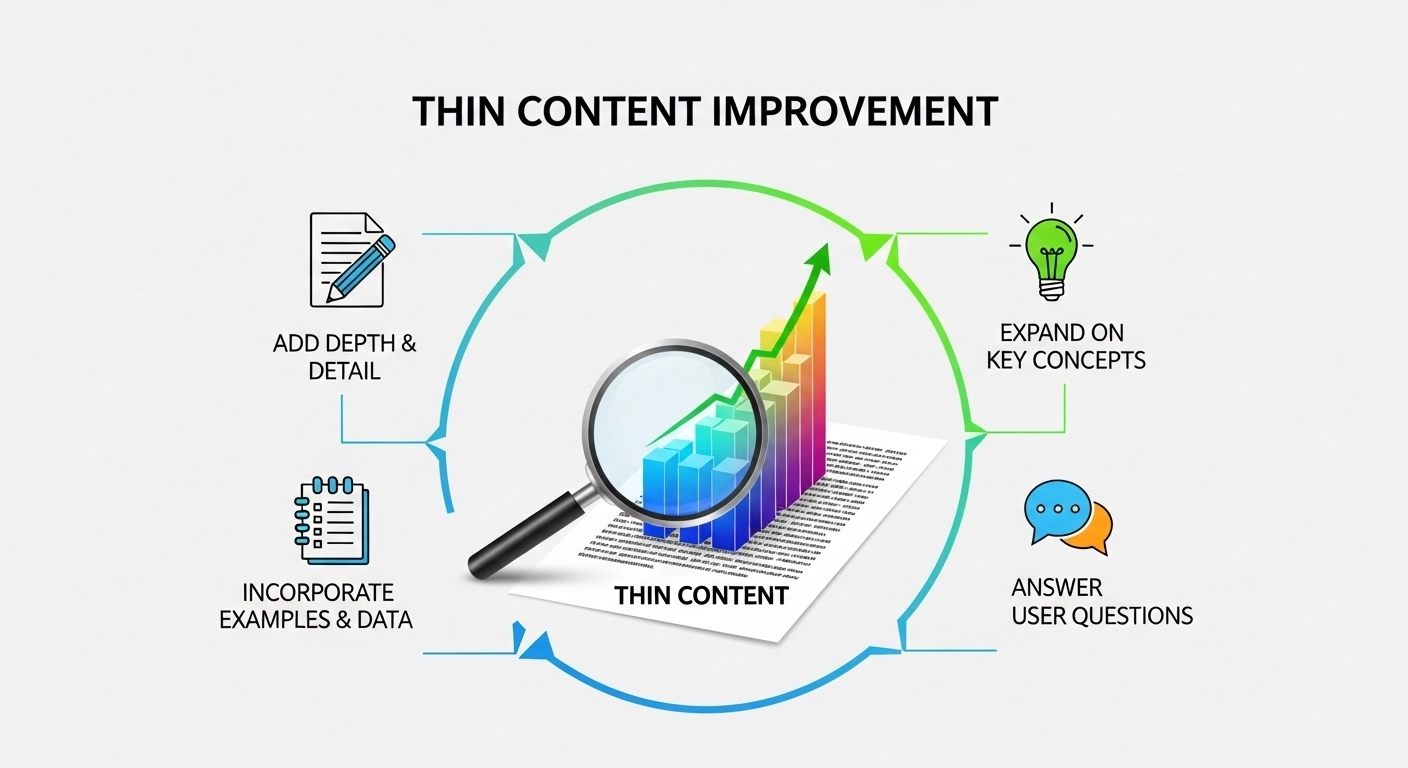
If your pages aren’t ranking—or worse, they’ve dropped—thin content could be the reason. Search engines reward depth, usefulness, and clarity. Thin content does the opposite: it offers little value, answers questions poorly, and leaves users unsatisfied.
This guide shows you how to identify thin content and turn it into high-performing pages that rank, convert, and actually help people.
What Is Thin Content?
Thin content is any page that lacks substance or fails to satisfy search intent. It might be:
- Very short with little useful information
- Repetitive or copied from other sources
- Overloaded with ads or affiliate links
- Missing clear structure or purpose
Google doesn’t penalize thin content directly—but it simply won’t rank it well.
Why Thin Content Hurts SEO
Thin pages create three big problems:
1. Poor user experience
Visitors don’t find what they need, so they leave quickly.
2. Low topical authority
Your site looks shallow compared to competitors with in-depth content.
3. Crawl waste
Search engines spend time on low-value pages instead of your best ones.
How to Identify Thin Content
Start with a quick audit. Look for pages that:
- Have low word count (under ~300–500 words)
- Get little or no organic traffic
- Have high bounce rates
- Target weak or unclear keywords
- Duplicate other pages on your site
Tip: Use tools like Google Search Console or analytics to find underperforming URLs.
Step-by-Step Thin Content Improvement
1. Match Search Intent First
Before adding more words, ask:
What is the user actually looking for?
For example:
- “Thin content improvement” → user wants actionable SEO fixes
- “Best SEO tools” → user wants comparisons and recommendations
Fixing intent alone can dramatically improve rankings.
2. Expand with Real Value (Not Just Length)
Don’t just add fluff. Add useful depth, such as:
- Step-by-step instructions
- Real examples
- Case studies
- Screenshots or visuals
- Expert insights
Bad:
“SEO is important for websites.”
Better:
“SEO helps your pages rank higher in search results, increasing organic traffic without paid ads.”
3. Improve Content Structure
Make your content easy to scan:
- Use clear headings (H2, H3)
- Keep paragraphs short (2–3 lines)
- Add bullet points where helpful
- Highlight key takeaways
Readable content performs better—both for users and search engines.
4. Add Semantic Keywords
Search engines understand topics, not just keywords.
Include related terms like:
- content quality
- search intent
- on-page SEO
- content optimization
- user engagement
This helps your page rank for multiple queries naturally.
5. Fix Duplicate & Cannibalized Pages
If multiple pages target the same keyword:
- Merge them into one strong page
- Redirect the weaker URLs
- Keep only the best version
This strengthens your authority instead of splitting it.
6. Add Internal Links
Link your improved page to:
- Related blog posts
- Service pages
- Pillar content
This helps users explore your site and improves SEO signals.
7. Update Regularly
Content freshness matters. Update your pages with:
- New data
- Updated examples
- Better formatting
A refreshed page often ranks higher than an outdated one.
Quick Example: Before vs After
Before (Thin Content):
A 200-word article explaining what SEO is in general terms.
After (Improved Content):
A 1,200-word guide covering:
- What SEO is
- How it works
- Step-by-step beginner strategy
- Tools and examples
- FAQs
The second version satisfies intent and keeps users engaged longer.
Thin Content Improvement Checklist
Use this before publishing or updating any page:
- Does it fully answer the user’s question?
- Is it better than competing pages?
- Is it easy to read and scan?
- Does it include examples or actionable steps?
- Is it unique and original?
If you can’t confidently say “yes” to all, it needs improvement.
FAQ: Thin Content Improvement
Q1: How long should content be to avoid being thin?
There’s no exact number, but most ranking pages are 800–2,000+ words depending on the topic. Focus on completeness, not word count.
Q2: Can I fix thin content without rewriting everything?
Yes. You can expand sections, add examples, improve structure, and update information instead of starting from scratch.
Q3: Should I delete thin content pages?
If they have no value, delete or redirect them. If they have potential, improve them instead.
Q4: Does AI content count as thin content?
Not necessarily. AI content becomes thin when it lacks depth, originality, or usefulness.
Conclusion: Turn Weak Pages into SEO Assets
Thin content isn’t just a ranking problem—it’s a missed opportunity.
By improving your pages with real value, better structure, and clear intent, you can transform underperforming content into traffic-driving assets.
