
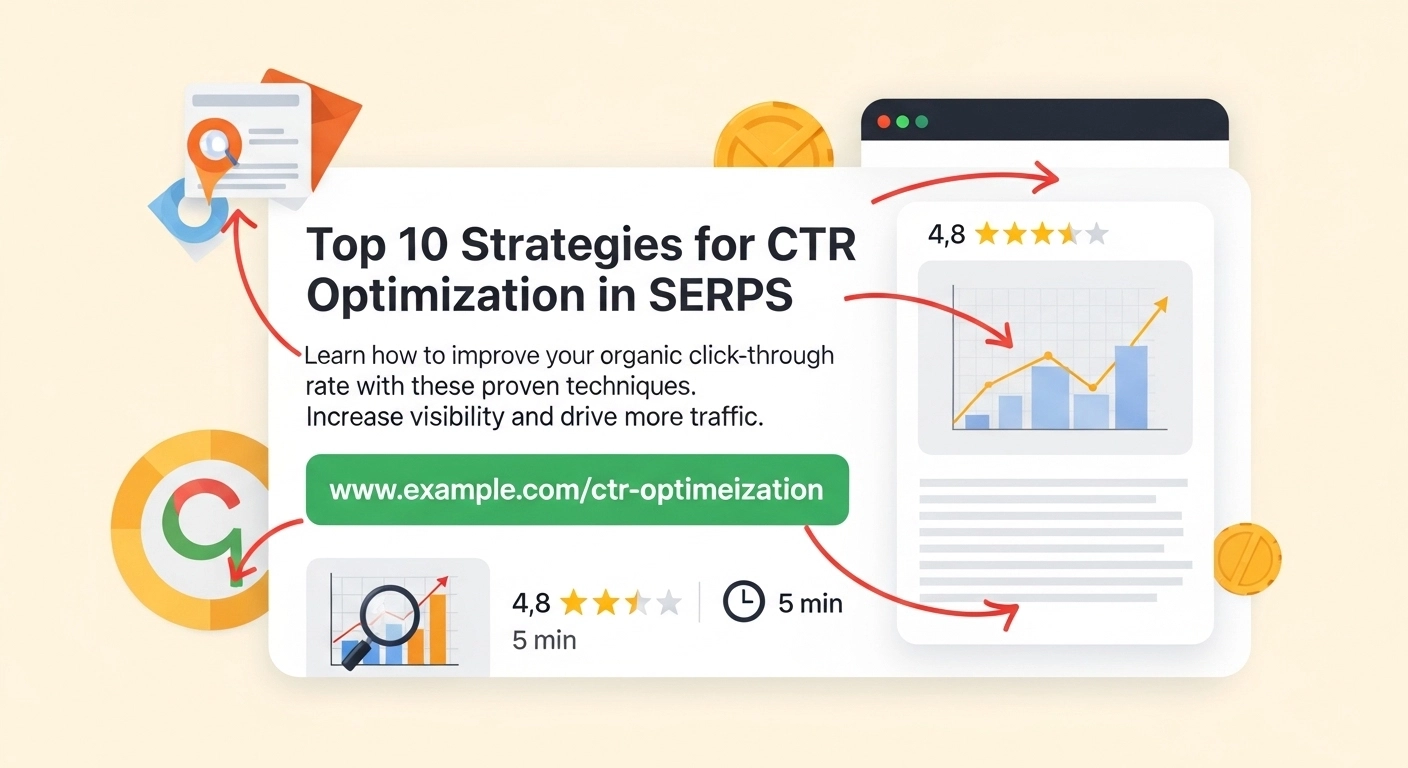
Getting to the first page of Google is only half the battle. The real win happens when people actually click your result instead of the others. That’s where CTR optimization in SERPs (Search Engine Results Pages) comes in.
Click-through rate (CTR) is one of the most overlooked SEO growth levers. You don’t always need more rankings—you often just need more clicks from the traffic you already have.
In this guide, you’ll learn how to improve CTR in a practical, human way without relying on tricks or clickbait.
What Is CTR Optimization in SERPs?
CTR optimization in SERPs means improving how often users click your page after seeing it in search results.
The formula is simple:
CTR = (Clicks ÷ Impressions) × 100
If 1,000 people see your page in Google and 50 click it, your CTR is 5%.
Google shows multiple results for every search query, so your goal is to make your listing more appealing than the others—without misleading users.
Why CTR Matters for SEO
CTR is not just a vanity metric. It impacts real performance.
Here’s why it matters:
- More clicks = more organic traffic without higher rankings
- Strong CTR signals relevance to search engines
- Better engagement can improve long-term rankings
- You maximize value from existing keyword positions
Even moving from position #5 to #3 is powerful—but improving CTR at the same position can double your traffic.
How Google Determines Whether People Click Your Result
Users decide in seconds based on:
- Title tag
- Meta description
- URL structure
- Rich snippets (stars, FAQs, pricing, etc.)
- Emotional relevance (does it feel useful or urgent?)
Your job is to align all of these elements with search intent.
Proven CTR Optimization Strategies for SERPs
1. Write Titles That Match Intent (Not Just Keywords)
A good title does two things:
- Includes the keyword naturally
- Promises a clear benefit or outcome
Weak title:
CTR optimization in SERPs guide
Better:
CTR Optimization in SERPs: How to Get More Clicks From Google Without More Rankings
Add clarity, curiosity, or a benefit—not fluff.
2. Use Power Words Without Overdoing It
Power words increase emotional pull when used correctly:
- Proven
- Simple
- Step-by-step
- Ultimate
- Effective
- Practical
Example:
A Simple Guide to CTR Optimization in SERPs That Actually Works
Avoid spammy exaggeration. Keep it believable.
3. Optimize Meta Descriptions for Click Intent
Your meta description doesn’t directly affect rankings, but it strongly affects clicks.
A strong meta description:
- Explains what the page delivers
- Includes a soft call-to-action
- Matches user intent
Example:
Learn how to improve CTR in SERPs with practical SEO strategies, real examples, and simple optimization techniques to increase organic clicks.
4. Use Brackets or Numbers in Titles
These improve scan-ability in search results.
Examples:
- CTR Optimization in SERPs [2026 Guide]
- 7 Proven Ways to Improve CTR in Google
- CTR Optimization in SERPs: Step-by-Step Guide
Numbers signal structure and easy reading.
5. Improve URL Structure
Keep URLs:
- Short
- Clean
- Keyword-relevant
Good:/ctr-optimization-serps/
Bad:/blog/seo/2026/article?id=9382
Simple URLs increase trust and click likelihood.
6. Add Schema Markup for Rich Results
Rich snippets help your listing stand out.
Use:
- FAQ schema
- Review schema
- Article schema
This can add stars, dropdown FAQs, and extra details directly in SERPs.
More visibility = more clicks.
7. Align With Search Intent (Most Important Factor)
If your content doesn’t match what users want, CTR will stay low no matter how good your title is.
Search intent types:
- Informational (learn something)
- Commercial (compare options)
- Transactional (buy/do action)
Match your tone and promise accordingly.
8. Test and Improve Using Google Search Console
Use Search Console to find:
- High impressions + low CTR pages
- Queries you already rank for
- Pages stuck at positions 3–10
Then improve:
- Title tags
- Meta descriptions
- Content alignment
Small changes often lead to big CTR gains.
Common CTR Mistakes to Avoid
- Clickbait titles that don’t deliver
- Keyword stuffing in titles
- Vague meta descriptions
- Ignoring search intent
- Copying competitor titles exactly
Google users are quick to judge. If your listing feels generic, they’ll scroll past it.
Simple FAQ: CTR Optimization in SERPs
What is a good CTR in Google search?
It depends on position. Position #1 often gets 25–40% CTR, while positions #5–10 may get under 5%.
Does CTR affect SEO rankings?
Indirectly, yes. Higher CTR can signal relevance and improve engagement metrics over time.
How can I improve CTR quickly?
Start with:
- Better titles
- Improved meta descriptions
- Adding numbers or brackets
- Aligning with search intent
Is CTR more important than rankings?
They work together. Rankings get you visibility; CTR turns that visibility into traffic.
Conclusion
CTR optimization in SERPs is one of the fastest ways to grow organic traffic without waiting months for ranking improvements. When your titles, descriptions, and intent alignment are strong, you can outperform competitors—even at the same position.
Small changes in how your result appears can lead to major traffic gains.
