
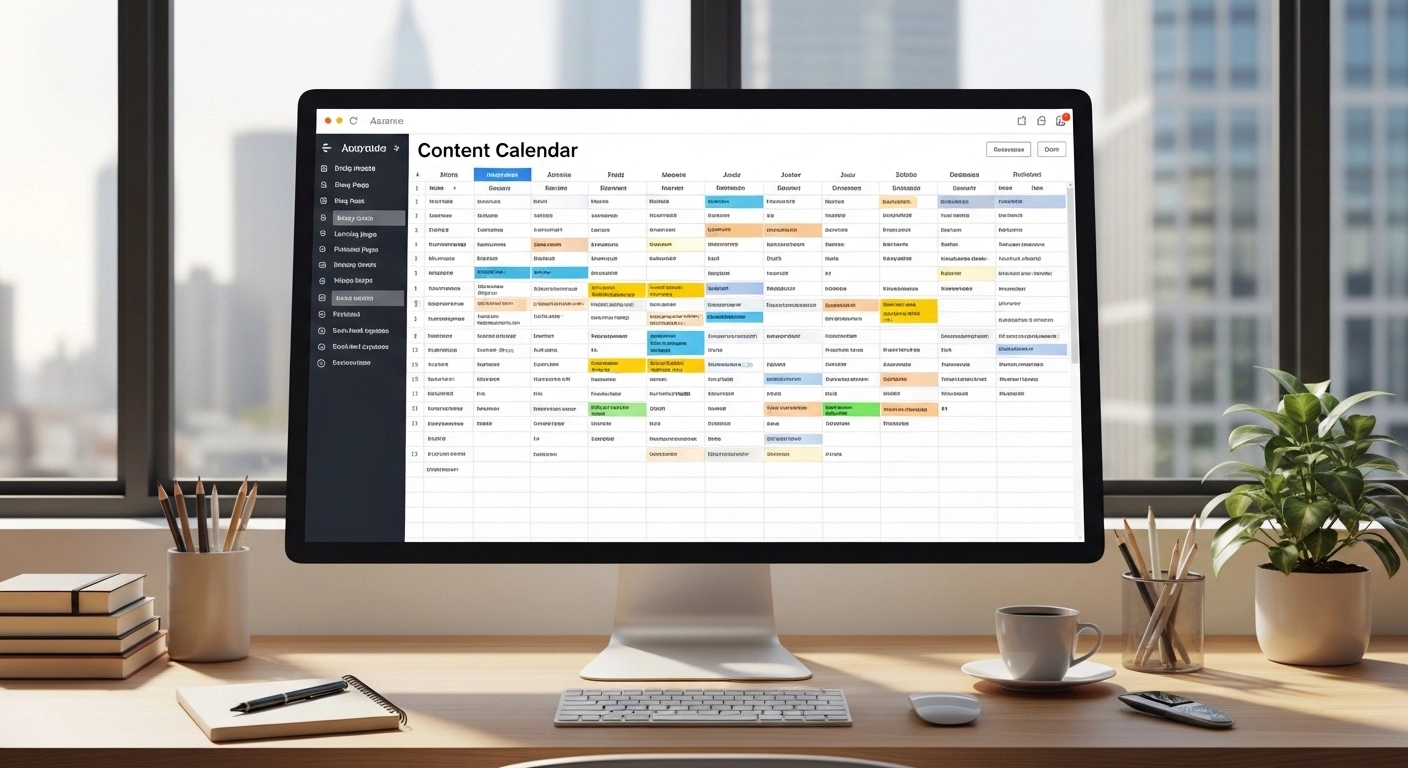
If you want steady traffic from Google, random publishing won’t get you far. What actually works is structure—and that’s where a content calendar for SEO becomes essential.
A well-planned calendar helps you publish the right content at the right time, target keywords strategically, and build long-term authority instead of short bursts of traffic that quickly fade.
In this guide, you’ll learn how to create an SEO-focused content calendar that keeps your blog consistent, organized, and optimized for real search growth.
What Is a Content Calendar for SEO?
A content calendar for SEO is a planning system that maps out what content you’ll publish, when you’ll publish it, and which keywords each piece targets.
It goes beyond a simple posting schedule. A proper SEO content calendar includes:
- Target keywords (primary and secondary)
- Search intent (informational, transactional, navigational)
- Content format (blog post, guide, comparison, etc.)
- Publishing dates
- Internal linking plan
- Content goals (traffic, leads, rankings)
Instead of guessing what to write next, you follow a structured roadmap built around search demand.
Why an SEO Content Calendar Matters
Without a calendar, most blogs face the same problems:
- Inconsistent publishing
- Overlapping topics
- Missed keyword opportunities
- Weak internal linking
- No long-term strategy
A strong content calendar fixes these issues by turning your blog into a system.
Here’s what you gain:
1. Better keyword coverage
You avoid repeating topics and ensure you cover all important keywords in your niche.
2. Consistent publishing
Google rewards fresh, regularly updated content.
3. Strong topical authority
Publishing related content in clusters helps search engines understand your expertise.
4. Higher efficiency
You always know what’s next, which reduces writer’s block and saves time.
How to Build a Content Calendar for SEO (Step-by-Step)
Let’s break it down into a simple process you can follow.
1. Start With Keyword Research
Your content calendar starts with keywords, not ideas.
Find keywords based on:
- Search volume
- Keyword difficulty
- Search intent
- Business relevance
Group them into clusters such as:
- Beginner topics
- How-to guides
- Comparison posts
- Advanced strategies
For example, if your niche is SEO, a cluster might look like:
- SEO basics for beginners
- On-page SEO checklist
- Technical SEO audit guide
- Keyword research strategies
- Internal linking guide
This structure helps you build topical authority instead of random articles.
2. Understand Search Intent
Every keyword has intent behind it. Your content must match that intent.
There are four main types:
- Informational: “What is SEO content calendar”
- Navigational: Brand or tool searches
- Commercial: “Best SEO tools”
- Transactional: “Hire SEO expert”
If your content doesn’t match intent, it won’t rank—even if it’s well written.
3. Group Content Into Pillars and Clusters
This is where strategy becomes powerful.
Pillar content:
Broad, high-level topics (e.g., “SEO Guide”)
Cluster content:
Supporting articles that link back to the pillar.
Example structure:
Pillar: SEO Content Strategy Guide
Clusters:
- Keyword research guide
- Content calendar for SEO
- On-page optimization checklist
- Internal linking strategy
This creates a web of content that strengthens rankings across all pages.
4. Choose Your Publishing Frequency
Be realistic. A content calendar only works if you can maintain it.
Common schedules:
- 2 posts per week (ideal for growth)
- 1 post per week (steady progress)
- 2–4 posts per month (for small teams)
Consistency matters more than volume.
5. Assign Dates and Prioritize Content
Now place your content into a calendar.
Prioritize based on:
- High-impact keywords first
- Seasonal topics
- Content gaps in your site
- Evergreen topics
A simple monthly layout might look like:
- Week 1: Beginner guide
- Week 2: How-to article
- Week 3: Comparison post
- Week 4: Advanced strategy post
6. Plan Internal Linking in Advance
Internal linking is often ignored, but it’s critical for SEO.
In your content calendar, note:
- Which older posts each new article should link to
- Which pillar page it supports
- Where future links will come from
This helps distribute authority across your website.
7. Track Performance and Adjust
A content calendar is not static.
Every month, review:
- Organic traffic
- Keyword rankings
- Click-through rates
- Engagement metrics
Then update your calendar based on what’s working.
If a topic performs well, expand it into a cluster. If it fails, refine it or replace it.
Tools You Can Use for Content Planning
You don’t need fancy software, but tools help.
Common options include:
- Google Sheets (simple and effective)
- Notion (great for teams)
- Trello (visual workflow)
- Ahrefs or SEMrush (keyword planning)
- Google Calendar (deadline tracking)
Choose what fits your workflow best.
Common Mistakes to Avoid
Even with a calendar, many blogs struggle because of these mistakes:
1. Writing without keyword research
Guesswork leads to low-ranking content.
2. Ignoring search intent
Ranking doesn’t matter if users don’t find value.
3. Overloading the calendar
Too much content leads to burnout and inconsistency.
4. Not updating old content
SEO is not just publishing—it’s maintenance.
Simple Example of an SEO Content Calendar
Here’s what a basic weekly structure might look like:
- Monday: Keyword research post
- Wednesday: How-to SEO guide
- Friday: Comparison or list post
Each post is linked to a pillar topic and built around a targeted keyword cluster.
FAQs: Content Calendar for SEO
1. Why do I need a content calendar for SEO?
It helps you stay consistent, target the right keywords, and build structured topical authority for better rankings.
2. How far in advance should I plan content?
Most SEO teams plan 1–3 months ahead, depending on workload and resources.
3. Is a content calendar necessary for small blogs?
Yes. Even solo bloggers benefit because it removes guesswork and improves consistency.
4. How many blog posts should I publish per month?
Quality matters more than quantity, but 4–8 posts per month is a solid range for growth.
5. Can I change my content calendar later?
Absolutely. A good SEO calendar is flexible and should evolve based on performance.
Conclusion
A content calendar for SEO is more than a schedule—it’s a strategy. It turns scattered content creation into a focused system that builds authority, improves rankings, and drives consistent organic traffic.
When you plan ahead, align with search intent, and structure your content into clusters, you give your website a real chance to compete in search results.
