
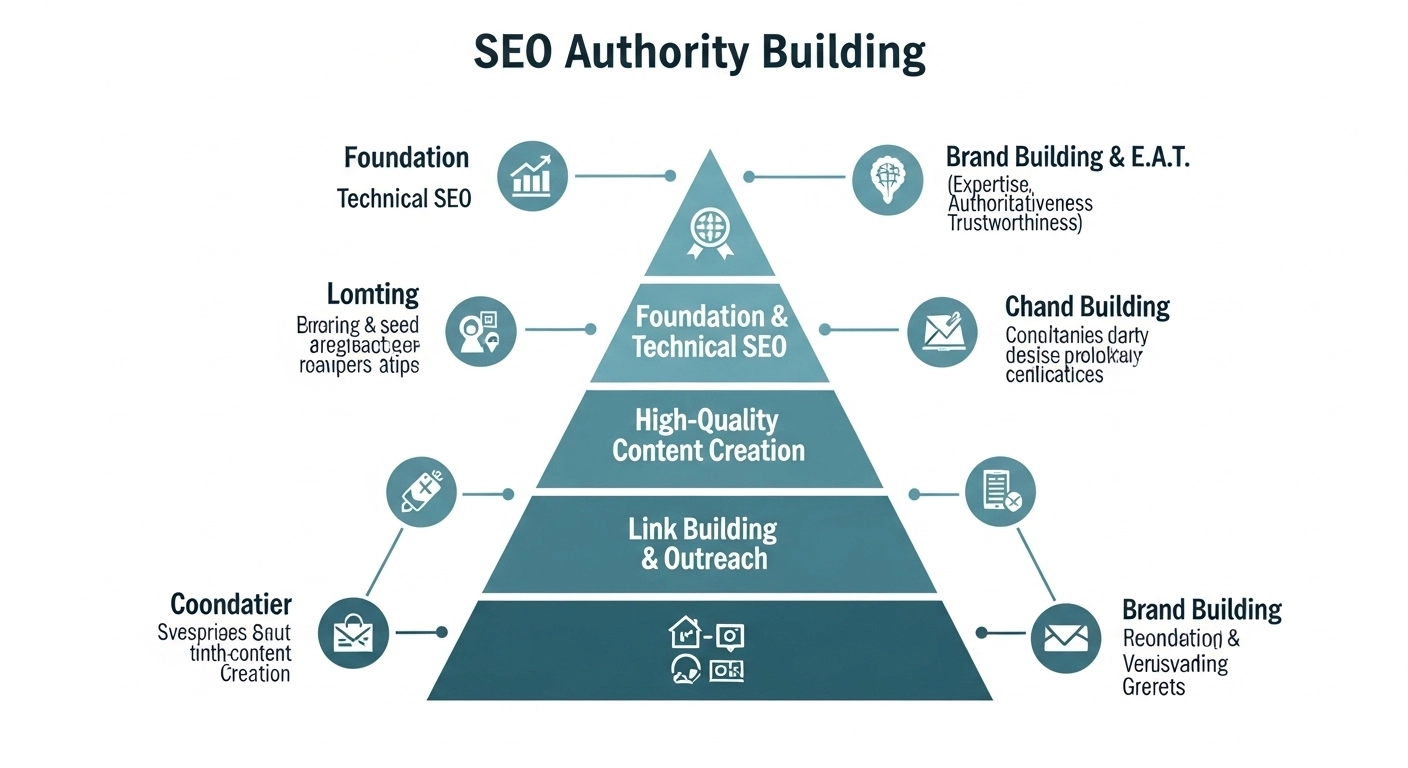
If you want your website to rank higher on Google, building SEO authority is essential. Search engines prefer websites that show expertise, trust, and consistent value. When your site becomes an authority in a topic, Google is far more likely to rank your content at the top of search results.
But authority does not happen overnight. It is built through high-quality content, strong backlinks, topical expertise, and user trust.
This guide explains a simple and practical SEO authority building strategy you can start using today.
What Is SEO Authority?
SEO authority refers to how trustworthy and credible a website appears to search engines.
When a website consistently publishes helpful content and earns links from trusted sources, search engines begin to view it as a reliable source of information.
Two common signals often used to measure authority include:
- Domain Authority (DA) – Overall strength of a domain
- Page Authority (PA) – Ranking strength of a specific page
While these are third-party metrics, they reflect a broader idea:
Google rewards websites that demonstrate expertise, authority, and trustworthiness.
Why SEO Authority Matters
Building authority improves nearly every part of your SEO performance.
A high-authority website typically gets:
- Higher rankings in search results
- Faster indexing of new content
- More organic traffic
- Better trust from readers
- Higher conversion rates
In short, authority turns your website into a long-term traffic asset.
7 Proven SEO Authority Building Strategies
1. Create High-Quality, Expert Content
Authority starts with content quality.
Instead of publishing many short articles, focus on deep, useful content that solves real problems.
Strong authority content should include:
- Clear explanations
- Practical examples
- Updated information
- Structured headings
- Internal links
For example, instead of writing a short article about SEO tips, create a complete SEO guide for beginners that covers everything from keywords to technical SEO.
The more helpful your content is, the more people will share and link to it.
2. Build Topical Authority
Search engines prefer websites that focus deeply on one subject.
This is called topical authority.
For example, if your site is about SEO, your content should include related topics like:
- Keyword research
- On-page SEO
- Technical SEO
- Link building
- SEO tools
- Content optimization
A powerful strategy is the pillar and cluster model.
Example structure:
Pillar Page: Complete SEO Guide
Cluster Content:
- Keyword Research Guide
- On-Page SEO Checklist
- Technical SEO Audit Guide
- Link Building Strategies
All cluster articles link back to the main pillar page. This signals strong topical relevance to search engines.
3. Earn High-Quality Backlinks
Backlinks are one of the strongest authority signals.
When respected websites link to your content, it acts like a vote of confidence.
Some effective ways to earn backlinks include:
- Guest blogging on industry websites
- Creating original research or statistics
- Publishing useful guides and tools
- Outreach to bloggers and journalists
- Creating shareable infographics
Focus on quality over quantity. One link from a trusted site can be worth more than dozens of weak links.
4. Strengthen Your Internal Linking
Internal links help search engines understand your site structure and distribute authority across pages.
A good internal linking strategy:
- Connects related articles
- Uses descriptive anchor text
- Links to important pages regularly
For example, if you write about keyword research, link naturally to related articles like SEO content strategy or on-page optimization.
This improves both SEO and user navigation.
5. Optimize for E-E-A-T
Google evaluates websites using Experience, Expertise, Authoritativeness, and Trustworthiness (E-E-A-T).
You can improve this by:
- Adding author bios
- Showing real experience and examples
- Citing reliable sources
- Publishing accurate information
- Keeping content updated
If your website shows clear expertise, search engines are more likely to trust it.
6. Improve Website User Experience
Authority is not only about links and content. User experience also matters.
A strong SEO website should have:
- Fast page speed
- Mobile-friendly design
- Clear navigation
- Easy readability
- Minimal ads or distractions
When users stay longer on your site and explore more pages, it signals quality and relevance.
7. Maintain Consistent Publishing
Authority grows with consistency.
Publishing valuable content regularly helps search engines recognize your website as an active and reliable source.
A good strategy is:
- 1–2 high-quality articles per week
- Regular updates to older content
- Expanding existing guides with new information
Over time, your website builds a strong content library, which increases authority.
Example of a Simple Authority Strategy
Here is a practical example for an SEO website:
Month 1
Publish a pillar article: Complete SEO Guide
Month 2
Add supporting articles:
- Keyword Research Guide
- On-Page SEO Checklist
- SEO Tools Guide
Month 3
Build backlinks through guest posts and outreach.
Month 4
Update content, improve internal links, and add new cluster articles.
Within months, your site begins to show topical authority in SEO.
Common Mistakes to Avoid
Many websites fail to build authority because they make simple mistakes.
Avoid these problems:
- Publishing thin or low-quality content
- Buying spam backlinks
- Ignoring internal linking
- Covering too many unrelated topics
- Not updating old content
Authority requires quality, patience, and strategy.
Frequently Asked Questions
How long does it take to build SEO authority?
SEO authority usually takes 3 to 12 months depending on competition, content quality, and backlink growth.
Are backlinks still important for SEO authority?
Yes. Backlinks remain one of the strongest ranking factors because they signal trust and credibility.
What is topical authority in SEO?
Topical authority means covering a subject deeply with multiple related articles, making your website a trusted source on that topic.
Can a new website build authority quickly?
Yes, if it focuses on high-quality content, strong internal linking, and smart link building.
Conclusion
Building SEO authority is one of the most powerful long-term strategies in digital marketing.
Instead of chasing quick rankings, focus on creating valuable content, earning quality backlinks, building topical expertise, and improving user experience.
When search engines and readers trust your website, rankings become easier and traffic grows naturally.
Start today:
Choose one topic, create a comprehensive guide, publish supporting articles, and begin building backlinks. With consistency and the right strategy, your website can become a trusted authority in your niche.
