
In today’s digital economy, visibility on search engines determines whether a business grows or gets ignored. Millions of websites compete for attention, yet only a small percentage appear on the first page of Google. The difference between success and obscurity often comes down to one thing: a powerful SEO strategy.
A well-structured SEO strategy helps businesses improve search rankings, increase organic traffic, attract qualified leads, and build long-term online authority. Without a clear plan, even high-quality websites struggle to reach their audience.
Modern search engines use advanced algorithms, AI systems, and semantic understanding to determine which pages deserve top rankings. This means businesses must move beyond outdated tactics and adopt a data-driven, user-focused SEO strategy.
In this comprehensive guide, you’ll learn how to create a future-proof SEO strategy designed to rank on Google, satisfy search intent, and dominate competitive search results.
What Is an SEO Strategy?
An SEO strategy is a structured plan designed to improve a website’s visibility in search engines through optimization, content development, technical improvements, and authority building.
It aligns your website content with what users are searching for while ensuring search engines can easily understand and rank your pages.
Key Elements of an SEO Strategy
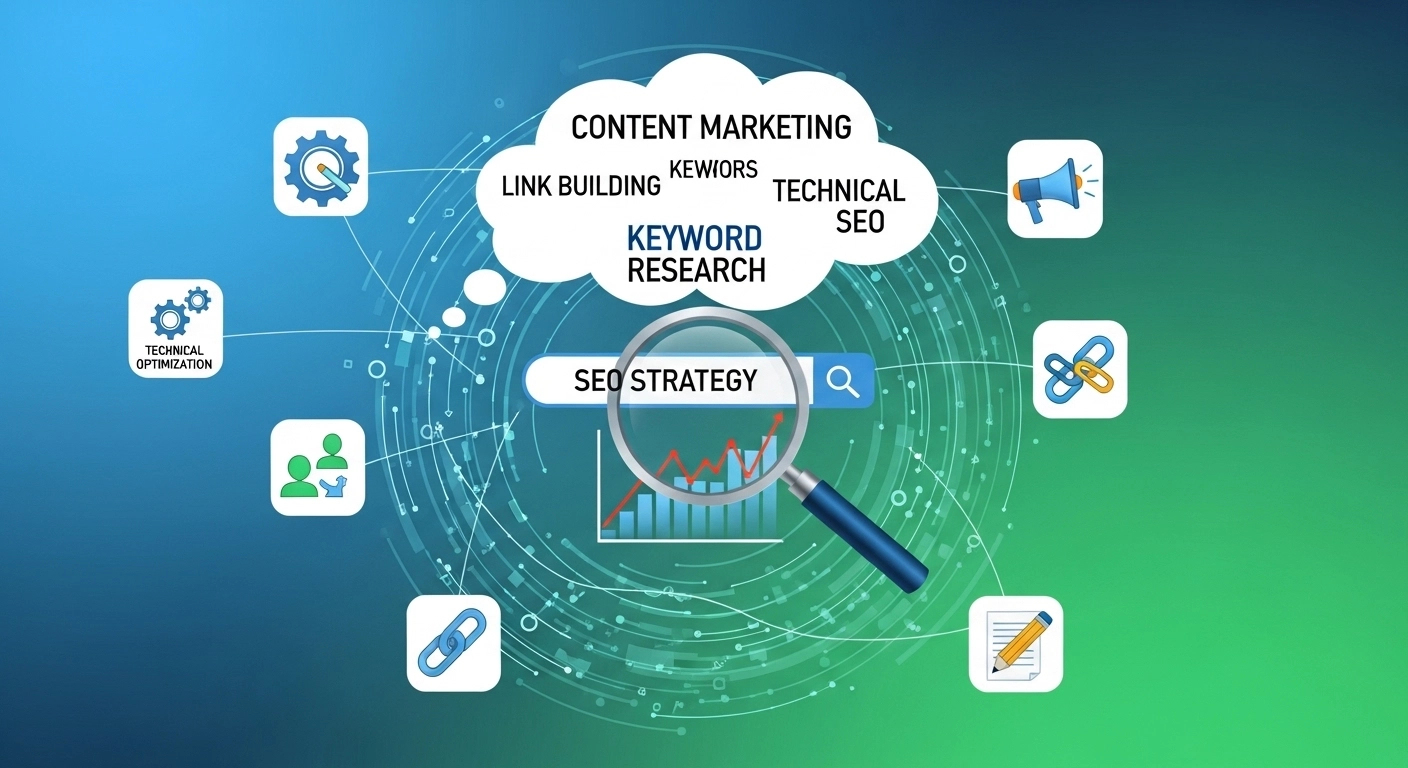
A successful strategy includes several core components:
- Keyword research
- Content optimization
- Technical SEO
- Link building
- User experience improvements
- Performance tracking
When these elements work together, websites gain stronger search visibility and consistent organic traffic.
Why an SEO Strategy Is Essential for Business Growth
Businesses that invest in a clear SEO strategy gain a major competitive advantage.
Benefits of a Strong SEO Strategy
- Higher search engine rankings
- Increased organic website traffic
- Stronger brand credibility
- Better user experience
- Sustainable lead generation
- Lower long-term marketing costs
Unlike paid advertising, SEO generates long-term results. A page optimized today can continue attracting traffic for months or even years.
Search engines also reward websites that consistently publish valuable content and follow best practices.
Understanding Search Intent Before Building an SEO Strategy
One of the most important ranking factors today is search intent.
Search intent refers to the reason behind a user’s search query.
Main Types of Search Intent
Informational Intent
Users are looking for knowledge or answers.
Examples:
- What is SEO strategy?
- How does SEO work?
Navigational Intent
Users want to find a specific website.
Example:
- Ahrefs blog
- Google Search Console
Commercial Investigation
Users are researching before making a decision.
Example:
- Best SEO tools
- Top SEO agencies
Transactional Intent
Users want to take action.
Example:
- Buy SEO software
- Hire SEO services
Understanding search intent ensures your content matches what users expect to find.
Keyword Research: The Foundation of Every SEO Strategy
Keyword research is the starting point of any successful SEO strategy.
It identifies the words and phrases people use when searching for information, products, or services online.
Types of Keywords to Target
A well-balanced SEO strategy targets multiple keyword types.
Primary Keywords
Main search terms with high relevance.
Example:
SEO strategy
Long-Tail Keywords
More specific search queries with lower competition.
Examples:
- Best SEO strategy for small businesses
- SEO strategy for eCommerce websites
- How to create an SEO strategy
LSI and Semantic Keywords
These are related terms that help search engines understand context.
Examples:
- search engine optimization plan
- SEO roadmap
- organic search strategy
- website ranking strategy
H4 Step-by-Step Keyword Research Framework
- Identify your core topic.
- Use keyword tools to discover related queries.
- Analyze search volume and competition.
- Identify long-tail opportunities.
- Group keywords by search intent.
- Map keywords to specific pages.
This process builds a strong foundation for your SEO strategy.
Content Optimization: Creating Content That Ranks
Content is the engine that powers search rankings.
However, modern SEO requires high-quality, intent-focused content, not just keyword placement.
Characteristics of High-Ranking SEO Content
Successful content typically includes:
- Clear topic coverage
- Valuable insights
- Semantic keyword usage
- Structured headings
- Internal linking
- Authoritative sources
Search engines prioritize content that demonstrates experience, expertise, authority, and trust (E-E-A-T).
H4 Content Optimization Checklist
To optimize content effectively:
- Include the primary keyword naturally
- Use semantic keyword variations
- Structure content with headings
- Add internal links
- Improve readability
- Include helpful visuals or examples
- Update outdated information
Well-optimized content improves both user experience and search rankings.
Technical SEO: Strengthening Your Website Foundation
Technical SEO ensures search engines can crawl, understand, and index your website efficiently.
Without proper technical optimization, even great content may struggle to rank.
Key Technical SEO Factors
Important technical elements include:
- Fast website loading speed
- Mobile-friendly design
- Secure HTTPS connection
- Clean URL structure
- XML sitemaps
- Structured data markup
- Fixing crawl errors
Search engines prioritize websites that deliver a smooth user experience.
H4 Technical SEO Audit Checklist
Perform regular audits to identify problems.
Check for:
- Broken links
- Duplicate content
- Slow loading pages
- Missing meta tags
- Poor mobile usability
- Indexing issues
Fixing these problems improves both SEO performance and user experience.
On-Page SEO: Optimizing Individual Pages
On-page SEO focuses on optimizing the elements within each webpage.
Important On-Page SEO Elements
These elements directly influence rankings:
- Title tags
- Meta descriptions
- Header tags
- Internal links
- Image optimization
- Keyword placement
- Content structure
H4 On-Page Optimization Framework
Follow this structure when optimizing pages:
- Write a compelling SEO title.
- Create a clear meta description.
- Use H1, H2, and H3 headings properly.
- Place keywords naturally in the content.
- Add internal links to relevant pages.
- Optimize images with alt text.
Consistent on-page optimization strengthens your SEO strategy.
Link Building: Increasing Website Authority
Backlinks remain one of the strongest ranking signals.
A backlink is a link from another website pointing to your site.
High-quality backlinks signal to search engines that your content is trustworthy and valuable.
Effective Link Building Strategies
Common methods include:
- Guest blogging
- Digital PR campaigns
- Creating shareable content
- Industry partnerships
- Resource link building
- Broken link outreach
Quality matters more than quantity.
Links from authoritative websites provide the strongest ranking benefits.
Local SEO Strategy for Regional Businesses
Local SEO helps businesses attract customers from nearby locations.
It is essential for companies that serve specific geographic areas.
Key Local SEO Strategies
- Optimize Google Business Profile
- Use location-based keywords
- Collect customer reviews
- Build local citations
- Create local landing pages
These tactics improve visibility in local search results and map listings.
Measuring SEO Strategy Success
Tracking performance is essential to improving your SEO strategy.
Key SEO Metrics to Monitor
Important metrics include:
- Organic traffic
- Keyword rankings
- Click-through rate (CTR)
- Bounce rate
- Conversion rate
- Backlink growth
SEO analytics tools help identify what works and where improvements are needed.
Future-Proofing Your SEO Strategy
Search engines constantly update their algorithms.
Future SEO success depends on adaptability and user-focused optimization.
Emerging SEO Trends
Businesses should prepare for:
- AI-powered search engines
- Voice search optimization
- Semantic search improvements
- Helpful content updates
- Core Web Vitals performance metrics
The most successful SEO strategies focus on helping users, not manipulating algorithms.
FAQ: SEO Strategy
What is an SEO strategy?
An SEO strategy is a structured plan used to improve a website’s visibility in search engines through keyword research, content optimization, technical SEO, and link building.
How long does an SEO strategy take to work?
Most SEO strategies begin showing noticeable results within 3 to 6 months, depending on competition, website authority, and optimization quality.
What are the most important parts of an SEO strategy?
The most critical components include:
- Keyword research
- High-quality content
- Technical SEO
- On-page optimization
- Link building
Together these factors improve rankings and traffic.
How often should an SEO strategy be updated?
SEO strategies should be reviewed every 3–6 months to adapt to algorithm updates, market changes, and new keyword opportunities.
Is SEO better than paid advertising?
SEO and paid advertising serve different purposes.
SEO provides long-term organic traffic, while paid ads generate immediate visibility. Many businesses use both strategies together.
What tools help build an SEO strategy?
Popular SEO tools include:
- Google Search Console
- Google Analytics
- Ahrefs
- SEMrush
- Ubersuggest
- Screaming Frog
These tools help analyze keywords, backlinks, and technical performance.
Conclusion
An effective SEO strategy is no longer optional for businesses that want to succeed online. With increasing competition and smarter search algorithms, companies must focus on delivering valuable content, optimizing technical performance, and building strong website authority.
The most successful strategies combine:
- Data-driven keyword research
- High-quality content creation
- Technical SEO improvements
- Strategic link building
- Continuous performance monitoring
When these elements work together, websites gain stronger rankings, consistent traffic, and sustainable growth.
Businesses that invest in a future-ready SEO strategy will continue to dominate search results while competitors struggle to keep up.
Start implementing these strategies today, and you’ll build a powerful foundation for long-term search engine success.
