
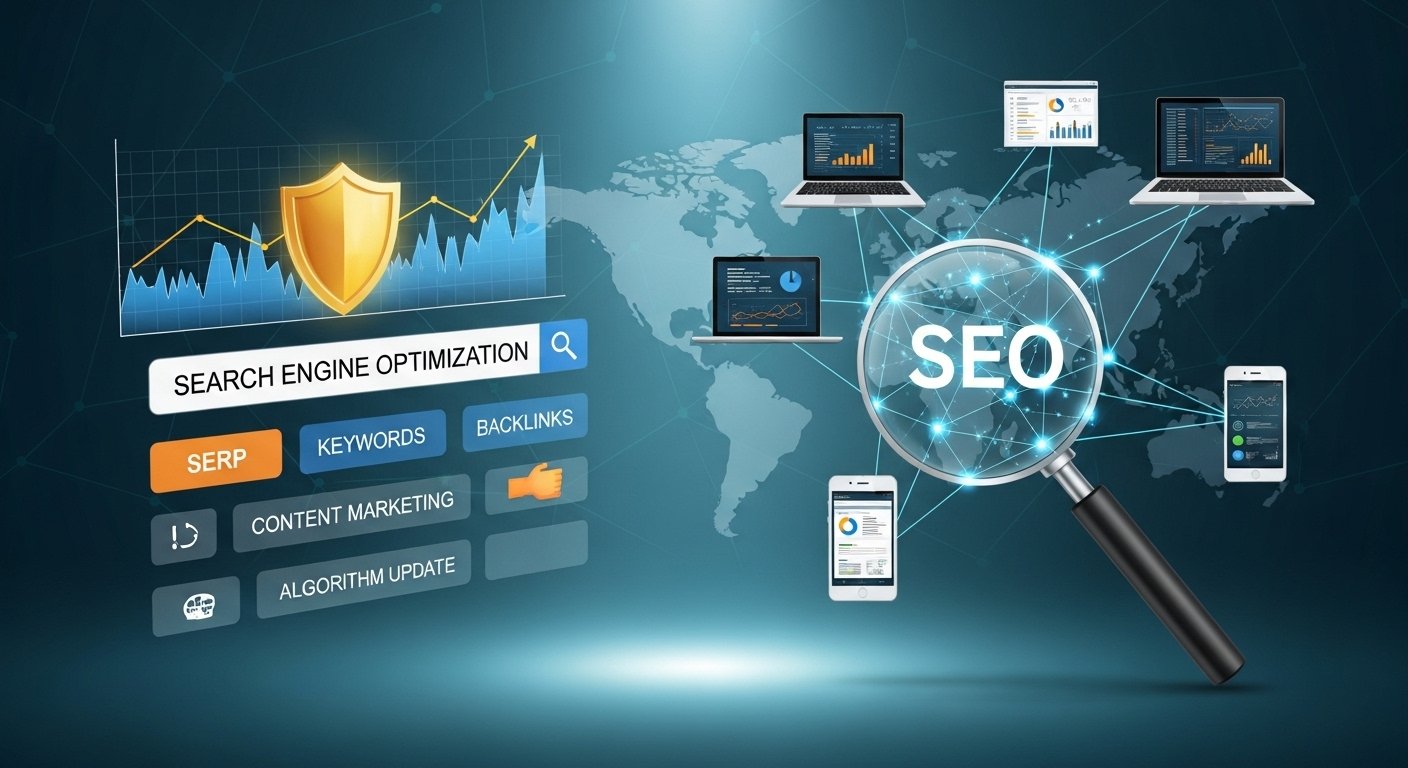
In today’s digital economy, businesses compete for visibility in an increasingly crowded online marketplace. Whether you run an eCommerce store, a local service company, or a global brand, your ability to attract customers online depends heavily on search engine optimization.
Search engine optimization (SEO) is the process of improving a website’s visibility in search engine results pages (SERPs) so that users can easily discover your content, products, or services. When done correctly, SEO drives organic traffic, builds brand authority, and increases lead generation and revenue.
Modern SEO goes far beyond simply adding keywords to webpages. Search engines now evaluate hundreds of ranking signals including content quality, website performance, backlinks, user experience, and search intent.
With the rise of AI search engines, voice search, semantic search, and algorithm updates, businesses must adopt a more strategic and holistic approach to search engine optimization.
This comprehensive guide explains everything you need to know about SEO, including how it works, why it matters, and how to build a powerful SEO strategy that ranks on Google and future search platforms.
What Is Search Engine Optimization (SEO)?
Search engine optimization is the practice of optimizing a website to improve its ranking in search engine results for relevant queries.
The goal is simple:
Help search engines understand your content so they can show it to the right users.
When your pages rank higher in search results, they receive more organic traffic.
Key Elements of Search Engine Optimization
SEO includes multiple disciplines working together:
- On-page SEO – optimizing website content
- Technical SEO – improving website infrastructure
- Off-page SEO – building authority through backlinks
- Content SEO – creating valuable information
- Local SEO – targeting geographic audiences
Modern SEO strategies combine all these elements to improve visibility and rankings.
How Search Engines Work
Understanding how search engines operate is essential for effective SEO.
Search engines like Google follow three main processes:
- Crawling
- Indexing
- Ranking
Crawling: Discovering Web Pages
Search engines use automated bots (also called spiders or crawlers) to scan the internet and discover new webpages.
These bots follow links between pages to gather information.
Indexing: Storing Information
After crawling a page, search engines analyze its content and store it in their database (index).
The index contains billions of webpages organized by topic and relevance.
Ranking: Delivering the Best Results
When a user enters a search query, search engines evaluate thousands of signals to determine which pages should appear first.
These ranking factors include:
- Content relevance
- Website authority
- Page speed
- Mobile friendliness
- User engagement
- Backlink quality
Why Search Engine Optimization Matters for Businesses
SEO is one of the most powerful digital marketing strategies available.
Unlike paid advertising, SEO generates long-term organic traffic without ongoing ad spend.
Benefits of Search Engine Optimization
Businesses that invest in SEO experience multiple advantages:
- Higher search engine rankings
- Increased organic traffic
- Better brand credibility
- Higher conversion rates
- Sustainable marketing growth
- Improved user experience
SEO also supports other marketing channels including:
- Content marketing
- Social media marketing
- PPC advertising
- Email marketing
- Online branding
Types of Search Engine Optimization
Effective SEO involves multiple optimization strategies working together.
On-Page SEO
On-page SEO focuses on optimizing elements within a webpage.
Key On-Page SEO Factors
- Keyword optimization
- Title tags and meta descriptions
- Heading structure (H1–H6)
- Internal linking
- Image optimization
- Content quality
H4: On-Page SEO Optimization Checklist
- Use target keywords naturally in headings and content
- Write compelling meta titles and descriptions
- Optimize images with alt text
- Structure content using headings
- Add internal links to relevant pages
Technical SEO
Technical SEO improves the backend structure of a website to help search engines crawl and index it efficiently.
Important Technical SEO Factors
- Website speed
- Mobile responsiveness
- Secure HTTPS connection
- XML sitemap
- Structured data markup
- Crawlability
H4: Technical SEO Best Practices
- Improve page load speed
- Fix broken links
- Optimize Core Web Vitals
- Use clean URL structures
- Implement schema markup
Off-Page SEO
Off-page SEO focuses on building website authority through external signals.
Key Off-Page SEO Techniques
- Link building
- Digital PR
- Brand mentions
- Influencer collaborations
- Social signals
High-quality backlinks act as votes of confidence that improve your site’s authority.
Local SEO
Local SEO helps businesses attract customers within a specific geographic area.
Local SEO Optimization Tips
- Optimize Google Business Profile
- Use location-based keywords
- Collect customer reviews
- Build local citations
- Create local content
Local SEO is essential for businesses such as:
- Restaurants
- Law firms
- Clinics
- Real estate agencies
- Retail stores
Keyword Research: The Foundation of SEO
Keyword research identifies the search terms people use when looking for information online.
Choosing the right keywords allows businesses to target relevant traffic.
Types of Keywords
SEO strategies typically include:
- Short-tail keywords
- Long-tail keywords
- Transactional keywords
- Informational keywords
- Local keywords
H4: Step-by-Step Keyword Research Process
- Identify your target audience
- Brainstorm relevant topics
- Use SEO tools for keyword data
- Analyze search intent
- Choose keywords with strong opportunity
High-quality keyword research improves both SEO and content marketing performance.
Content Optimization for SEO
Content is the foundation of modern SEO.
Search engines prioritize content that provides useful, relevant, and trustworthy information.
Characteristics of SEO-Optimized Content
Effective content should:
- Address user search intent
- Provide in-depth answers
- Include semantic keywords
- Be easy to read
- Offer unique value
H4: SEO Content Writing Framework
- Identify user intent
- Create a clear content outline
- Use headings to structure content
- Include relevant keywords naturally
- Add visuals and examples
- Update content regularly
Content that demonstrates expertise and authority tends to rank higher.
The Role of Backlinks in SEO
Backlinks remain one of the most important ranking factors.
A backlink occurs when another website links to your content.
Why Backlinks Matter
Backlinks signal to search engines that your content is trustworthy and valuable.
High-quality backlinks improve:
- Domain authority
- Search rankings
- Organic traffic
- Brand credibility
H4: Effective Link Building Strategies
- Guest blogging
- Digital PR campaigns
- Resource link building
- Skyscraper content
- Partnerships with industry sites
Quality always matters more than quantity.
SEO for Voice Search and AI Search Engines
Search behavior is rapidly evolving.
Voice assistants and AI-powered search engines are changing how users discover information.
Voice Search Optimization Tips
Voice searches tend to be conversational.
Optimize for voice search by:
- Using natural language keywords
- Answering questions directly
- Optimizing for featured snippets
- Improving page speed
AI Search Optimization
AI-powered search engines analyze content differently.
Key optimization strategies include:
- Writing comprehensive content
- Demonstrating expertise
- Using structured data
- Building topical authority
Future SEO Trends and Algorithm Updates
SEO continues to evolve as search engines become more sophisticated.
Businesses must stay prepared for algorithm changes.
Emerging SEO Trends
Future SEO strategies will focus on:
- AI-generated search results
- User experience signals
- E-E-A-T principles
- Entity-based search
- Semantic understanding
- Helpful content updates
Websites that prioritize high-quality content and user value will continue to succeed.
Common SEO Mistakes to Avoid
Many websites fail to rank due to avoidable mistakes.
Major SEO Errors
- Keyword stuffing
- Thin or duplicate content
- Ignoring mobile optimization
- Poor internal linking
- Slow website speed
- Low-quality backlinks
Avoiding these mistakes strengthens long-term SEO performance.
Frequently Asked Questions (FAQ)
What is search engine optimization?
Search engine optimization (SEO) is the process of improving a website’s visibility in search engine results to increase organic traffic and online visibility.
Why is SEO important for businesses?
SEO helps businesses attract targeted visitors, improve brand credibility, and generate leads without paying for advertising.
How long does SEO take to show results?
SEO typically takes 3–6 months to show noticeable improvements, depending on competition, industry, and strategy.
What are the main types of SEO?
The main types of SEO include:
- On-page SEO
- Technical SEO
- Off-page SEO
- Local SEO
- Content SEO
What is the difference between SEO and PPC?
SEO focuses on organic search rankings, while PPC (pay-per-click) advertising involves paid ads appearing in search results.
How do backlinks affect SEO?
Backlinks act as trust signals that help search engines determine the authority and relevance of your website.
What is E-E-A-T in SEO?
E-E-A-T stands for Experience, Expertise, Authority, and Trust, which are key factors search engines use to evaluate content quality.
Conclusion
Search engine optimization remains one of the most powerful strategies for growing online visibility and attracting customers.
A successful SEO strategy requires more than simply adding keywords. It involves optimizing content, improving website performance, building authority, and delivering valuable user experiences.
Businesses that invest in high-quality SEO strategies benefit from:
- Sustainable organic traffic
- Strong brand authority
- Higher conversions
- Long-term digital growth
As search engines continue to evolve with AI, voice search, and semantic algorithms, the companies that prioritize helpful content, technical excellence, and user-focused strategies will dominate search rankings.
Mastering SEO today positions your business for success in the future of digital search.
