
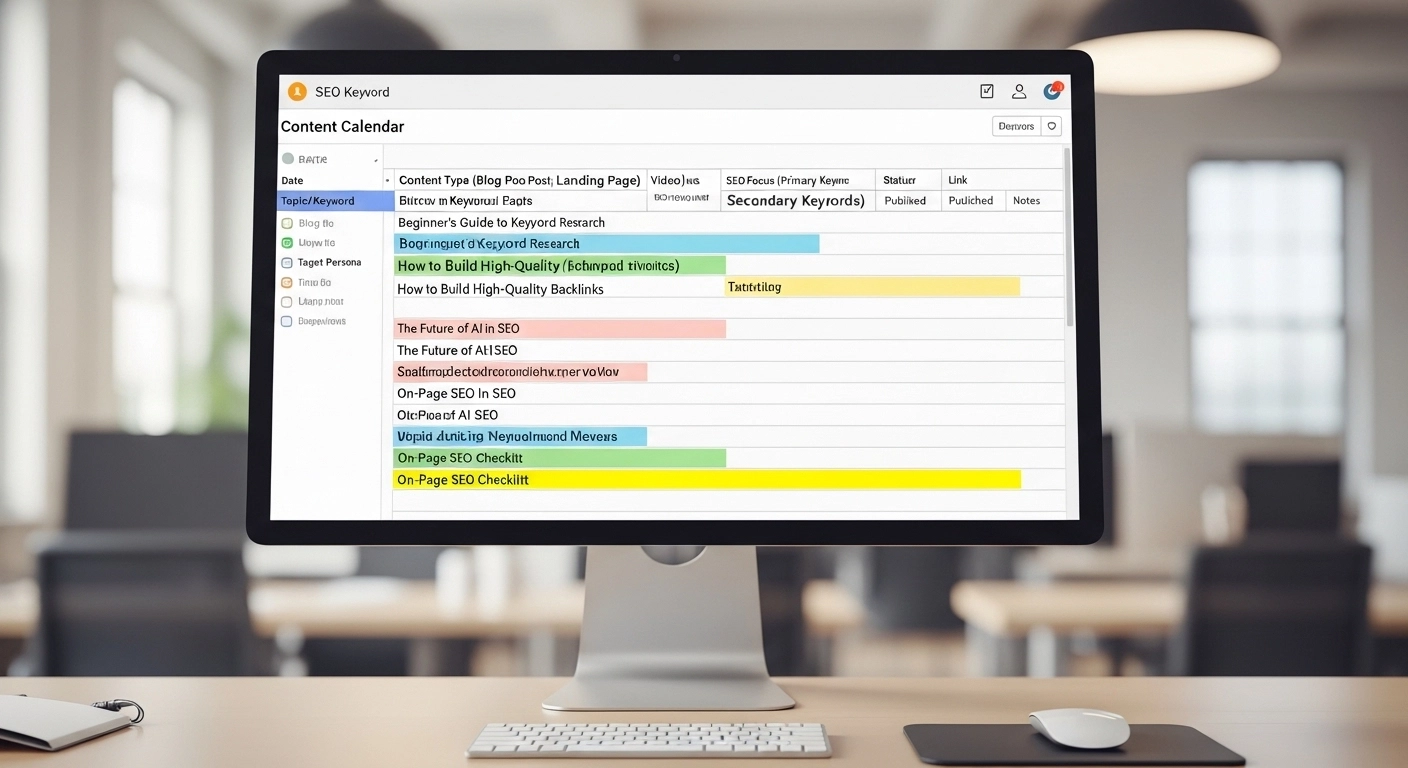
If you want consistent traffic from search engines, publishing random blog posts isn’t enough. Successful websites follow a structured content calendar for SEO—a plan that organizes what to publish, when to publish it, and which keywords to target.
A well-planned content calendar helps you stay consistent, target the right search queries, and build topical authority over time. Instead of guessing what to write next, you create content strategically so every article supports your SEO goals.
Let’s break down how to create a content calendar that improves rankings and drives steady organic traffic.
What Is an SEO Content Calendar?
An SEO content calendar is a schedule that outlines upcoming content along with important SEO elements such as:
- Target keywords
- Publishing dates
- Content format (blog, guide, video, etc.)
- Search intent
- Internal linking opportunities
Think of it as a roadmap for your SEO content strategy. It ensures that every article supports your larger goal of ranking higher in search results.
Instead of publishing occasionally, you build a system where content is planned weeks or months ahead.
Why a Content Calendar Is Important for SEO
Many websites fail at SEO because they publish inconsistently or target random topics. A content calendar solves this problem.
1. Consistent Publishing
Search engines prefer websites that update regularly. A calendar keeps your publishing schedule consistent.
Example:
- Week 1: Beginner guide
- Week 2: How-to tutorial
- Week 3: Comparison article
- Week 4: Industry trends
Consistency builds trust with both readers and search engines.
2. Better Keyword Planning
Instead of competing with yourself, you organize keywords logically.
Example structure:
| Topic Cluster | Keyword |
| SEO Basics | what is SEO |
| SEO Basics | on-page SEO checklist |
| SEO Tools | best SEO tools |
| SEO Strategy | content calendar for SEO |
This approach creates topic clusters, which help search engines understand your website authority.
3. Improved Content Quality
When content is planned in advance, you have time to:
- Research keywords
- Study competitors
- Add visuals and examples
- Optimize headings and structure
The result is better content that ranks higher.
4. Stronger Internal Linking
A calendar lets you plan related articles that link to each other.
Example:
Main guide:
“Complete SEO Strategy Guide”
Supporting articles:
- Keyword research guide
- On-page SEO checklist
- Technical SEO basics
This structure strengthens SEO signals and improves crawlability.
How to Create an SEO Content Calendar (Step by Step)
1. Start With Keyword Research
Every SEO content calendar begins with keyword research.
Look for:
- High search volume
- Low to medium competition
- Clear search intent
Tools you can use include:
- Google Keyword Planner
- Ahrefs
- SEMrush
- Ubersuggest
Example keywords:
- SEO content strategy
- blog content calendar
- content planning for SEO
- editorial calendar for blogs
2. Group Keywords Into Topics
Instead of writing random posts, organize keywords into topic clusters.
Example cluster:
Main Topic: SEO Content Strategy
Articles:
- What is an SEO content strategy
- How to build a content calendar
- Content calendar templates
- How often to publish blog posts
Each article supports the main topic.
3. Decide Your Publishing Frequency
Choose a schedule that you can maintain consistently.
Common publishing schedules:
- 1 post per week (good for small websites)
- 2–3 posts per week (faster growth)
- Daily publishing (large content teams)
Consistency is more important than quantity.
4. Create a Calendar Structure
Your calendar can be simple. A spreadsheet works perfectly.
Example content calendar:
| Date | Topic | Keyword | Content Type |
| May 1 | What is SEO | SEO basics | Guide |
| May 5 | Keyword research tips | keyword research | Tutorial |
| May 10 | SEO tools comparison | best SEO tools | List post |
| May 15 | Content calendar guide | content calendar for SEO | Guide |
This keeps your SEO strategy organized.
5. Match Search Intent
Every article should match what users actually want.
Common search intents:
- Informational – learn something
- Navigational – find a specific website
- Commercial – compare products
- Transactional – ready to buy
Example:
Keyword: “content calendar template”
Best content type:
- Downloadable template
- Step-by-step guide
Matching intent increases your chances of ranking.
6. Add Seasonal and Trending Content
Your content calendar should also include timely topics.
Examples:
- SEO trends for 2026
- Holiday marketing strategies
- Year-end content planning
These posts can bring spikes in traffic.
Tools for Managing an SEO Content Calendar
You don’t need complicated tools to start.
Popular options include:
Google Sheets
Simple and free for beginners.
Notion
Great for organizing content teams.
Trello or Asana
Useful for task management and collaboration.
Choose the tool that fits your workflow.
Best Practices for an Effective SEO Content Calendar
Follow these principles to get the best results.
Focus on topical authority
Publish multiple articles around the same topic.
Update old content regularly
Refreshing existing posts improves rankings.
Track performance
Use Google Analytics and Search Console.
Plan internal links
Connect related articles to strengthen SEO.
Leave room for new ideas
SEO trends and opportunities change quickly.
Example Monthly SEO Content Plan
Here’s a simple monthly calendar for an SEO blog.
Week 1
- Beginner’s guide to SEO
Week 2
- Keyword research tutorial
Week 3
- On-page SEO checklist
Week 4
- Content calendar for SEO
Each article supports the overall SEO theme and builds authority.
FAQ: Content Calendar for SEO
How far in advance should you plan an SEO content calendar?
Most teams plan 1–3 months ahead. This gives enough time for research, writing, editing, and optimization.
How often should I publish SEO content?
Consistency matters more than frequency. Even one high-quality article per week can grow organic traffic steadily.
Do small websites need a content calendar?
Yes. A content calendar helps small websites stay organized and compete with larger sites by targeting specific keywords strategically.
Can I change my content calendar later?
Absolutely. SEO strategies evolve, so your calendar should remain flexible. Update it based on performance data and new keyword opportunities.
Conclusion
A content calendar for SEO is one of the most powerful tools for building long-term organic traffic. Instead of publishing randomly, you create a structured plan that targets the right keywords, matches search intent, and builds topical authority.
With consistent publishing, strategic keyword planning, and strong internal linking, your website can steadily climb search rankings.
The key is simple: plan your content before you create it.
