
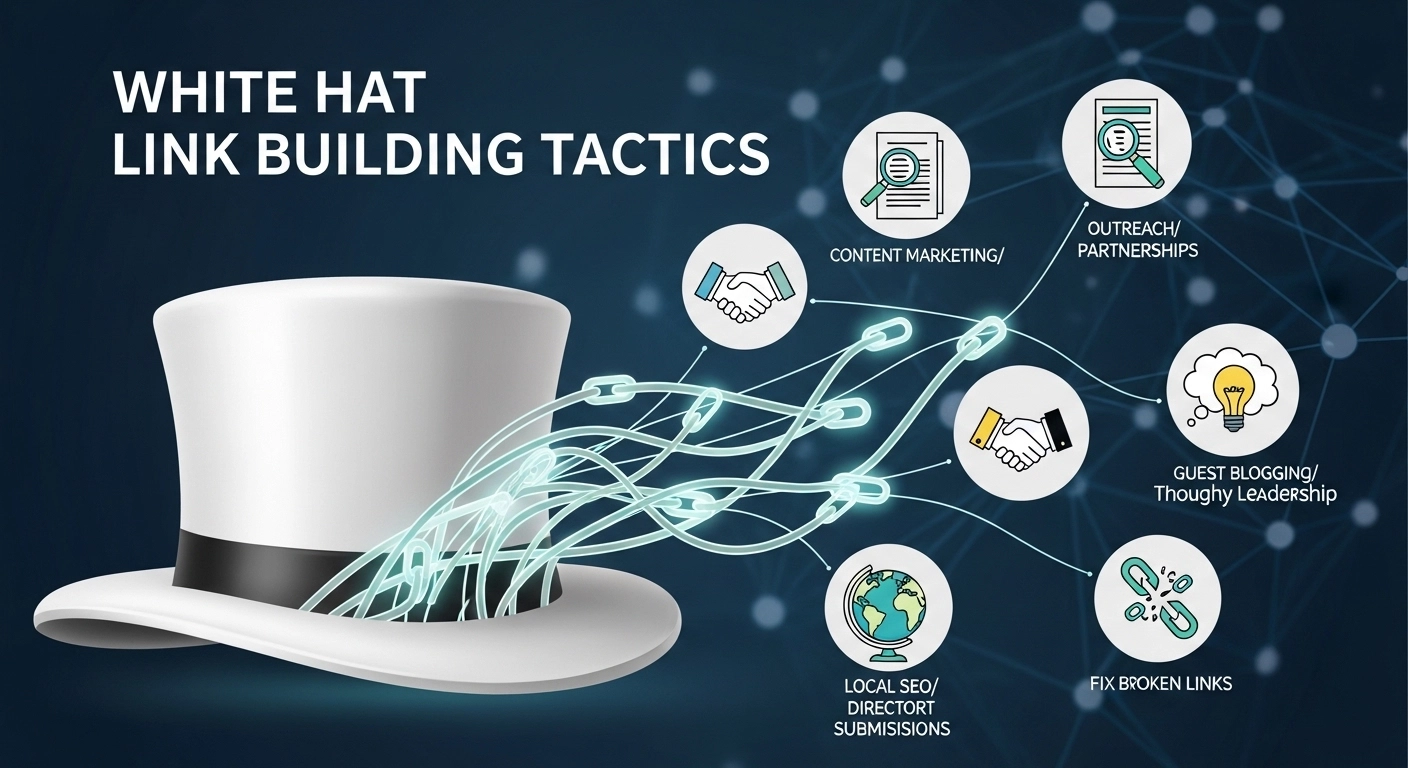
Search engines still treat backlinks as one of the strongest ranking signals. But not all links are equal. The difference between long-term SEO growth and a Google penalty often comes down to how those links are built.
That’s where white hat link building comes in.
White hat link building focuses on earning high-quality backlinks through ethical, sustainable methods that follow search engine guidelines. Instead of manipulating rankings, these strategies build authority, visibility, and trust.
In this guide, you’ll learn practical white hat link building tactics that work in 2026—and how to apply them to grow organic traffic safely.
What Is White Hat Link Building?
White hat link building refers to earning backlinks through legitimate, value-driven strategies that comply with search engine rules.
These links typically come from:
- High-quality content
- Genuine relationships
- Industry partnerships
- Media mentions
- Resource recommendations
Unlike black hat tactics such as buying links or using private blog networks, white hat links improve SEO without risking penalties.
Benefits include:
- Higher search rankings
- Increased domain authority
- Long-term traffic growth
- Strong brand credibility
1. Create Link-Worthy Content
The foundation of white hat link building is content people naturally want to reference.
If your content solves problems, provides unique insights, or offers valuable data, websites will link to it organically.
Examples of linkable content
- Original research and surveys
- Industry statistics pages
- In-depth guides
- Case studies
- Infographics
- Free tools or calculators
For example, a marketing site publishing “2026 SEO Statistics” can earn dozens of backlinks from bloggers citing the data.
Quick tips
- Focus on depth and accuracy
- Add visual assets like charts
- Update content regularly
- Include unique data or expert quotes
Great content doesn’t just attract readers—it attracts links automatically.
2. Guest Posting on Relevant Websites
Guest posting remains one of the most reliable white hat link building tactics when done correctly.
The key is contributing valuable content to reputable sites in your niche, not spammy blogs created only for links.
How to do it effectively
- Identify authoritative sites in your industry
- Pitch useful topic ideas
- Write genuinely helpful articles
- Include a contextual link to relevant content
For example, if you run a fitness blog, publishing a guest article on nutrition strategies for athletes on a sports website can earn a strong backlink.
Focus on quality and relevance, not volume.
3. Digital PR and Media Outreach
Digital PR is one of the most powerful link building strategies today.
Instead of chasing links, you earn them through media coverage.
Examples of digital PR tactics
- Expert commentary for journalists
- Data-driven reports
- Newsworthy studies
- Industry trend insights
- Unique company stories
Journalists and bloggers constantly look for credible sources. When they quote your insights, they often link back to your website.
Platforms like journalist request networks make it easier to connect with reporters.
4. Resource Page Link Building
Many websites maintain resource pages listing useful tools, guides, and articles.
If your content fits the topic, you can request inclusion.
Example resource pages:
- “Best SEO Tools”
- “Beginner Marketing Guides”
- “Helpful Blogging Resources”
How to find them
Search using queries like:
- keyword + useful resources
- keyword + recommended tools
- keyword + helpful links
Then contact the site owner and explain why your resource adds value.
This tactic works best when your content is genuinely useful.
5. Broken Link Building
Broken link building helps website owners fix dead links while giving you an opportunity to earn a backlink.
The process works like this:
- Find broken links on relevant websites
- Identify the missing content
- Create or match that content on your site
- Suggest your page as the replacement
Website owners appreciate the help because it improves their user experience.
Tools like SEO crawlers or browser extensions make finding broken links easier.
6. Build Relationships in Your Industry
Many backlinks come from relationships, not outreach templates.
Networking with bloggers, marketers, journalists, and creators often leads to natural linking opportunities.
Ways to build relationships:
- Engage with industry content on social media
- Comment thoughtfully on blogs
- Collaborate on projects
- Host webinars or podcasts
- Participate in expert roundups
Over time, these relationships can lead to mentions, collaborations, and organic links.
7. Create Free Tools and Resources
Free tools attract backlinks because they provide ongoing practical value.
Examples include:
- SEO audit tools
- Keyword generators
- ROI calculators
- Content templates
- Website graders
Even simple tools can earn hundreds of backlinks if they solve a real problem.
Many SaaS companies use this tactic as a core link-building strategy.
8. Leverage Skyscraper Content
The Skyscraper Technique focuses on improving existing popular content.
Steps include:
- Find content with many backlinks
- Create a better, updated version
- Reach out to websites linking to the original
Your improved content might include:
- More recent data
- Better design
- Deeper explanations
- Practical examples
When your content becomes the best resource available, many sites will update their links.
White Hat Link Building Best Practices
To maximize results, follow these key principles:
- Focus on relevance over quantity
- Prioritize authority websites
- Avoid paid link schemes
- Use natural anchor text
- Build links gradually
- Track backlinks regularly
White hat SEO is slower than shortcuts, but it builds sustainable rankings that last for years.
FAQ: White Hat Link Building
What is the difference between white hat and black hat link building?
White hat link building follows search engine guidelines and focuses on earning links naturally. Black hat tactics manipulate rankings using methods like buying links, spam comments, or private blog networks, which can lead to penalties.
How long does white hat link building take to work?
Most campaigns start showing results in 3–6 months, depending on competition, content quality, and outreach efforts.
Are backlinks still important for SEO?
Yes. Backlinks remain one of the top ranking factors, signaling authority, trust, and relevance to search engines.
How many backlinks do I need to rank?
There is no fixed number. Ranking depends on link quality, domain authority, content relevance, and competition.
Can you build backlinks without outreach?
Yes. Strategies like original research, tools, and high-value guides can attract links naturally over time.
Final Thoughts
White hat link building is not about shortcuts—it’s about creating value, building relationships, and earning trust.
When done correctly, these tactics produce:
- Stronger search rankings
- Sustainable organic traffic
- Real brand authority
Focus on helpful content, genuine connections, and strategic outreach, and backlinks will follow naturally.
