
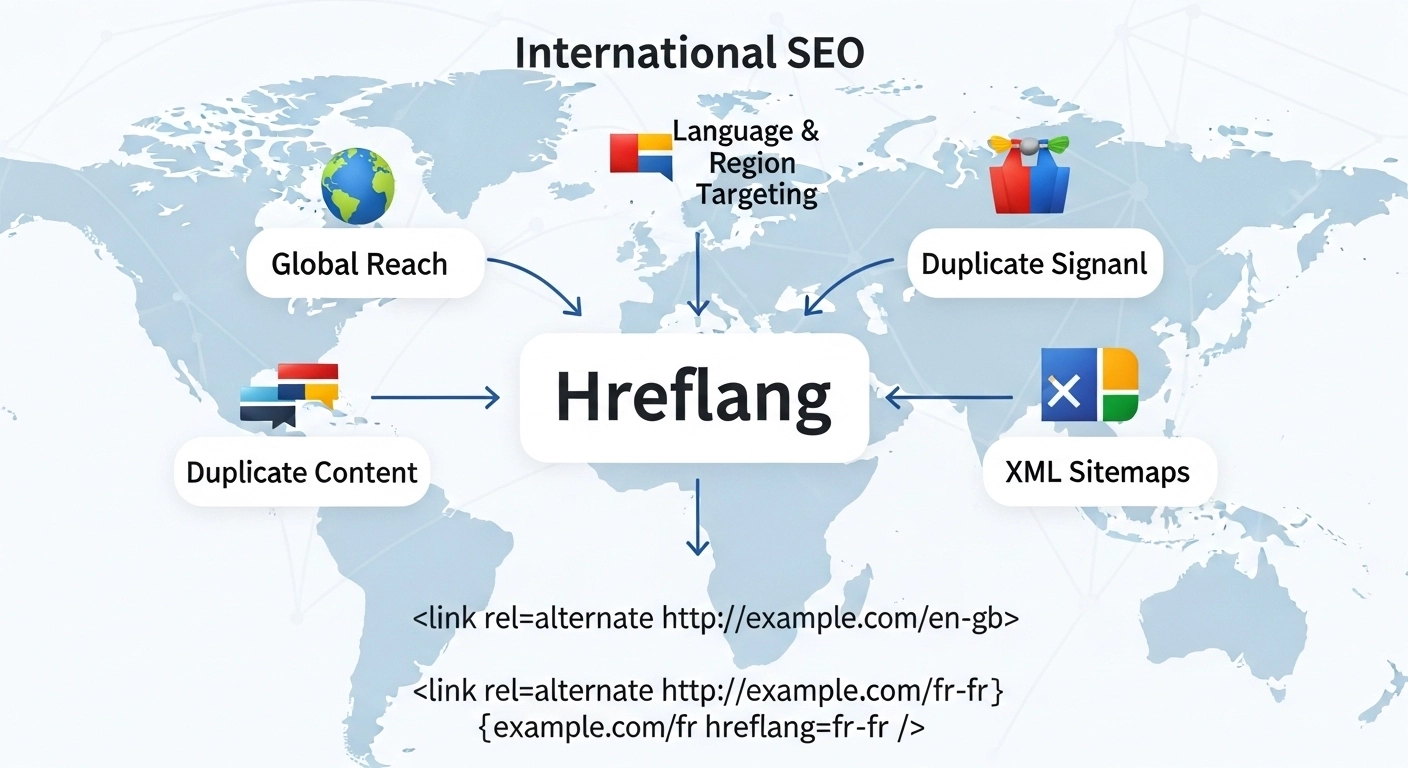
If your website targets users in multiple countries or languages, International SEO becomes essential. One of the most important tools in international search optimization is the hreflang tag.
When implemented correctly, hreflang tells search engines which version of a page to show to users based on their language and location. Without it, Google may display the wrong page to the wrong audience—hurting both user experience and rankings.
In this guide, you’ll learn what hreflang is, why it matters, and how to implement it correctly for global SEO success.
What Is Hreflang in International SEO?
Hreflang is an HTML attribute used to indicate the language and geographic targeting of a webpage.
It helps search engines understand that multiple pages contain similar content but are intended for different audiences.
For example:
- English for the United States
- English for the United Kingdom
- Spanish for Spain
- Spanish for Mexico
Instead of treating these pages as duplicates, search engines use hreflang to serve the correct version to the right users.
Example of an Hreflang Tag
<link rel=”alternate” hreflang=”en-us” href=”https://example.com/us/” />
<link rel=”alternate” hreflang=”en-gb” href=”https://example.com/uk/” />
<link rel=”alternate” hreflang=”es-es” href=”https://example.com/es/” />
In this example:
- en-us targets English speakers in the United States
- en-gb targets English speakers in the United Kingdom
- es-es targets Spanish speakers in Spain
Why Hreflang Matters for International SEO
If you run a multilingual or multi-regional website, hreflang offers several major benefits.
1. Prevents Duplicate Content Issues
Pages with similar content in different languages may look like duplicates to search engines.
Hreflang signals that they are intended for different audiences, not duplicates.
2. Improves User Experience
Users land on the correct language and regional version of your page automatically, reducing bounce rates.
3. Boosts International Rankings
Search engines can better understand which page to rank in which country, improving visibility globally.
4. Increases Conversions
Showing visitors content in their native language and currency significantly increases trust and conversions.
When You Need Hreflang
You should use hreflang if your website:
- Offers multiple languages
- Targets different countries
- Has regional versions of the same language
- Uses translated or localized pages
Examples:
| Page Version | Target Audience |
| example.com | Global English |
| example.com/us | United States |
| example.com/uk | United Kingdom |
| example.com/es | Spanish users |
How to Implement Hreflang
There are three main methods for implementing hreflang.
1. HTML Tags
The most common method is placing hreflang tags in the page <head> section.
Example:
<link rel=”alternate” hreflang=”en-us” href=”https://example.com/us/page/” />
<link rel=”alternate” hreflang=”en-gb” href=”https://example.com/uk/page/” />
<link rel=”alternate” hreflang=”x-default” href=”https://example.com/” />
The x-default tag indicates the fallback page when no specific language match exists.
2. HTTP Headers
For non-HTML files like PDFs, hreflang can be implemented via HTTP headers.
Example:
Link: <https://example.com/us/page/>; rel=”alternate”; hreflang=”en-us”
3. XML Sitemaps
Large websites often use hreflang in XML sitemaps to manage international pages more easily.
Example:
<xhtml:link rel=”alternate” hreflang=”en-us” href=”https://example.com/us/” />
<xhtml:link rel=”alternate” hreflang=”fr-fr” href=”https://example.com/fr/” />
Best Practices for Hreflang Implementation
To avoid common SEO mistakes, follow these best practices.
Always Use Reciprocal Tags
Each page must reference all alternate versions, including itself.
Example:
Page A → Page B
Page B → Page A
Without reciprocal linking, Google may ignore the tags.
Use Correct Language and Country Codes
Hreflang uses ISO language and country codes.
Examples:
| Code | Meaning |
| en | English |
| en-us | English (United States) |
| en-gb | English (United Kingdom) |
| fr-fr | French (France) |
Incorrect codes will break your hreflang implementation.
Avoid Automatic Redirects
Do not automatically redirect users based on location.
Allow users and search engines to access all versions of your pages.
Use Canonical Tags Carefully
Each language version should normally have a self-referencing canonical tag, not a canonical pointing to another language page.
Common Hreflang Mistakes
Many websites lose international traffic due to simple errors.
Missing Return Tags
Pages reference another version but don’t receive a return link.
Incorrect Language Codes
Using invalid codes like en-uk instead of en-gb.
Broken URLs
Hreflang links pointing to non-existing or redirected pages.
Mixing Canonical and Hreflang Incorrectly
Canonicalizing different language versions to one page can override hreflang signals.
Simple Real-World Example
Imagine an ecommerce site selling shoes internationally.
They create three versions:
- example.com/us/ – US customers (USD)
- example.com/uk/ – UK customers (GBP)
- example.com/es/ – Spanish customers (EUR)
Using hreflang ensures:
- US users see the US page
- UK users see the UK page
- Spanish users see the Spanish page
This improves both SEO performance and customer experience.
FAQ About International SEO Hreflang
What does hreflang mean in SEO?
Hreflang is an HTML attribute that tells search engines which language and regional version of a page should appear in search results.
Does hreflang affect rankings?
Hreflang does not directly boost rankings, but it ensures the correct page ranks for the correct audience, improving international SEO performance.
Can I use hreflang without translating content?
Yes, but it works best when pages are properly localized, not just duplicated.
What is x-default in hreflang?
The x-default tag defines the default page shown when no language or regional match exists.
Example:
<link rel=”alternate” hreflang=”x-default” href=”https://example.com/” />
Conclusion
For websites targeting multiple languages or regions, hreflang is a critical part of international SEO. It helps search engines deliver the right content to the right users while avoiding duplicate content issues.
When implemented correctly, hreflang can:
- Improve global search visibility
- Enhance user experience
- Increase international conversions
