
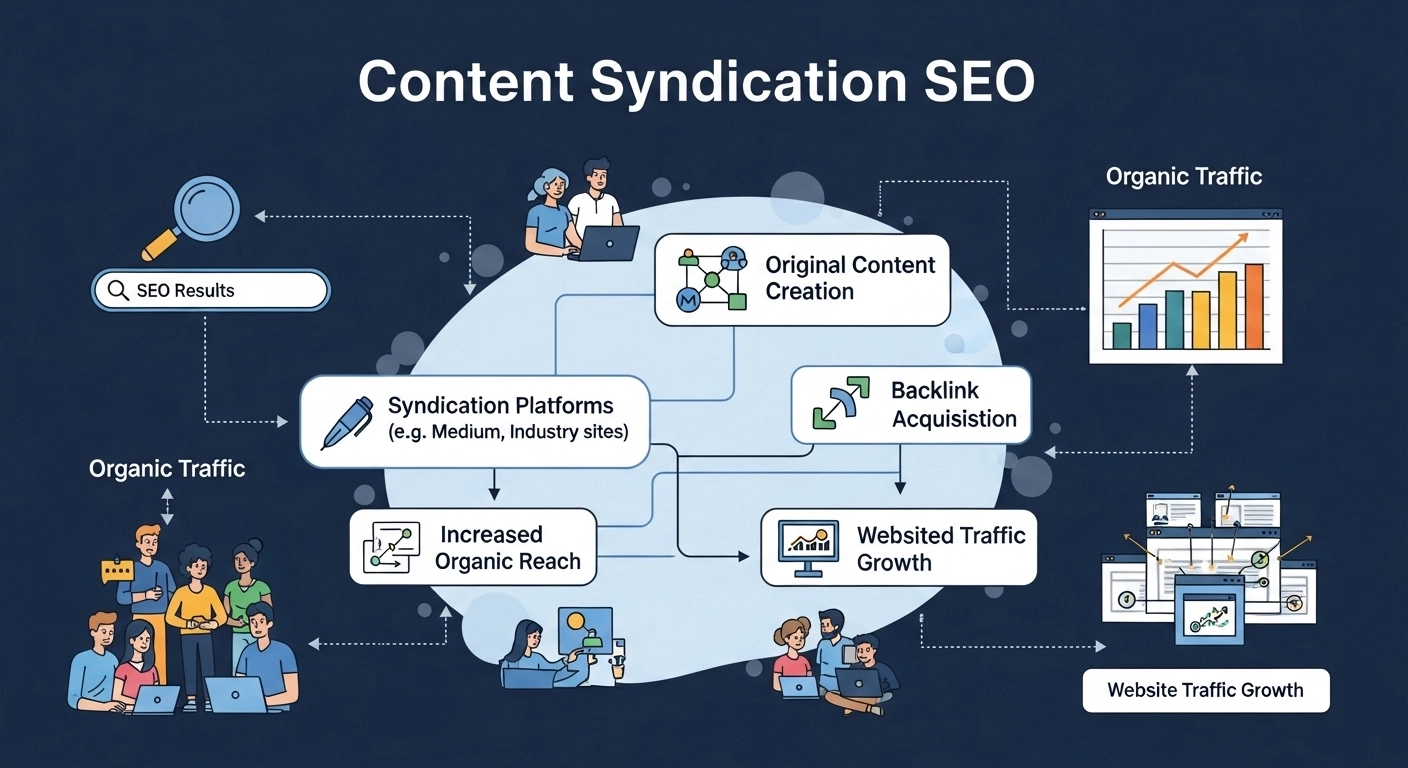
In the competitive world of digital marketing, creating great content is only half the battle. The real challenge is getting that content in front of the right audience. That’s where content syndication SEO comes in.
Content syndication allows you to republish your content on third-party platforms to reach new audiences, build authority, and increase traffic. When done correctly, it can support your SEO strategy instead of hurting it.
This guide explains what content syndication SEO is, how it works, and how to use it safely and effectively.
What Is Content Syndication in SEO?
Content syndication is the process of republishing your existing content on other websites, blogs, or platforms. These platforms share your article with their audience while typically linking back to your original source.
In simple terms:
You publish content once on your website, then distribute it across other platforms to gain more exposure.
Examples of content syndication platforms include:
- Medium
- LinkedIn Articles
- Industry blogs
- News websites
- Content syndication networks
For example, if you publish a blog post about digital marketing strategies on your website, you might later republish it on Medium or a partner website with a link back to your original article.
This helps you reach readers who might never have visited your site otherwise.
How Content Syndication Helps SEO
Many people worry that syndicating content will cause duplicate content issues. In reality, Google understands syndicated content when it’s handled properly.
Here are the main SEO benefits.
1. Increased Brand Visibility
When your content appears on multiple websites, your brand becomes visible to a larger audience. More exposure leads to:
- More traffic
- More brand searches
- More authority in your niche
For example, a marketing blog syndicated on a major industry site can instantly reach thousands of new readers.
2. High-Quality Backlinks
Most syndication opportunities include a link back to the original article.
These backlinks help search engines:
- Discover your content
- Understand your authority
- Improve your rankings
Backlinks from reputable websites are especially valuable for SEO.
3. Faster Content Distribution
Creating high-quality content takes time. Syndication allows you to maximize the value of content you already created.
Instead of writing new posts every day, you can distribute existing ones to new audiences.
This strategy is often called content amplification.
4. Referral Traffic
Readers on syndication platforms may click through to your website for more information.
This results in:
- Targeted traffic
- Potential leads
- More engagement
For example, a SaaS company might syndicate a blog post on a tech publication that sends hundreds of new visitors to their site.
How to Syndicate Content Without Hurting SEO
To protect your rankings, follow these best practices.
Publish on Your Website First
Always publish content on your own website before syndicating it elsewhere.
This helps search engines identify your site as the original source.
Wait a few days or weeks before republishing the article on other platforms.
Use Canonical Tags
A canonical tag tells search engines which version of the article is the original.
Example:
<link rel=”canonical” href=”https://yourwebsite.com/original-article”>
Many syndication platforms allow you to add this tag.
Request Proper Attribution
When your content appears on another site, it should include:
- Your name or brand
- A link to the original article
- A note such as:
“This article originally appeared on [Your Website].”
This protects your ownership and strengthens your SEO signals.
Avoid Low-Quality Syndication Sites
Not all syndication platforms are beneficial.
Avoid websites that:
- Publish spam content
- Have low authority
- Use scraped articles
Instead, focus on reputable industry platforms.
Quality matters far more than quantity.
Best Platforms for Content Syndication
Here are some popular places where businesses syndicate content.
Medium
Medium has a large built-in audience. Many marketers republish blog posts there to gain additional visibility.
You can also submit content to Medium publications.
LinkedIn Articles
LinkedIn is ideal for B2B content syndication.
Republishing your blog posts on LinkedIn can reach professionals and decision-makers.
Industry Websites
Guest posts and partnerships with industry blogs can act as syndication opportunities.
For example:
- Marketing blogs
- Technology news sites
- Business publications
These platforms often provide strong backlinks and targeted traffic.
Content Syndication Networks
Some services specialize in distributing content to large networks of websites.
Examples include:
- Outbrain
- Taboola
- Zemanta
These networks are commonly used in paid content syndication campaigns.
Example of a Simple Content Syndication Strategy
Let’s say you run a digital marketing blog.
A simple syndication workflow might look like this:
- Publish an article on your website.
- Wait one week for Google to index it.
- Republish the article on Medium with a canonical link.
- Share a shorter version on LinkedIn with a link back.
- Pitch the article to an industry publication.
This process turns one article into multiple traffic sources.
Content Syndication vs Guest Posting
These strategies are related but not the same.
Content Syndication
- Republishing existing content
- Same article appears on multiple sites
Guest Posting
- Writing a new article for another website
- Content is unique to that platform
Both strategies can support SEO and brand visibility.
Common Content Syndication Mistakes
Avoid these common problems:
Syndicating before publishing on your own site
This may cause another website to rank instead of yours.
No canonical tag or attribution
Search engines may treat the content as duplicate.
Using spam networks
Low-quality sites can damage your SEO reputation.
Over-syndicating the same article
Too many copies may dilute the value.
Balance and quality are key.
FAQ: Content Syndication SEO
Does content syndication hurt SEO?
No. When done correctly—with canonical tags and proper attribution—it can actually improve visibility and traffic.
Is content syndication considered duplicate content?
Technically yes, but search engines understand syndication when the original source is clear.
Using canonical links prevents SEO issues.
How long should I wait before syndicating content?
Most SEO experts recommend waiting 1–2 weeks after publishing the original article.
This allows search engines to index your page first.
Is content syndication free?
It can be both.
- Free: Medium, LinkedIn, partnerships
- Paid: content syndication networks like Outbrain
Final Thoughts
Content syndication SEO is one of the most effective ways to extend the reach of your content without creating new articles constantly.
By republishing your content on trusted platforms, you can:
- Build authority
- Earn backlinks
- Increase brand awareness
- Drive targeted traffic
The key is to focus on high-quality platforms, proper attribution, and canonical tags.
When used strategically, content syndication can turn a single blog post into a powerful growth engine.
