
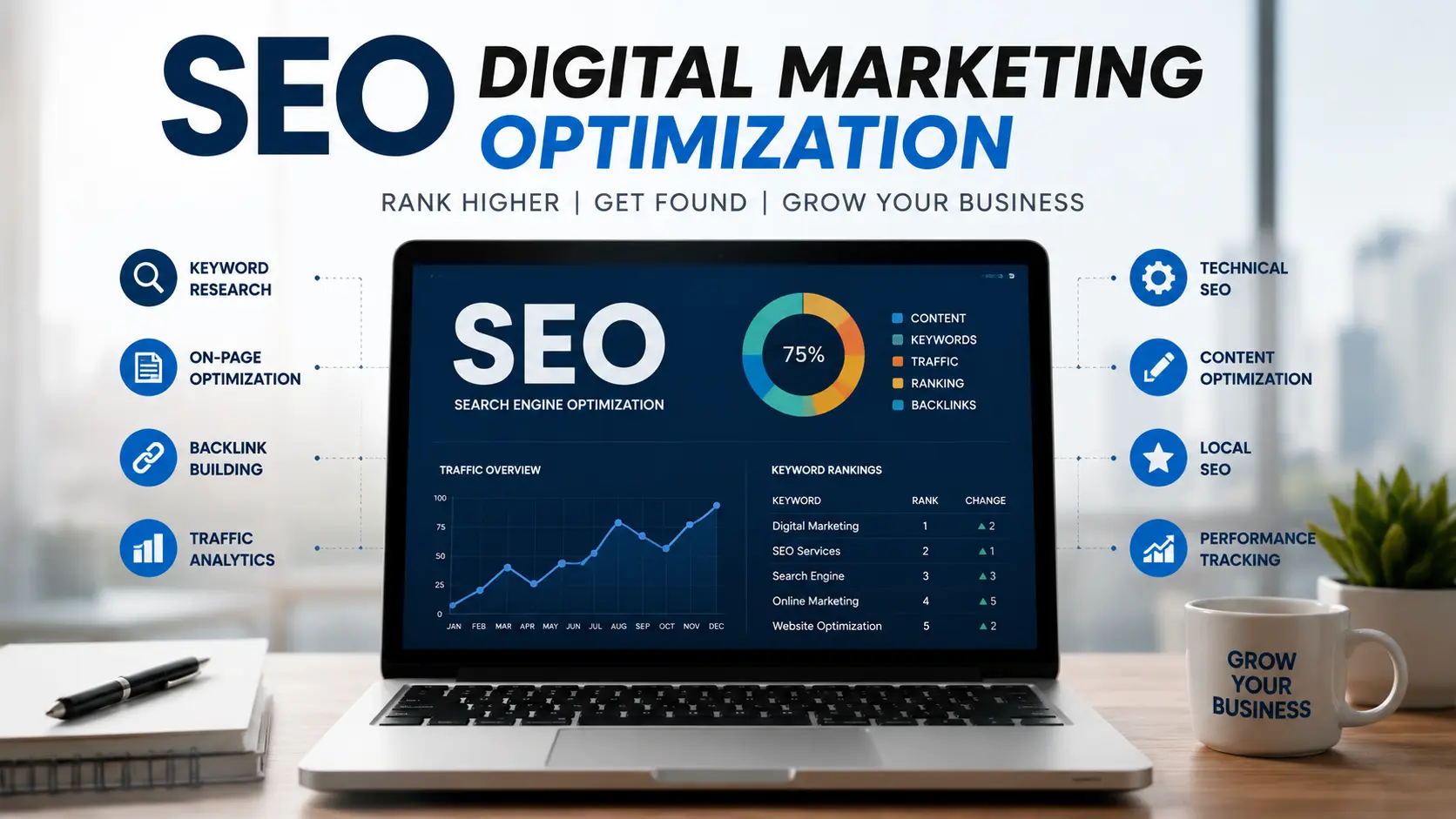
In today’s competitive online space, simply having a website is not enough. Businesses need a smart strategy that connects search visibility, user experience, and content performance. That’s where SEO digital marketing optimization comes in.
It’s not just about ranking higher on Google—it’s about attracting the right audience, improving engagement, and turning visitors into customers. In this guide, you’ll learn what it means, how it works, and how to apply it effectively.
What Is SEO Digital Marketing Optimization?
SEO digital marketing optimization is the process of improving all digital marketing elements—your website, content, technical setup, and user experience—to increase visibility in search engines and drive qualified traffic.
It combines three key areas:
- Search Engine Optimization (SEO): Improving rankings on Google and other search engines
- Digital Marketing: Promoting your brand through online channels like content, email, and social media
- Optimization: Continuously improving performance based on data and user behavior
Instead of working separately, these elements work together to grow your online presence.
Why It Matters for Modern Businesses
Most online experiences start with a search engine. If your website isn’t optimized, you’re missing out on potential customers who are actively looking for your services.
Here’s why it’s important:
- Increases organic traffic without paid ads
- Builds long-term brand authority
- Improves conversion rates
- Reduces customer acquisition cost
- Helps you compete with larger brands
For example, a small e-commerce store that optimizes its product pages and content can outrank bigger competitors by targeting specific keywords and user intent.
Key Components of SEO Digital Marketing Optimization
To understand how it works, let’s break it into core components.
1. Keyword Strategy and Search Intent
Everything starts with understanding what your audience is searching for.
Instead of guessing keywords, focus on:
- Informational keywords (e.g., “how to improve website ranking”)
- Transactional keywords (e.g., “buy SEO tools online”)
- Navigational keywords (e.g., “best SEO agency near me”)
But the real power comes from search intent optimization—matching content with what the user actually wants.
If someone searches “SEO digital marketing optimization,” they likely want a guide or strategy, not just a definition.
2. On-Page SEO Optimization
On-page SEO ensures your content is structured for both users and search engines.
Important elements include:
- Clear and descriptive titles
- Proper heading structure (H1, H2, H3)
- Meta descriptions that encourage clicks
- Internal linking to related pages
- Optimized images with alt text
For example, a blog post about SEO should include internal links to related topics like content marketing, keyword research, or technical SEO.
3. High-Quality Content Creation
Content is the backbone of SEO digital marketing optimization.
Good content should be:
- Helpful and easy to read
- Focused on solving real problems
- Structured with short paragraphs and headings
- Supported with examples or data
Instead of writing for search engines, write for humans first. Google rewards content that keeps users engaged.
4. Technical SEO Improvements
Even great content won’t perform well if your website has technical issues.
Key technical areas include:
- Fast page loading speed
- Mobile-friendly design
- Secure HTTPS connection
- Proper indexing and crawlability
- Clean URL structure
For example, if your site takes more than 3 seconds to load, users may leave before even seeing your content.
5. User Experience (UX) Optimization
Search engines now prioritize user experience more than ever.
Good UX includes:
- Easy navigation
- Clean layout
- Readable fonts
- Logical page structure
- Minimal pop-ups or distractions
If users stay longer on your site and interact with it, search engines see it as a quality signal.
6. Off-Page SEO and Authority Building
Off-page SEO focuses on building trust outside your website.
This includes:
- Backlinks from reputable websites
- Brand mentions across the web
- Guest posting
- Social media engagement
For example, if industry blogs link to your content, search engines view your website as more trustworthy.
How SEO and Digital Marketing Work Together
SEO alone is powerful, but when combined with digital marketing, results multiply.
Here’s how they connect:
- Social media drives traffic to SEO-optimized content
- Email marketing brings users back to your website
- Content marketing supports keyword ranking
- Paid ads can test keywords before organic targeting
Think of SEO as the foundation and digital marketing as the amplification system.
Common Mistakes to Avoid
Many businesses struggle because they make avoidable mistakes:
- Targeting too many keywords at once
- Ignoring search intent
- Publishing low-quality content
- Not updating old blog posts
- Over-optimizing with keywords
Instead, focus on consistency, quality, and long-term improvement.
Simple Strategy to Get Started
If you’re new to SEO digital marketing optimization, follow this simple roadmap:
- Research keywords based on your audience
- Create helpful, well-structured content
- Optimize each page for on-page SEO
- Improve website speed and mobile usability
- Build high-quality backlinks
- Track performance and refine regularly
SEO is not a one-time task—it’s an ongoing process.
FAQ: SEO Digital Marketing Optimization
1. What is SEO digital marketing optimization in simple terms?
It’s the process of improving your website and online marketing so more people can find you on search engines like Google.
2. How long does SEO optimization take to show results?
Usually, it takes 3 to 6 months to see noticeable improvements, depending on competition and consistency.
3. Is SEO better than paid advertising?
SEO provides long-term, sustainable traffic, while ads give quick but temporary results. Most businesses use both together.
4. Do small businesses need SEO optimization?
Yes. SEO helps small businesses compete with larger companies by targeting specific and local search queries.
5. What is the most important part of SEO?
High-quality content combined with strong keyword strategy and technical performance is the foundation of SEO success.
Conclusion
SEO digital marketing optimization is not just a trend—it’s a long-term strategy for building visibility, trust, and sustainable online growth. When done correctly, it connects your content, website, and marketing efforts into one powerful system that attracts the right audience and converts them into customers.
The key is consistency. Small improvements over time lead to big results.
