
If your goal is steady, compounding growth, not short-term spikes, SEO should be the backbone of your digital strategy. The right approach doesn’t just bring traffic; it attracts the right visitors, converts them, and keeps your pipeline full.
This guide breaks down proven SEO digital growth strategies you can actually implement—whether you’re building a new site or scaling an existing one.
What “SEO Digital Growth” Really Means
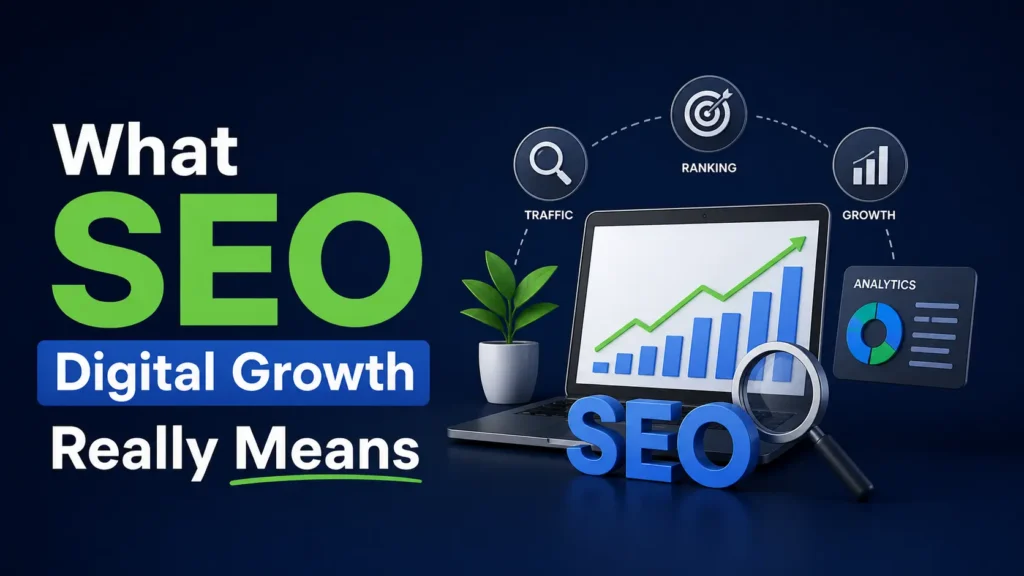
SEO digital growth is about aligning three things:
- Search demand (what people are looking for)
- Content relevance (how well you answer it)
- Technical performance (how easily search engines and users access it)
When these work together, you get predictable traffic growth, better rankings, and higher conversions.
Read More: E-commerce Conversion Optimization: Ultimate Guide to Boost Sales in
Start With Search Intent, Not Just Keywords

Most SEO efforts fail because they chase keywords instead of understanding intent.
Types of search intent:
- Informational: “how to improve SEO”
- Navigational: brand searches
- Commercial: “best SEO tools”
- Transactional: “buy SEO services”
Practical example:
If you target “SEO digital growth strategies”, your content should:
- Teach actionable methods
- Include frameworks and examples
- Avoid overly salesy language
Tip: Use tools like Google suggestions and “People Also Ask” to map real intent.
Read More: City-Based Keywords Guide: Local SEO Strategy That Ranks
Build Topic Clusters

Google rewards websites that go deep into a subject.
How to do it:
Create a pillar page and support it with related articles.
Example cluster:
- Pillar: SEO Digital Growth Strategies
- Supporting content:
- Technical SEO checklist
- On-page SEO guide
- Content marketing for SEO
- Link building strategies
Link them together internally to signal authority.
Read More: SEO Ranking Enhancement Tips: A Practical Guide to Boost Your Search Visibility
Optimize On-Page SEO the Smart Way

Forget outdated keyword stuffing. Focus on clarity and structure.
Essentials:
- Clear H1 with primary keyword
- Descriptive subheadings (H2, H3)
- Natural keyword variations
- Short paragraphs for readability
Example:
Instead of repeating:
“SEO digital growth strategies”
Use variations like:
- SEO growth tactics
- organic growth strategies
- search-driven scaling methods
Create Content That Actually Solves Problems

High rankings come from usefulness, not word count.
Winning content includes:
- Step-by-step instructions
- Real examples
- Simple explanations
- Actionable takeaways
Weak vs strong content:
- ❌ Generic tips
- ✅ “Here’s exactly how to do it” guides
Improve Technical SEO for Performance
Even great content fails if your site is slow or hard to crawl.
Key areas:
- Page speed optimization
- Mobile responsiveness
- Clean URL structure
- Proper indexing
Quick wins:
- Compress images
- Use caching
- Fix broken links
Build High-Quality Backlinks
Backlinks are still one of the strongest ranking factors.
Effective strategies:
- Guest posting on relevant blogs
- Creating link-worthy content (guides, data, tools)
- Outreach to niche websites
Example:
Publish a detailed SEO case study → reach out to bloggers → earn natural links.
Focus on Conversion, Not Just Traffic
Traffic without conversions is wasted effort.
Optimize for:
- Clear CTAs (calls to action)
- Fast-loading pages
- Trust signals (reviews, testimonials)
Example:
Instead of just a blog, add:
- “Get a free SEO audit”
- “Download checklist”
Track, Measure, and Improve
Growth comes from continuous optimization.
Track:
- Organic traffic
- Keyword rankings
- Click-through rate (CTR)
- Conversion rate
Tools:
- Google Analytics
- Google Search Console
Use data to refine content and strategy.
Simple SEO Growth Framework
- Research intent
- Build topic clusters
- Create valuable content
- Optimize on-page
- Fix technical issues
- Earn backlinks
- Improve conversions
- Analyze and scale
Repeat this cycle consistently.
Read More: SEO Search Traffic Improvement: A Practical Guide to Grow Organic Visitors
FAQ: SEO Digital Growth Strategies
What is the fastest way to grow with SEO?
There’s no instant shortcut. The fastest sustainable growth comes from targeting low-competition keywords and publishing high-quality content consistently.
How long does SEO take to show results?
Typically 3–6 months for noticeable growth, depending on competition and consistency.
Do backlinks still matter?
Yes. High-quality backlinks remain a major ranking factor, especially in competitive niches.
How often should I publish content?
Focus on quality over quantity. 1–2 strong, well-optimized posts per week is effective for most websites.
Is SEO better than paid ads?
SEO provides long-term, compounding growth, while ads deliver immediate but temporary results. The best strategy uses both.
Final Thoughts: Build for Long-Term Growth
SEO digital growth isn’t about hacks; it’s about consistency, relevance, and value.
If you:
- Understand your audience
- Create genuinely helpful content
- Optimize your site properly
- Build authority over time
You’ll create a system that drives traffic and revenue on autopilot.
