
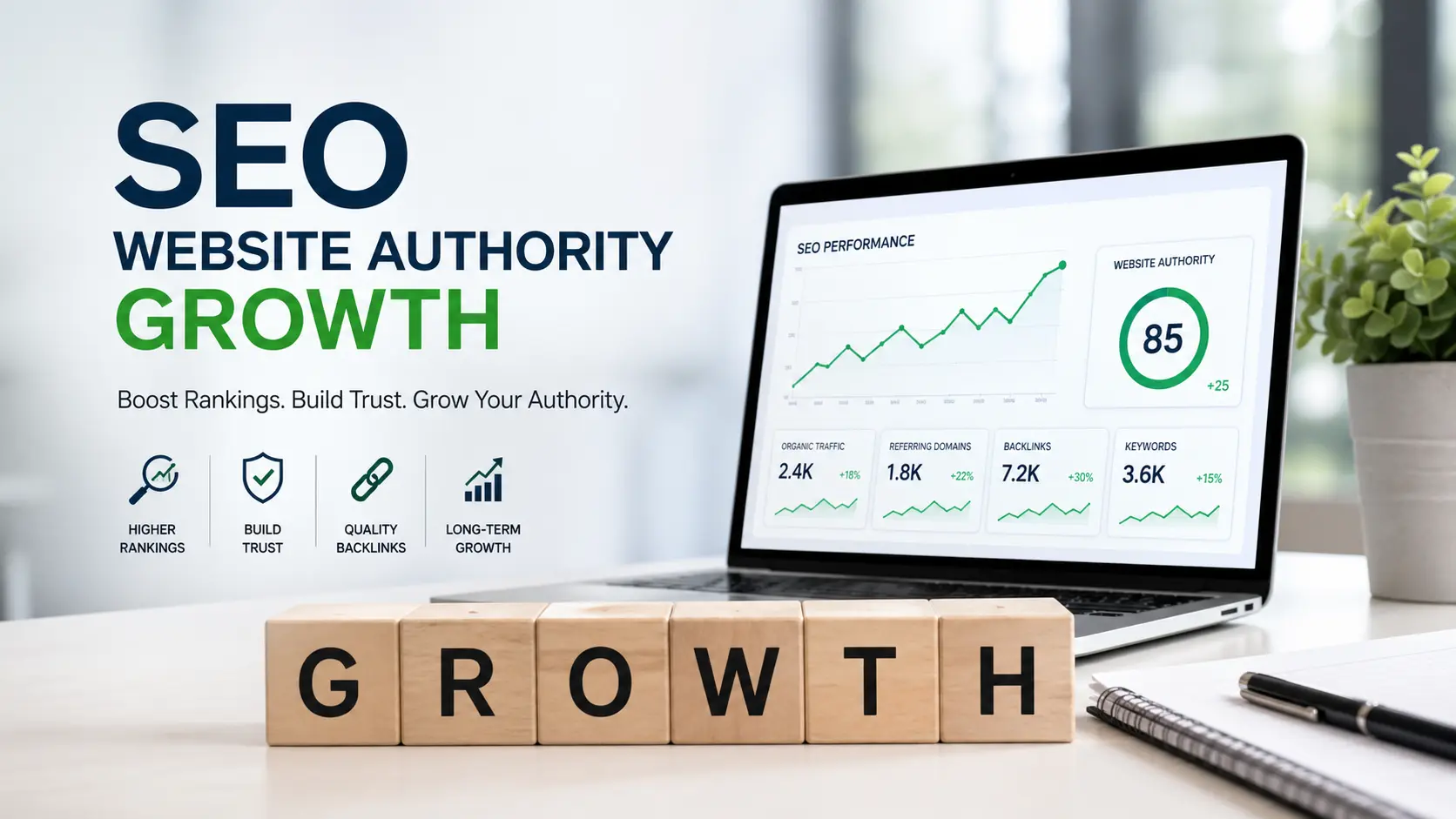
If your website isn’t growing in rankings, traffic, or visibility, the issue often isn’t just keywords or content—it’s authority. Search engines don’t just rank pages; they rank trusted websites.
SEO website authority growth is about building that trust in a structured, long-term way so Google sees your site as reliable, relevant, and worth ranking above competitors.
Let’s break it down in a practical, no-fluff way.
What Is Website Authority in SEO?
Website authority is a measure of how trustworthy and influential your website appears to search engines.
It’s not a single official Google score, but it is reflected through signals like:
- Quality backlinks from other trusted sites
- Strong topical relevance
- Consistent content publishing
- User engagement (time on site, clicks, bounce rate)
- Brand mentions across the web
In simple terms:
Higher authority = higher chance of ranking.
Why SEO Website Authority Growth Matters
You can write great content, but without authority, it often gets buried.
Here’s what authority actually helps with:
- Faster ranking for new content
- Higher visibility for competitive keywords
- Better trust from users and search engines
- More organic backlinks over time
- Stronger long-term traffic stability
Think of it like reputation. A new website is like a new business—Google won’t immediately trust it until it proves value.
Core Pillars of SEO Website Authority Growth
1. High-Quality Content That Solves Real Problems
Content is still the foundation, but not just any content.
Focus on:
- In-depth guides instead of short articles
- Real examples and case studies
- Clear answers to search intent
- Updated and accurate information
For example, instead of writing “SEO tips,” create:
“Step-by-step SEO strategy for ranking a new website in 2026”
That level of depth builds authority naturally.
2. Topical Authority (Not Just Random Keywords)
Google prefers websites that specialize in a topic cluster, not scattered content.
Instead of writing random posts like:
- SEO tips
- Digital marketing basics
- Blogging ideas
Build clusters like:
- SEO fundamentals
- Technical SEO
- Link building strategies
- Keyword research systems
When your site covers a topic deeply, Google starts treating it as an expert source.
3. Strong Backlink Profile (Quality Over Quantity)
Backlinks are still one of the strongest authority signals.
But not all links are equal.
Focus on:
- Guest posting on relevant sites
- Digital PR mentions
- Industry blogs and niche directories
- Natural editorial links
Avoid spammy link farms—they do more harm than good.
One high-authority link is worth more than 100 weak ones.
4. Internal Linking Structure
Internal links help Google understand your site hierarchy.
Best practices:
- Link related articles together
- Use descriptive anchor text
- Build pillar pages that connect to supporting content
Example:
A pillar page on “SEO Strategy” links to:
- Keyword research guide
- On-page SEO checklist
- Link building methods
This strengthens authority across the entire site.
5. Technical SEO Foundation
Without a solid technical setup, authority growth slows down.
Make sure your site has:
- Fast loading speed
- Mobile-friendly design
- Clean URL structure
- Proper indexing and sitemap
- No broken links
Even great content won’t rank well on a weak technical base.
6. Brand Signals and Trust Building
Google increasingly values brand presence.
You can strengthen this by:
- Getting brand mentions on other websites
- Being active on social platforms
- Maintaining consistent branding
- Encouraging user engagement and reviews
When people search your brand name, that’s a strong authority signal.
Common Mistakes That Block Authority Growth
Many websites stay stuck because of these issues:
- Publishing thin, low-value content
- Ignoring backlinks completely
- Targeting too many unrelated topics
- Not updating old content
- Over-optimizing keywords instead of user intent
Fixing these alone can significantly improve rankings over time.
Realistic Timeline for Authority Growth
SEO authority is not instant.
Typical growth timeline:
- 1–3 months: indexing + initial visibility
- 3–6 months: ranking improvements for low competition keywords
- 6–12 months: noticeable authority and stable traffic
- 12+ months: strong competitive positioning
Consistency matters more than speed.
Simple SEO Authority Growth Strategy (Step-by-Step)
- Pick one main niche/topic
- Create 5–10 pillar content pages
- Build 20–50 supporting articles
- Internally link everything properly
- Start earning quality backlinks
- Update content every 3–6 months
- Monitor rankings and refine strategy
This system compounds over time.
FAQ: SEO Website Authority Growth
1. How long does it take to increase website authority?
Usually 3–12 months depending on content quality, backlinks, and consistency.
2. Can a new website build authority quickly?
Yes, but only with strong content and consistent backlink acquisition. There are no shortcuts.
3. Do backlinks still matter for SEO authority?
Yes, high-quality backlinks remain one of the strongest ranking signals.
4. What is more important: content or backlinks?
Both matter. Content builds relevance, backlinks build trust.
5. How do I check my website authority?
Tools like Ahrefs, Moz, or Semrush provide authority metrics, but focus more on traffic and rankings.
Conclusion
SEO website authority growth is not about tricks—it’s about building long-term trust with search engines and users.
When you combine:
- High-quality content
- Strong topical structure
- Ethical backlinks
- Clean technical SEO
- Consistent branding
your website naturally becomes more powerful in search results.
