
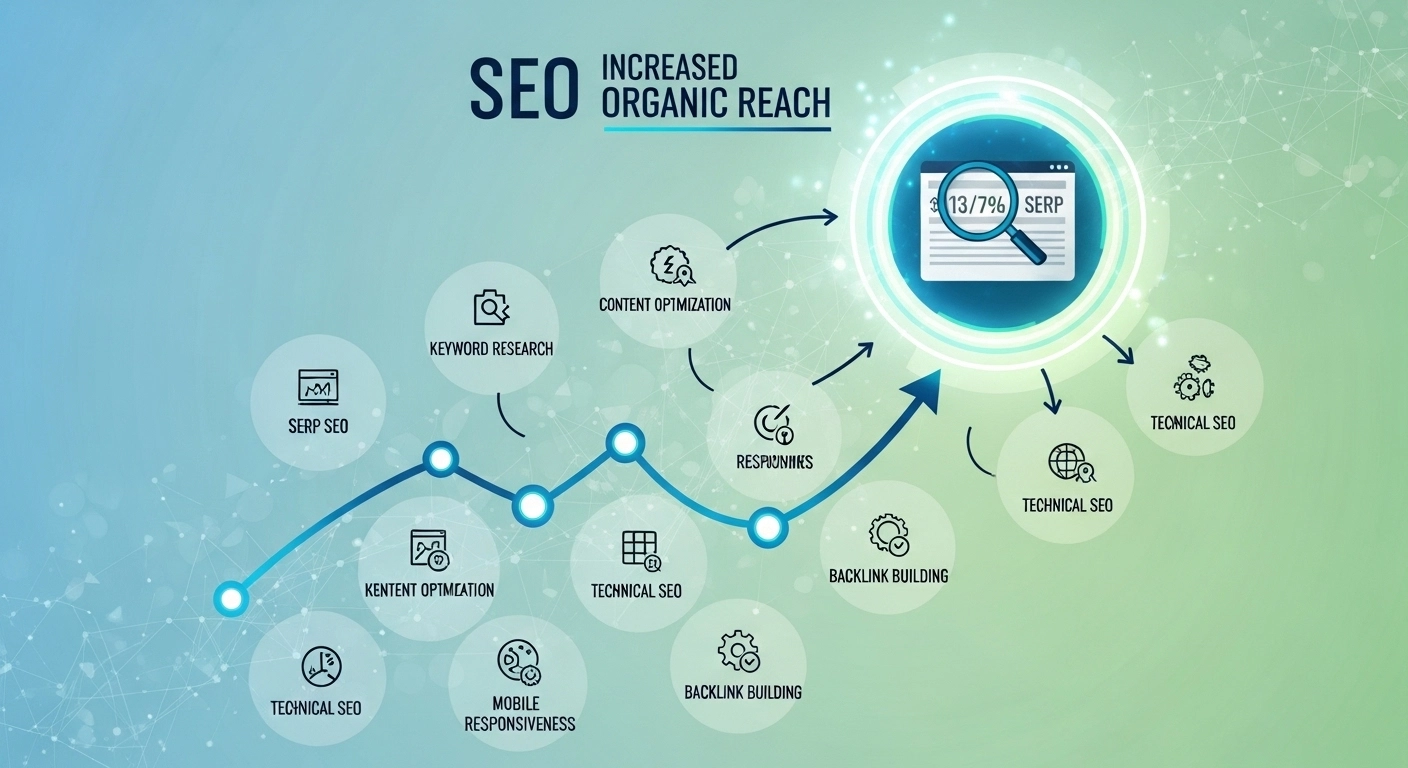
Organic reach is the backbone of long-term SEO success. When your content appears in search results without paid ads, you’re building sustainable traffic that compounds over time. But improving organic reach isn’t about luck—it’s about strategy, consistency, and understanding how search engines evaluate content.
This guide breaks down practical, proven methods to improve SEO organic reach in a way that actually works today.
What Is SEO Organic Reach?
SEO organic reach refers to the number of users who find your website through unpaid search results on platforms like Google. It reflects how visible your content is when people search for topics related to your business.
Higher organic reach means:
- More qualified traffic
- Better brand visibility
- Lower customer acquisition costs
- Long-term stability compared to paid ads
1. Focus on Search Intent First
If your content doesn’t match what users are actually searching for, it won’t rank—no matter how well it’s written.
There are four main types of search intent:
- Informational (learning something)
- Navigational (finding a specific site)
- Commercial (comparing options)
- Transactional (ready to buy)
Practical Example:
If someone searches “SEO organic reach improvement,” they want strategies, not definitions. So your content should focus on actionable steps—not theory alone.
2. Create High-Quality, Helpful Content
Google rewards content that fully answers the user’s question.
To improve organic reach:
- Write in simple, clear language
- Avoid unnecessary filler
- Add real examples
- Break content into short paragraphs
- Cover the topic deeply, not shallowly
Think of your content as the best possible answer on the internet for that query.
3. Use Semantic SEO (Not Just Keywords)
Modern SEO is not about repeating keywords—it’s about covering related concepts naturally.
For example, if your topic is SEO organic reach improvement, include related terms like:
- search visibility
- keyword optimization
- content relevance
- internal linking
- backlinks
- user engagement signals
This helps search engines understand your content depth.
4. Improve On-Page SEO Elements
Strong on-page SEO still matters a lot.
Make sure you optimize:
- Title tags (clear and keyword-aligned)
- Meta descriptions (engaging and clickable)
- Headings (structured and logical)
- URL structure (short and clean)
- Image alt text (descriptive, not stuffed)
These small details help search engines rank your pages more accurately.
5. Strengthen Internal Linking
Internal links guide both users and search engines through your site.
Benefits include:
- Better crawlability
- Higher page authority distribution
- Increased session duration
Example:
Link a blog about keyword research to another about content strategy. This creates topic clusters that boost overall visibility.
6. Build High-Quality Backlinks
Backlinks are still one of the strongest ranking signals.
But quality matters more than quantity.
Focus on:
- Guest posting on relevant websites
- Digital PR mentions
- Industry directories
- Shareable content (guides, tools, stats)
Avoid spammy or irrelevant links—they can hurt more than help.
7. Improve User Experience (UX)
Search engines track how users interact with your site.
Improve UX by:
- Making pages mobile-friendly
- Improving page speed
- Using clean design and typography
- Reducing bounce rate with engaging content
If users stay longer, your organic reach naturally improves.
8. Update Old Content Regularly
Freshness matters, especially for competitive topics.
Update your content by:
- Adding new statistics
- Improving outdated sections
- Expanding weak areas
- Refreshing keywords
This signals to Google that your content is still relevant.
9. Target Long-Tail Keywords
Long-tail keywords bring highly targeted traffic and are easier to rank for.
Example:
Instead of targeting “SEO,” go for:
- “SEO organic reach improvement tips for beginners”
- “how to increase organic reach in Google”
These attract users who are closer to taking action.
FAQ: SEO Organic Reach Improvement
1. How long does it take to improve organic reach?
Usually 3–6 months, depending on competition, content quality, and backlinks.
2. Can I improve organic reach without backlinks?
Yes, but backlinks significantly speed up growth and improve rankings.
3. Is keyword density still important?
Not really. Focus on natural writing and semantic relevance instead.
4. What is the fastest way to boost organic reach?
Optimizing existing content and improving on-page SEO often delivers the quickest results.
Conclusion
Improving SEO organic reach is not about shortcuts—it’s about building a strong foundation of quality content, technical optimization, and user-focused strategy. When all these elements work together, your visibility grows steadily and sustainably.
The key is consistency. Small improvements across content, structure, and authority can create powerful long-term results.
