
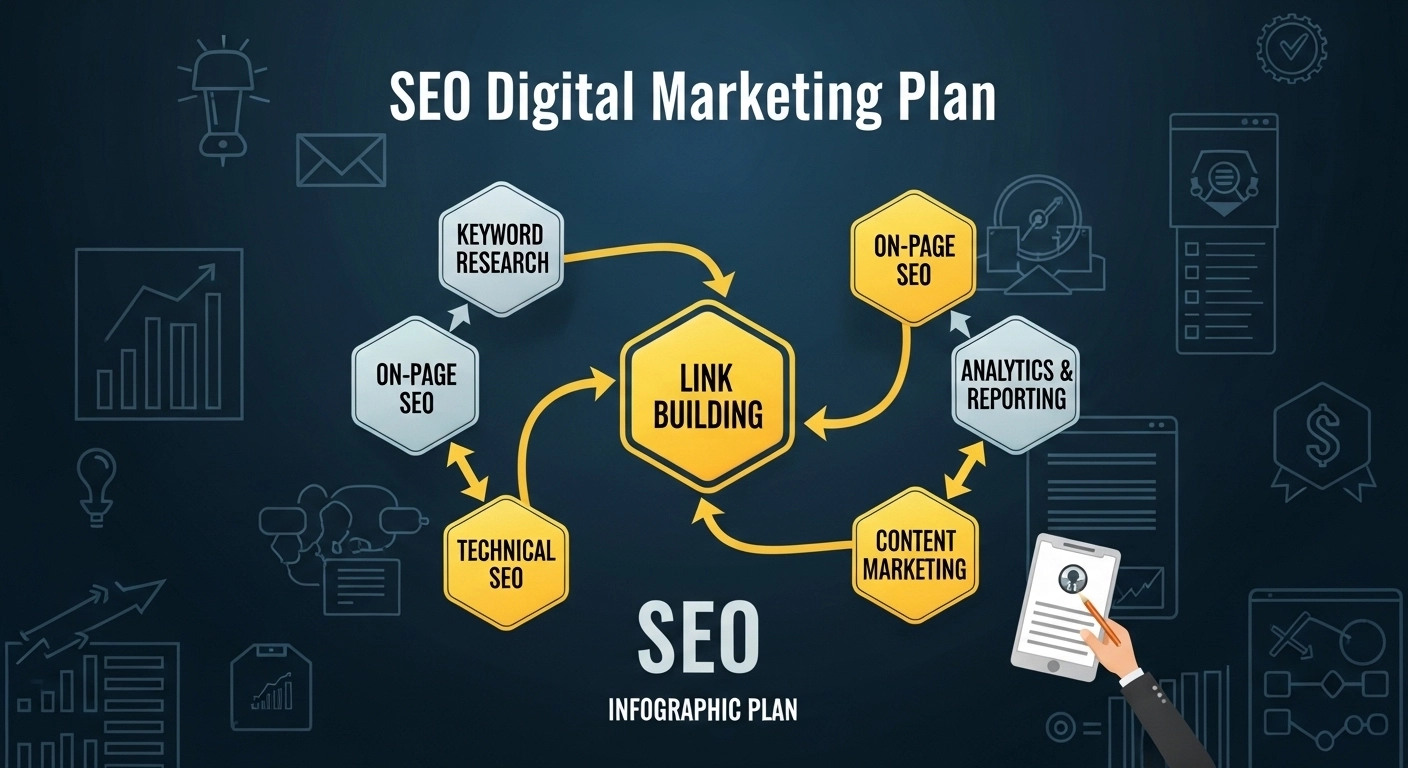
A strong SEO digital marketing plan isn’t just about rankings—it’s about attracting the right audience, turning clicks into customers, and building long-term growth. If your goal is consistent, high-quality traffic without relying only on paid ads, this guide will walk you through exactly how to create a plan that works.
What Is an SEO Digital Marketing Plan?
An SEO digital marketing plan is a structured strategy that combines search engine optimization with broader digital marketing efforts—like content, technical improvements, and user experience—to increase visibility and drive conversions.
Instead of chasing keywords randomly, you align your content, website, and promotion around search intent and business goals.
Why You Need a Clear SEO Plan
Without a plan, SEO becomes guesswork. With one, you get:
- Consistent organic traffic growth
- Better keyword targeting
- Higher conversion rates
- Stronger brand authority
- Measurable ROI
Think of it as the blueprint for everything you publish and optimize.
Step 1: Define Clear Goals
Start with outcomes, not tactics.
Ask yourself:
- Do you want more leads, sales, or traffic?
- Which pages should rank?
- What actions should visitors take?
Example:
Instead of “increase traffic,” aim for
→ “Increase organic leads by 30% in 6 months.”
Step 2: Understand Your Target Audience
SEO is about people, not just search engines.
Identify:
- Pain points
- Search behavior
- Buying intent
Use tools like Google Search Console, forums, and competitor research to see what your audience is actually searching for.
Step 3: Keyword Research with Intent
Not all keywords are equal.
Focus on:
- Informational keywords (e.g., “what is SEO”)
- Commercial keywords (e.g., “best SEO services”)
- Transactional keywords (e.g., “buy SEO tools”)
Prioritize long-tail keywords because they:
- Are easier to rank
- Bring targeted traffic
- Convert better
Example:
Instead of targeting “SEO,” go for
→ “SEO digital marketing plan for small business”
Step 4: Create High-Quality Content
Content is the core of your SEO plan.
Your content should:
- Solve real problems
- Match search intent
- Be easy to read and structured
Use:
- Clear headings (H1, H2, H3)
- Short paragraphs
- Real examples
- Internal linking
Content Types to Include:
- Blog posts
- How-to guides
- Case studies
- Landing pages
Step 5: Optimize On-Page SEO
Every page should be optimized properly.
Focus on:
- Title tags (include your keyword naturally)
- Meta descriptions (compelling and clickable)
- Header structure
- Image alt text
- URL structure
Tip: Write for humans first, then optimize for search engines.
Step 6: Technical SEO Matters
Even great content won’t rank if your site has technical issues.
Check:
- Page speed
- Mobile-friendliness
- Indexing issues
- Broken links
- Core Web Vitals
Use tools like Google Search Console and PageSpeed Insights to fix problems.
Step 7: Build Authority with Backlinks
Backlinks signal trust to search engines.
Ways to build them:
- Guest posting
- Creating shareable content
- Outreach to bloggers
- Digital PR
Focus on quality over quantity.
Step 8: Track and Measure Performance
You can’t improve what you don’t measure.
Monitor:
- Organic traffic
- Keyword rankings
- Bounce rate
- Conversion rate
Adjust your strategy based on data—not assumptions.
Step 9: Integrate with Other Marketing Channels
SEO works best when combined with:
- Content marketing
- Social media
- Email marketing
- Paid ads
Example:
Promote your blog posts on social media to get initial traffic and backlinks.
Common Mistakes to Avoid
- Targeting keywords without intent
- Publishing thin or duplicate content
- Ignoring technical SEO
- Not updating old content
- Expecting instant results
SEO is a long-term game—but it pays off.
Simple SEO Digital Marketing Plan Example
Goal: Increase leads for a service business
Steps:
- Target long-tail keywords
- Publish 2 blog posts per week
- Optimize service pages
- Build backlinks monthly
- Track results and improve
Consistency is more important than complexity.
FAQ
How long does SEO take to show results?
Typically 3–6 months, depending on competition and consistency.
What is the most important part of an SEO plan?
Content and search intent alignment. Without that, nothing else works effectively.
Can I do SEO without technical knowledge?
Yes, but basic technical understanding helps improve results significantly.
How often should I update my SEO plan?
Review it every 3 months and adjust based on performance data.
Final Thoughts
A successful SEO digital marketing plan isn’t about tricks or shortcuts—it’s about strategy, consistency, and understanding your audience. When done right, it becomes one of the most powerful growth engines for your business.
