
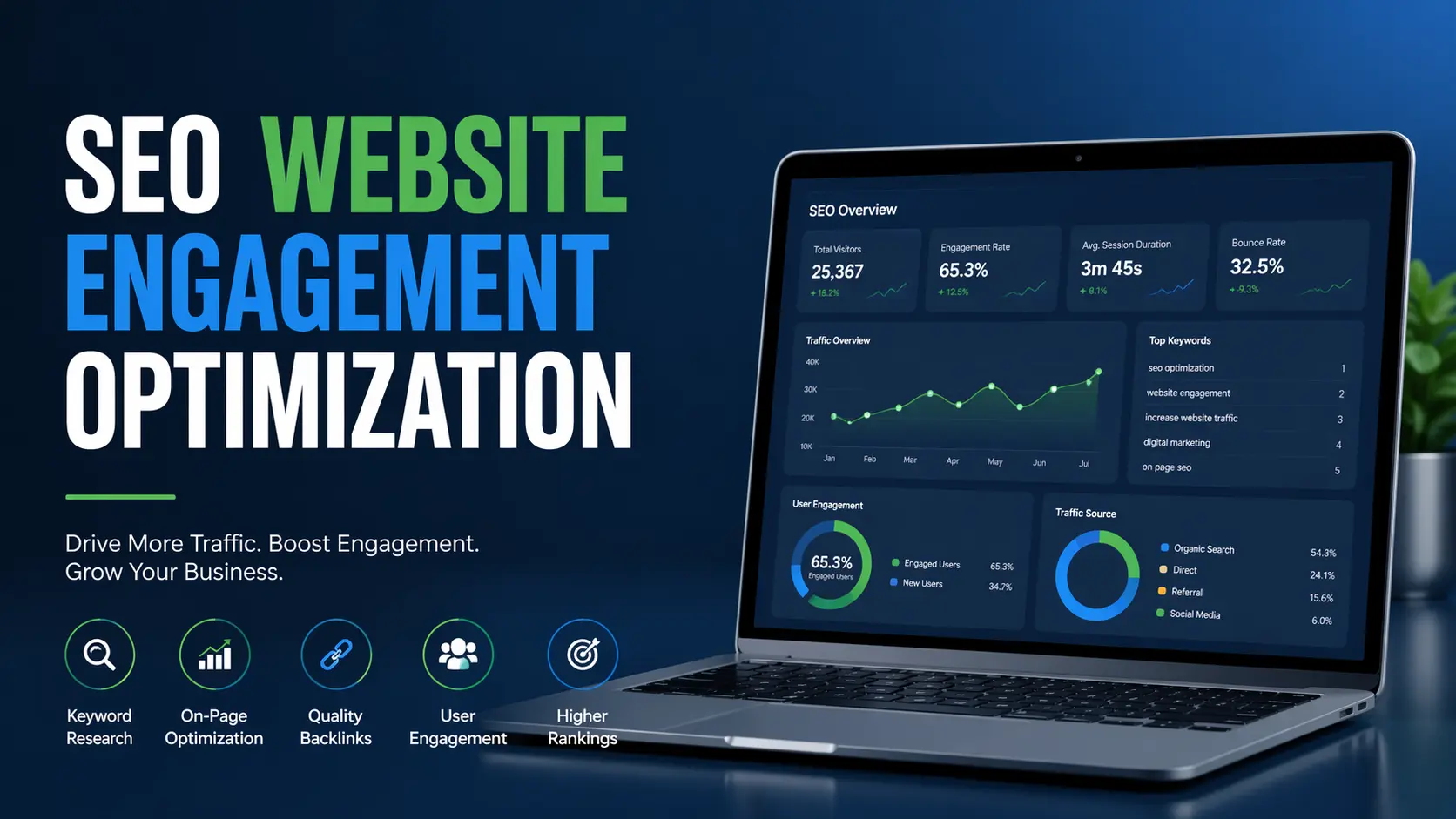
Getting traffic is only half the battle. If visitors land on your site and leave within seconds, your SEO isn’t truly working. That’s where SEO website engagement optimization comes in—turning passive visits into meaningful interactions that boost rankings, conversions, and long-term growth.
This guide shows you how to improve engagement signals the right way, with practical tactics you can apply immediately.
What Is SEO Website Engagement Optimization?
SEO engagement optimization is the process of improving how users interact with your website after they arrive from search engines.
Instead of focusing only on rankings, you optimize for behaviors like:
- Time on page
- Pages per session
- Bounce rate
- Scroll depth
- Click-through rate (CTR)
Search engines pay attention to these signals. If users stay longer and engage more, it suggests your content satisfies search intent—which can positively influence rankings over time.
Why Engagement Matters for SEO
High engagement tells search engines one thing: your content is valuable.
Here’s what happens when engagement improves:
- Lower bounce rates signal relevance
- Longer sessions indicate quality content
- More clicks and interactions show user satisfaction
- Better UX leads to higher conversion rates
In short, engagement bridges the gap between traffic and results.
1. Match Search Intent First
If your content doesn’t match what users are looking for, nothing else matters.
Types of search intent:
- Informational – “how to improve SEO engagement”
- Navigational – looking for a specific site
- Transactional – ready to buy or sign up
- Commercial – comparing options
Example:
If someone searches “SEO website engagement optimization”, they expect:
- Clear explanation
- Practical strategies
- Real examples
Not a sales pitch or vague theory.
Quick tip: Analyze top-ranking pages and align your structure, depth, and format with what already works.
2. Write for Humans, Not Just Keywords
Keyword stuffing kills engagement. Readability wins.
How to improve readability:
- Use short paragraphs (2–4 lines)
- Add clear headings and subheadings
- Write in simple, conversational language
- Avoid jargon unless necessary
Example:
Instead of:
“Utilize comprehensive methodologies to enhance user interaction metrics…”
Write:
“Make your content easier to read and people will stay longer.”
Simple always performs better.
3. Optimize Your Above-the-Fold Content
The first 5 seconds decide everything.
When users land on your page, they should instantly see:
- What the page is about
- Why it matters
- What they’ll gain
Best practices:
- Strong headline
- Clear introduction
- No clutter
- Fast loading
If users don’t understand your page quickly, they leave.
4. Improve Page Speed and Mobile Experience
Slow websites destroy engagement.
Focus on:
- Fast loading time (under 3 seconds)
- Mobile-friendly design
- Clean layout with easy navigation
Tools to use:
- Google PageSpeed Insights
- Core Web Vitals reports
Even a 1-second delay can significantly increase bounce rates.
5. Use Internal Linking Strategically
Internal links guide users deeper into your site.
Benefits:
- Increase pages per session
- Reduce bounce rate
- Help search engines understand your structure
Example:
If someone reads about SEO basics, link to:
- Keyword research guide
- On-page SEO checklist
- Technical SEO tips
Make it natural, not forced.
6. Add Engaging Visual Elements
People don’t read everything—they scan.
Break up your content with:
- Images
- Infographics
- Videos
- Bullet points
Why it works:
Visuals make content easier to digest and keep users on the page longer.
7. Use Clear Calls to Action (CTAs)
Don’t leave users wondering what to do next.
Examples:
- “Read the full SEO checklist”
- “Download the guide”
- “Start optimizing your site today”
A good CTA turns engagement into action.
8. Structure Content for Easy Scanning
Most users skim before they read.
Make your content scannable:
- Use bold text for key ideas
- Add bullet points
- Keep sections short
- Use descriptive headings
If users can quickly find value, they’re more likely to stay.
9. Reduce Bounce Rate With Smart UX
A high bounce rate often means poor experience.
Fix it by:
- Improving design clarity
- Removing distractions
- Using readable fonts
- Adding related content suggestions
Think like a visitor: Is this page easy and helpful?
10. Track and Improve Engagement Metrics
You can’t optimize what you don’t measure.
Key metrics to monitor:
- Bounce rate
- Average session duration
- Pages per session
- Scroll depth
Tools:
- Google Analytics
- Heatmaps (like Hotjar)
Look for patterns and continuously improve.
Simple FAQ
What is the most important engagement metric for SEO?
There’s no single metric, but time on page and bounce rate together give strong insights into content quality.
Does engagement directly affect rankings?
Not directly confirmed, but strong engagement signals often correlate with better rankings because they reflect user satisfaction.
How can I quickly improve engagement?
Start with:
- Better headlines
- Faster loading speed
- Clear structure
- Strong internal linking
Is content length important for engagement?
Only if it delivers value. Long content works when it’s useful—not when it’s filled with fluff.
Conclusion: Engagement Is the Real SEO Advantage
SEO is no longer just about ranking—it’s about keeping users on your site and giving them value.
When you optimize for engagement:
- Visitors stay longer
- They explore more pages
- They trust your content
- And they convert
That’s how real growth happens.
