
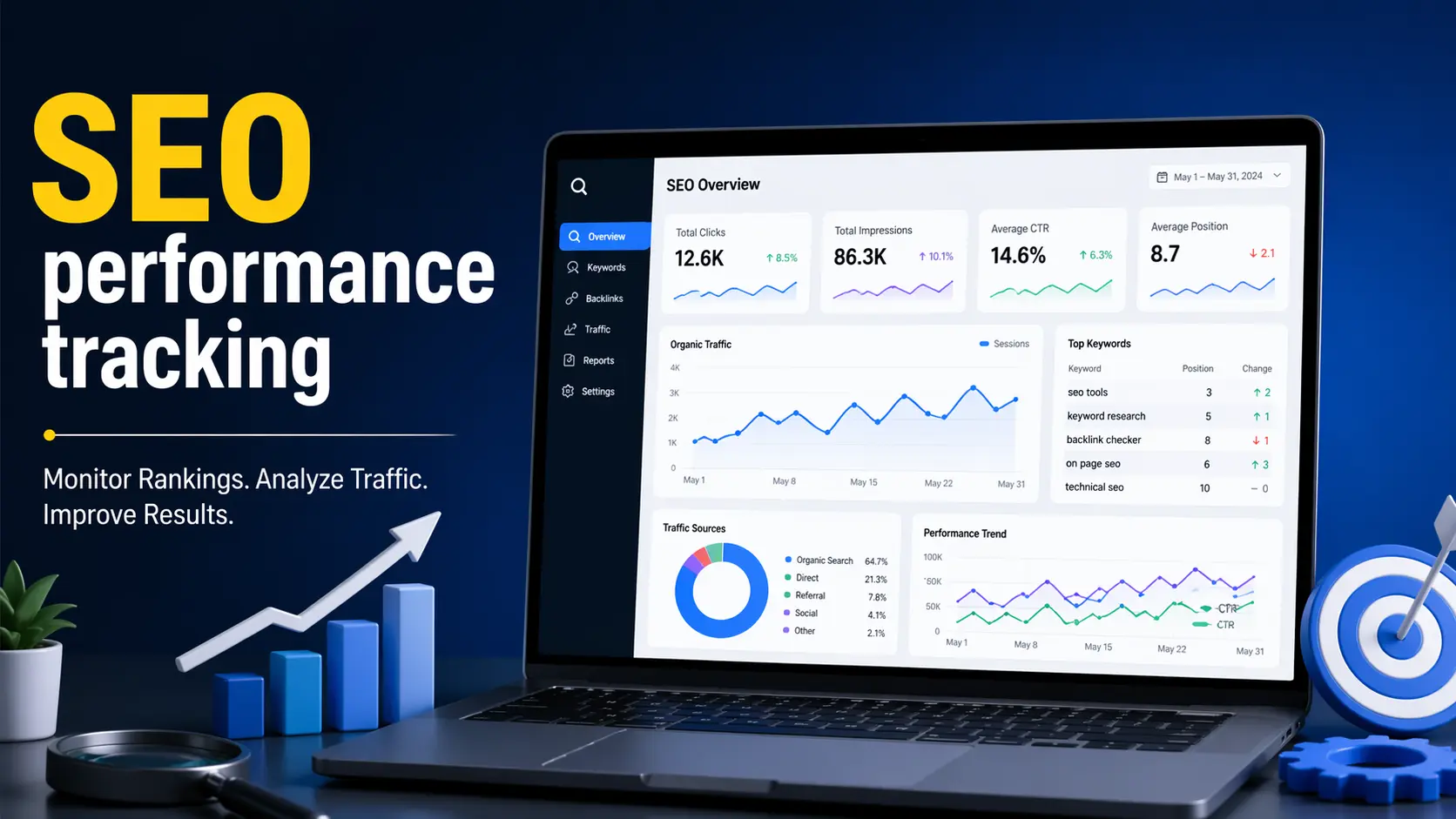
If you’re investing time or money into SEO, you need to know one thing: is it working?
That’s where SEO performance tracking comes in.
It’s not just about rankings or traffic—it’s about understanding how your SEO efforts translate into real business results like leads, sales, and growth.
This guide breaks down exactly what to track, how to track it, and how to turn data into smarter decisions.
What Is SEO Performance Tracking?
SEO performance tracking is the process of monitoring, analyzing, and improving your website’s visibility and results in search engines.
Instead of guessing, you use real data to answer questions like:
- Are my rankings improving?
- Is organic traffic growing?
- Are visitors converting into customers?
Done right, it helps you double down on what works and fix what doesn’t.
Why SEO Tracking Matters
Without tracking, SEO becomes a blind investment.
Here’s what proper tracking gives you:
- Clear ROI: Know if your SEO efforts are paying off
- Better decisions: Focus on strategies that drive results
- Early problem detection: Spot drops before they hurt your business
- Growth opportunities: Discover keywords and pages to scale
The Most Important SEO Metrics to Track
Not all metrics are equal. Focus on the ones that actually impact growth.
1. Organic Traffic
This shows how many visitors come from search engines.
What to look for:
- Steady growth over time
- Traffic spikes after publishing content
- Drops (which may indicate issues)
Example:
If your blog post starts bringing 500 → 2,000 monthly visitors, your SEO is working.
2. Keyword Rankings
Track where your pages appear in search results.
Focus on:
- Keywords moving from page 2 → page 1
- High-intent keywords (buyer-focused terms)
- Ranking stability
Tip: Don’t obsess over one keyword—track clusters instead.
3. Click-Through Rate (CTR)
CTR tells you how many people click your link after seeing it.
Low CTR? You may need to improve:
- Title tags
- Meta descriptions
- Search intent match
4. Conversions from Organic Traffic
This is the most important metric.
Track:
- Leads (form submissions, calls)
- Sales
- Sign-ups
Example:
If SEO brings 1,000 visitors but zero leads, something is wrong.
5. Bounce Rate & Engagement
These show how users interact with your site.
Watch for:
- High bounce rates (bad sign)
- Low time on page
- Poor engagement
This often means your content doesn’t match search intent.
6. Backlinks & Domain Authority
Backlinks still play a big role in rankings.
Track:
- Number of referring domains
- Link quality
- Growth over time
Best Tools for SEO Performance Tracking
You don’t need dozens of tools—just a few solid ones:
- Google Analytics – traffic, user behavior, conversions
- Google Search Console – rankings, impressions, CTR
- Ahrefs / SEMrush – keyword tracking, backlinks, competitor analysis
- Screaming Frog – technical SEO audits
How to Track SEO Performance (Step-by-Step)
Step 1: Set Clear Goals
Define what success looks like:
- More traffic?
- More leads?
- Better rankings?
Without goals, data is meaningless.
Step 2: Set Up Tracking Tools
At minimum:
- Install Google Analytics
- Verify your site in Search Console
Make sure conversion tracking is enabled.
Step 3: Build a Simple Dashboard
Track key metrics in one place:
- Organic traffic
- Top keywords
- Conversions
- Top pages
Keep it simple—don’t overwhelm yourself.
Step 4: Monitor Weekly, Analyze Monthly
- Weekly: Check for sudden drops or spikes
- Monthly: Review trends and performance
SEO is a long-term game—focus on patterns, not daily changes.
Step 5: Optimize Based on Data
Use your insights to:
- Update underperforming content
- Improve CTR (titles & descriptions)
- Target better keywords
- Fix technical issues
Common SEO Tracking Mistakes
Avoid these pitfalls:
- Tracking vanity metrics only (like impressions without conversions)
- Ignoring search intent
- Checking rankings daily (waste of time)
- Not linking SEO to business goals
- Using too many tools without clarity
Practical Example
Let’s say you publish an article targeting “best SEO tools.”
After 3 months:
- Traffic grows from 0 → 3,000/month
- Ranking improves to top 5
- CTR increases after title update
- Conversions rise after adding a CTA
That’s SEO performance tracking in action—measure → adjust → grow.
FAQ: SEO Performance Tracking
1. How long does it take to see SEO results?
Usually 3–6 months, depending on competition and strategy.
2. What is the most important SEO metric?
Conversions from organic traffic. Traffic alone doesn’t pay the bills.
3. How often should I check SEO performance?
Weekly for quick checks, monthly for deep analysis.
4. Can I track SEO without paid tools?
Yes. Google Analytics and Search Console are enough to start.
5. Why did my rankings drop suddenly?
Possible reasons include algorithm updates, technical issues, or stronger competition.
Conclusion: Turn Data Into Growth
SEO performance tracking isn’t about collecting data—it’s about using it to grow.
Focus on the metrics that matter, ignore distractions, and continuously improve based on real insights.
If you do this consistently, SEO becomes predictable, scalable, and powerful.
