
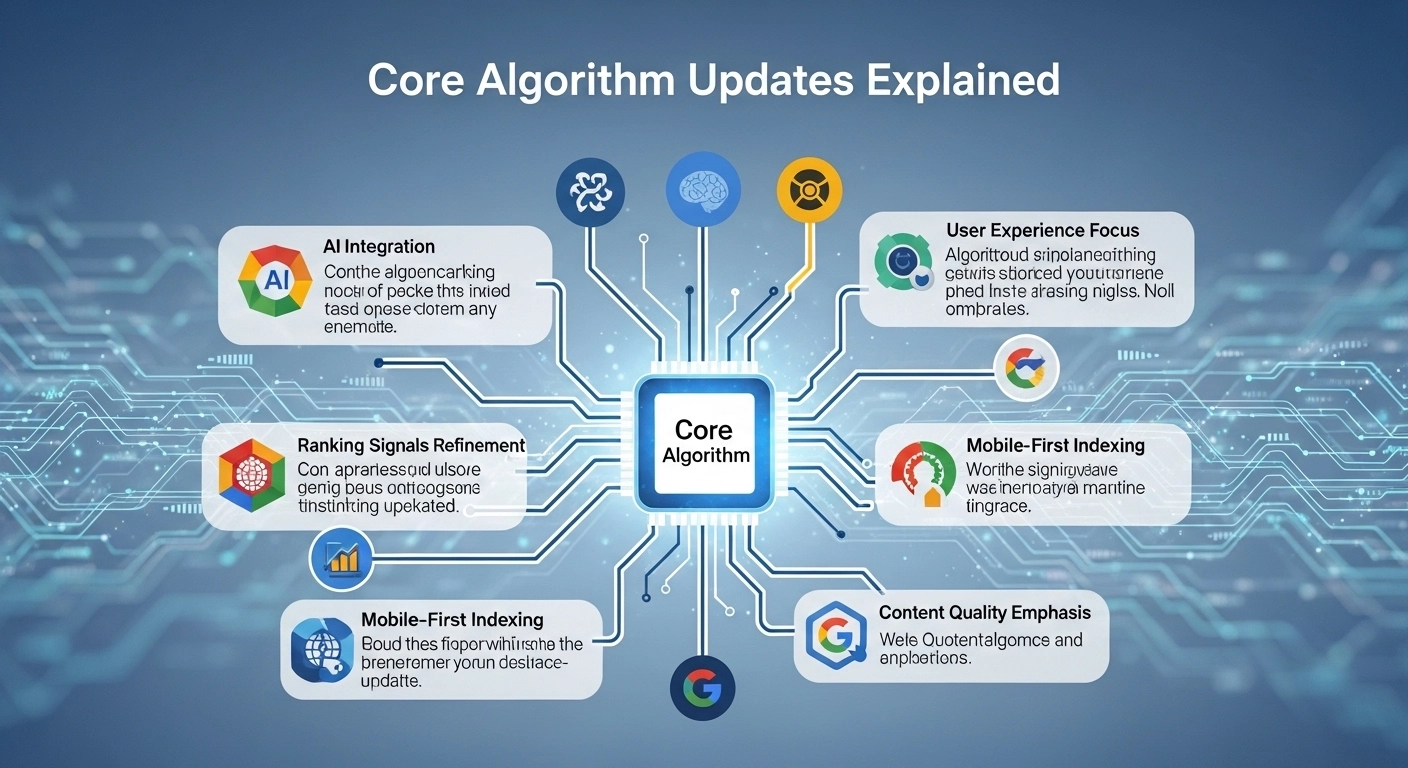
Search engines are constantly evolving. If your website depends on organic traffic, you’ve likely heard the phrase “core algorithm updates” and wondered what it actually means—and why it can suddenly change your rankings overnight.
In this guide, we’ll break down core algorithm updates explained in simple terms, how they affect your website, and what you can do to stay ahead without guessing or panic.
What Are Core Algorithm Updates?
Core algorithm updates are major changes made by search engines like Google to improve how they rank web pages in search results.
Unlike small daily tweaks, these updates are broad and impactful. They don’t target specific websites or pages. Instead, they refine how Google evaluates content quality, relevance, and trustworthiness across the entire web.
Think of it like upgrading a recipe:
- Same ingredients (web pages)
- New cooking method (ranking system)
- Better final taste (search results)
Why Do Core Updates Happen?
Search engines want to show users the most helpful and reliable content. Core updates help them:
- Improve search result quality
- Reduce low-value or spam content
- Better understand user intent
- Reward expert, useful content
In simple terms, Google is always trying to answer:
“Which pages truly deserve to rank for this query?”
How Core Algorithm Updates Affect Your Website
When a core update rolls out, you might notice changes like:
1. Ranking fluctuations
Some pages move up, others drop—even if you didn’t change anything.
2. Traffic increases or drops
Organic traffic can shift suddenly depending on how your content is evaluated.
3. Changes in visibility
Some keywords may bring more impressions, while others lose exposure.
4. Industry-wide impact
Entire niches (health, finance, news, SEO) often feel stronger effects.
Common Reasons Websites Lose Rankings
If your traffic drops after a core update, it usually doesn’t mean your site is “penalized.” It often means other pages are now considered more helpful.
Common issues include:
- Thin or shallow content
- Outdated information
- Weak E-E-A-T signals (Experience, Expertise, Authority, Trust)
- Poor user experience (slow speed, messy layout)
- Over-optimized or unnatural SEO content
- Lack of real value or originality
How to Recover After a Core Update
Recovery is possible—but it takes real improvement, not shortcuts.
1. Improve content quality
Make your content more useful, detailed, and clear. Add real examples, data, and explanations.
2. Focus on user intent
Ask: Does this page fully answer what the user is searching for?
3. Strengthen E-E-A-T signals
Show credibility:
- Author information
- Real experience
- Trust signals (sources, references)
4. Update outdated pages
Refresh old content with current information and better structure.
5. Improve user experience
- Faster loading speed
- Mobile-friendly design
- Clean formatting and headings
Example: What Changes After a Core Update
Imagine you run a blog about “best smartphones.”
Before update:
- Short list posts
- Minimal details
- Generic descriptions
After update competitors improve:
- Detailed comparisons
- Real user experience
- Updated specs and pricing
- Clear buying guidance
Result: your page may drop because others now provide better value.
How to Stay Safe from Future Core Updates
You can’t “optimize for updates,” but you can build a stable SEO foundation:
- Write for humans first, search engines second
- Create in-depth, helpful content
- Avoid thin or repetitive articles
- Build topic authority over time
- Keep improving existing content
Google rewards consistency and quality, not shortcuts.
FAQs: Core Algorithm Updates Explained
1. Are core updates penalties?
No. They are ranking re-evaluations, not penalties.
2. How often do core updates happen?
Usually a few times per year, but timing is not fixed.
3. Can I recover from a traffic drop?
Yes. Improving content quality and relevance often leads to recovery over time.
4. How long does recovery take?
It can take weeks or months, depending on the update and improvements made.
Conclusion
Core algorithm updates are a normal part of search engine evolution. They are designed to reward better content—not punish websites.
If your rankings change, don’t panic. Instead, focus on improving your content quality, user experience, and topical authority.
That’s the real long-term SEO strategy that survives every update.
