
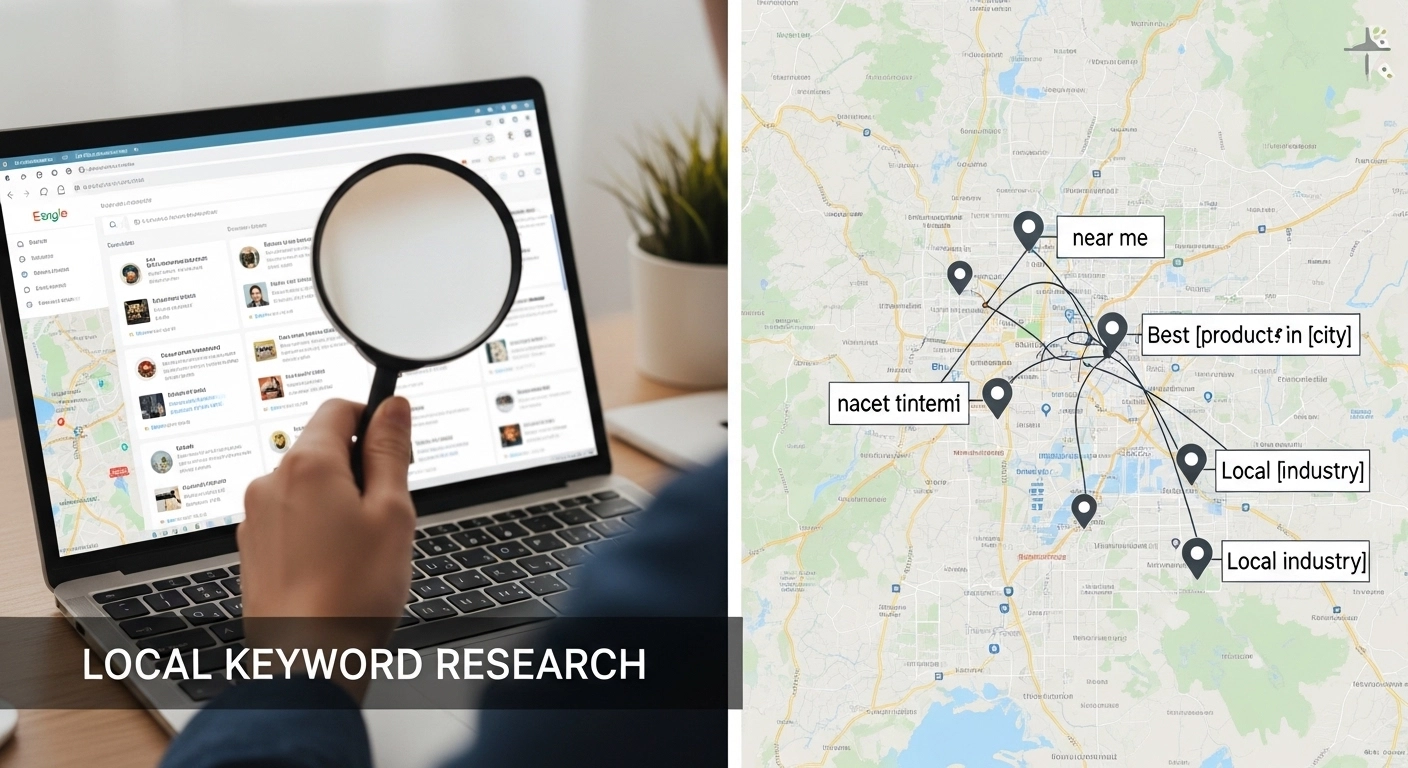
If you want more local customers finding your business on Google, you need one thing done right: local keyword research.
This is the foundation of local SEO. It tells you exactly what people in your area are searching for, how they phrase their problems, and what kind of services they’re ready to buy.
In this guide, you’ll learn how to do local keyword research step-by-step in a simple, practical way—no complicated jargon, just real strategies you can use immediately.
What Is Local Keyword Research?
Local keyword research is the process of finding search terms people use when looking for products or services in a specific location.
These keywords usually include:
- A service (like “plumber” or “dentist”)
- A location (like “near me,” “in Lahore,” or “in Brooklyn”)
Examples:
- “best dentist in Chicago”
- “emergency plumber near me”
- “affordable SEO services in Dallas”
- “coffee shop open now in New York”
Unlike general SEO keywords, local keywords are focused on intent + location, meaning users are often ready to take action.
Why Local Keyword Research Matters
If you skip this step, you’re basically guessing what your customers are searching for—and that rarely works.
Here’s what proper local keyword research helps you achieve:
1. More targeted traffic
You attract people who are actually in your service area.
2. Higher conversion rates
Local searchers often have buying intent, not just browsing intent.
3. Better Google Maps rankings
Strong local keywords improve visibility in the “Map Pack.”
4. Less competition
Local SEO is often easier than competing on broad national keywords.
How to Do Local Keyword Research (Step-by-Step)
Let’s break it down into a simple process you can follow.
Step 1: Start With Your Core Services
Begin with what you actually offer.
Ask yourself:
- What services do I provide?
- How do customers describe them?
Example:
If you run a cleaning business:
- House cleaning
- Office cleaning
- Deep cleaning
- Move-in/move-out cleaning
These are your seed keywords.
Step 2: Add Location Modifiers
Now combine your services with location terms.
You can use:
- City names (e.g., “Karachi”)
- Neighborhoods (e.g., “Gulberg”)
- “Near me”
- “Near [landmark]”
Example:
- house cleaning in Karachi
- office cleaning Lahore
- deep cleaning service near me
This is the core of local keyword research—service + location pairing.
Step 3: Use Google Autocomplete
Go to Google and start typing your service.
For example:
- “plumber in…”
- “dentist near…”
- “SEO agency in…”
Google will automatically suggest real searches people are making.
These suggestions are gold because they reflect real user behavior.
Step 4: Check “People Also Ask” and Related Searches
Scroll down on Google results and look at:
- People Also Ask (PAA)
- Related searches
These sections give you:
- Long-tail keywords
- Question-based queries
- Hidden opportunities
Example:
If you search “dentist in Lahore,” you might see:
- “How much does a dentist cost in Lahore?”
- “Best dental clinic near me open now”
These are highly valuable for content creation.
Step 5: Analyze Competitors
Search your main keywords and look at top-ranking businesses.
Pay attention to:
- Page titles
- Service pages
- Location pages
- FAQs
Ask:
- What keywords are they targeting?
- What locations do they mention?
- What services are they emphasizing?
You don’t copy them—you identify gaps they missed.
Step 6: Find Long-Tail Local Keywords
Long-tail keywords are more specific and easier to rank for.
Examples:
- affordable home cleaning service in downtown Chicago
- emergency plumber available at night in Houston
- best SEO consultant for small business in Dubai
These keywords may have lower search volume but usually bring higher-quality leads.
Step 7: Group Keywords by Intent
Not all keywords mean the same thing. Organize them into categories:
1. Service Keywords
- plumber in Dallas
- SEO services in Lahore
2. Emergency Keywords
- emergency electrician near me
- 24/7 locksmith in New York
3. Budget Keywords
- cheap house cleaning service
- affordable dental clinic near me
4. Best/Comparison Keywords
- best dentist in Chicago
- top SEO agency in Dubai
This helps you create better pages and content structure.
Step 8: Map Keywords to Pages
Don’t try to rank everything on one page.
Instead:
- One service page = one main keyword group
- One location page = one city or area
- Blog posts = informational keywords
Example structure:
- /plumbing-services-houston
- /emergency-plumber-houston
- /plumbing-cost-guide-houston
This improves both SEO and user experience.
Common Mistakes to Avoid
Many people mess up local keyword research. Avoid these:
1. Targeting only broad keywords
“Plumber” alone is too competitive and unclear.
2. Ignoring search intent
Not every keyword leads to customers.
3. Overstuffing location names
Unnatural writing hurts rankings and trust.
4. Not updating keywords
Local trends change—so should your strategy.
Simple FAQ About Local Keyword Research
What is the easiest way to find local keywords?
Start with your service + city combination and use Google autocomplete for variations.
Do I need tools for local keyword research?
Tools help, but you can start with Google, “People Also Ask,” and competitor research.
How many local keywords should I target?
Focus on a small group per page—usually 1 main keyword and 5–10 related terms.
Are “near me” keywords important?
Yes. They show strong buying intent and are very important for mobile searches.
Conclusion
Local keyword research is not complicated—but it is powerful.
When done right, it helps you connect directly with people in your area who are actively searching for your services. Instead of chasing traffic, you start attracting real customers who are ready to take action.
The key is simple:
Understand your services, understand your location, and understand how people actually search.
