
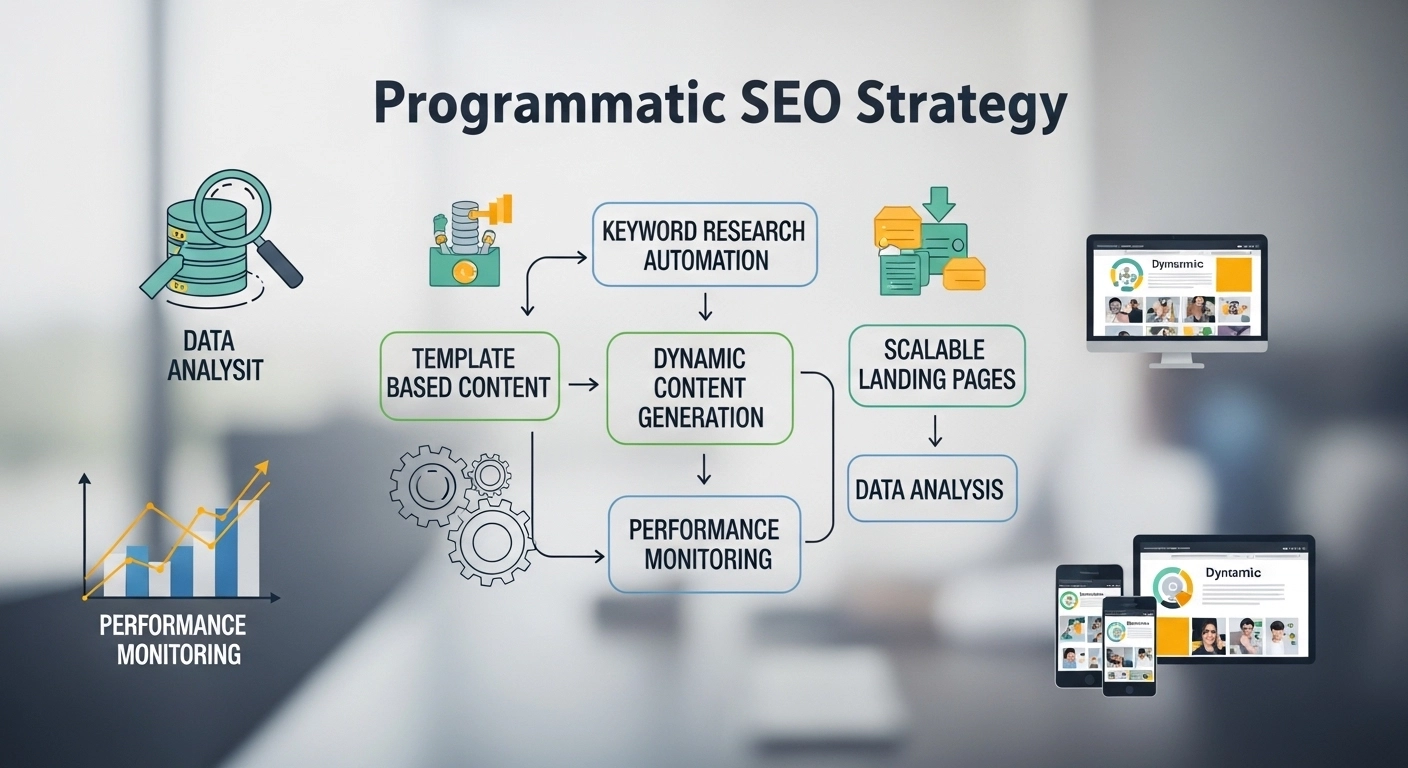
Programmatic SEO is one of the most powerful ways to scale organic traffic without manually creating hundreds—or thousands—of pages. Instead of writing each page one by one, you build a system that generates optimized pages using structured data, templates, and automation.
If done right, a programmatic SEO strategy can drive massive, targeted traffic and dominate long-tail search results. If done poorly, it can lead to thin content, index bloat, and zero rankings.
This guide walks you through exactly how to do it the right way.
What Is Programmatic SEO?

Programmatic SEO is the process of creating large numbers of web pages using a combination of:
- Structured data (databases, APIs, spreadsheets)
- Page templates
- Automation or scripts
Each page targets a specific keyword variation—usually long-tail queries—with unique, useful content generated at scale.
Simple Example
Instead of writing one article like:
“Best Hotels in Pakistan”
You create hundreds of pages like:
- “Best Hotels in Lahore”
- “Best Hotels in Karachi”
- “Best Hotels in Islamabad”
Each page pulls dynamic data (prices, ratings, locations) and fits into a consistent template.
Why Programmatic SEO Works
Search engines reward relevance and coverage. Programmatic SEO helps you:
- Capture thousands of long-tail keywords
- Build topical authority fast
- Scale content production efficiently
- Increase organic traffic with lower marginal cost
It’s especially effective for marketplaces, SaaS tools, directories, and comparison websites.
When to Use Programmatic SEO
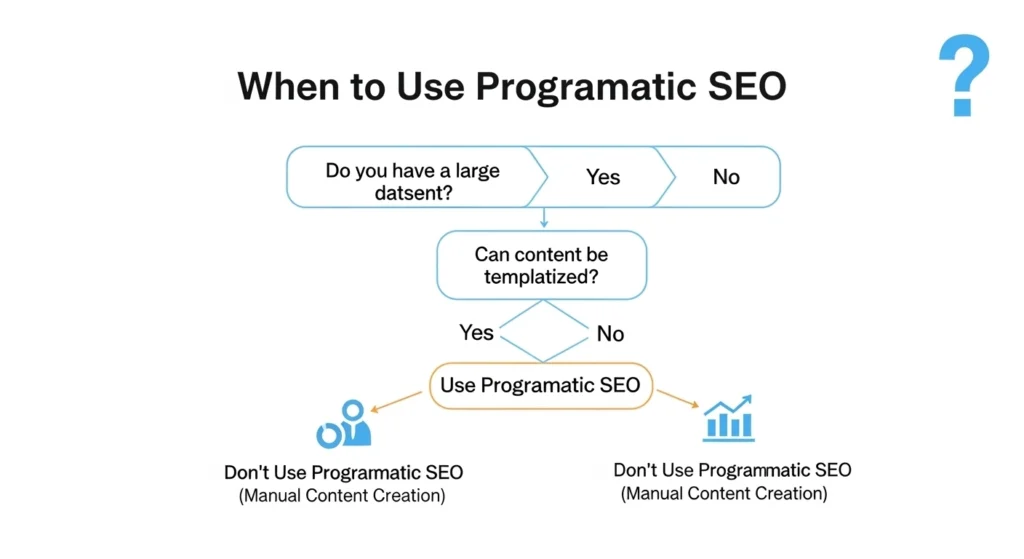
Programmatic SEO is ideal when:
- You have structured data (locations, products, stats)
- There are repeatable search patterns
- Users search for similar queries with slight variations
Good Use Cases
- Location-based pages (e.g., “SEO services in [city]”)
- Comparison pages (e.g., “Tool A vs Tool B”)
- Listings (jobs, products, directories)
- Calculators and tools
- Templates or generators
Step-by-Step Programmatic SEO Strategy

1. Find Scalable Keyword Patterns
Start with keyword research, but think in patterns—not single keywords.
Look for structures like:
- “Best [service] in [city]”
- “[Product] for [use case]”
- “[Tool] vs [Tool]”
- “Top [category] for [audience]”
Use tools like Ahrefs, SEMrush, or Google Autocomplete to identify variations.
2. Build a Data Source
Programmatic SEO relies on data. Your content will be generated from it.
Examples of data sources:
- Google Sheets or Airtable
- APIs (weather, finance, product data)
- Scraped datasets (carefully and ethically)
- Internal databases
Your dataset should include:
- Unique attributes per page
- Enough depth to create meaningful content
3. Create High-Quality Page Templates
Templates are the backbone of programmatic SEO.
A strong template includes:
- Unique H1 and title tags
- Dynamic sections (based on data)
- Helpful content blocks (not just lists)
- Internal links
- FAQs or supporting information
Example Structure
- Introduction (customized per page)
- Data-driven section (tables, listings)
- Insights or analysis
- FAQs
- Call-to-action
Avoid making pages that feel identical.
4. Add Unique Value at Scale
This is where most people fail.
Google doesn’t rank pages just because they exist—it ranks pages that are useful.
To stand out:
- Add insights (not just raw data)
- Include comparisons or summaries
- Use filters, sorting, or interactivity
- Add user-generated content (reviews, ratings)
Even at scale, each page must feel valuable.
5. Optimize for On-Page SEO
Each generated page should follow SEO best practices:
- Keyword in title, H1, and URL
- Optimized meta description
- Clean URL structure
- Proper heading hierarchy
- Schema markup (if applicable)
Also ensure fast loading speed and mobile optimization.
6. Build Internal Linking at Scale
Internal links help search engines discover and rank your pages.
Use:
- Category hubs (pillar pages)
- Related pages sections
- Breadcrumb navigation
This creates a strong topical structure and improves crawlability.
7. Control Indexing and Quality
Not every generated page should be indexed.
Use:
- Noindex for low-quality or duplicate pages
- Canonical tags where needed
- Filters to avoid thin content
Focus on quality over quantity.
Real-World Examples of Programmatic SEO

Successful companies use programmatic SEO to dominate search:
- Travel sites (location-based pages)
- Job boards (job + location combinations)
- SaaS tools (use-case landing pages)
- E-commerce stores (category + filter pages)
They don’t just generate pages—they create useful, structured experiences.
Common Mistakes to Avoid

1. Thin Content
Pages with little or no unique value won’t rank.
2. Duplicate Content
Using the same template without variation can hurt performance.
3. Over-Scaling Too Fast
Launching thousands of pages without testing can backfire.
4. Ignoring User Intent
Every page must match what users actually want.
Programmatic SEO vs Traditional SEO
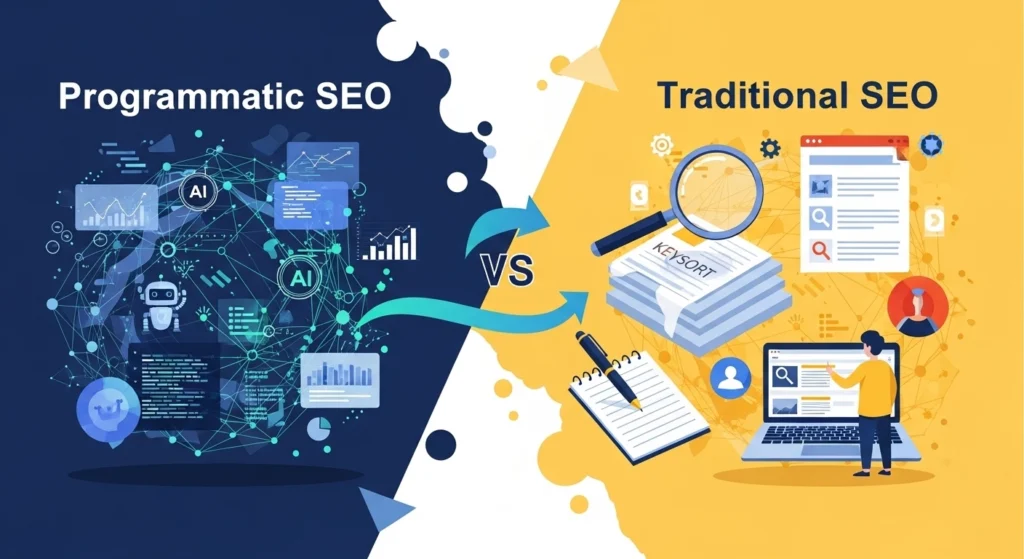
| Aspect | Programmatic SEO | Traditional SEO |
| Scale | High | Low to Medium |
| Content Creation | Automated | Manual |
| Best For | Large datasets | Deep content |
| Speed | Fast | Slower |
The best strategy often combines both.
Simple FAQ
What is programmatic SEO in simple terms?
It’s a way to create many SEO pages automatically using data and templates instead of writing each page manually.
Is programmatic SEO good for beginners?
Yes, but it requires planning. Start small, test results, and scale gradually.
Does Google penalize programmatic SEO?
No—Google rewards helpful content. It only penalizes low-quality, spammy pages.
How many pages should I create?
Start with 50–100 high-quality pages, measure performance, then scale.
Do I need coding skills?
Not always. Tools like Webflow, WordPress plugins, and no-code platforms can help—but advanced setups may require developers.
Final Thoughts
A well-executed programmatic SEO strategy can transform your organic growth. It allows you to target thousands of keywords, build authority, and drive consistent traffic—all while saving time.
But success depends on one thing: quality at scale.
If your pages are genuinely useful, structured well, and aligned with search intent, programmatic SEO becomes a long-term growth engine.
