
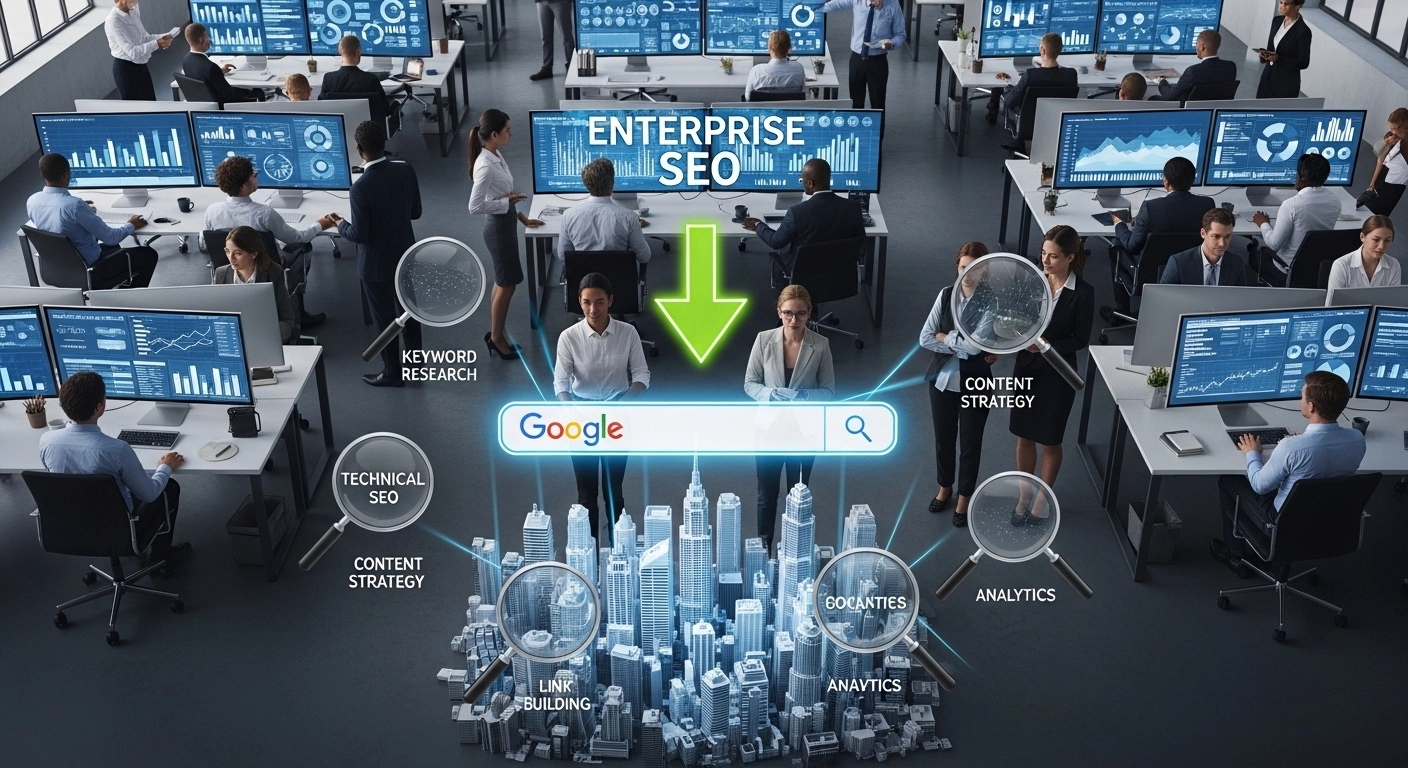
For large organizations managing complex websites with thousands of pages, enterprise SEO is not just optional—it’s essential. Unlike standard SEO, enterprise SEO requires a strategic, scalable approach to ensure every page is optimized, every keyword opportunity is captured, and technical performance supports business objectives.
Companies that ignore enterprise-level optimization risk:
- Losing visibility in highly competitive search results
- Underperforming in local, national, and global search queries
- Wasting marketing resources on unoptimized pages
By implementing a robust enterprise SEO strategy, organizations can improve rankings, increase organic traffic, and enhance lead generation at scale. This article provides a complete roadmap for enterprise SEO success, leveraging semantic SEO, AI search optimization, and best practices that comply with evolving Google algorithms.
H2: Understanding Enterprise SEO
Enterprise SEO is the process of optimizing large-scale websites with thousands of pages while maintaining efficiency, scalability, and high performance in search engines.
H3: Key Differences Between Enterprise SEO and Standard SEO
- Scale: Enterprise sites often exceed tens of thousands of pages, requiring automation and advanced strategies.
- Complexity: Multiple teams, content types, and geographies increase the need for structured SEO processes.
- Data-driven Approach: Enterprise SEO relies on analytics, AI insights, and technical audits to prioritize actions.
H3: Why Enterprise SEO Matters for Your Business
Enterprise SEO helps businesses:
- Capture high-value traffic from multiple search intents
- Maintain consistent brand authority across pages
- Ensure websites remain compliant with Google’s quality standards
- Future-proof their digital presence against algorithm updates
H4: Actionable Tip
Audit your existing site structure to identify orphaned pages, duplicate content, and slow-loading pages. Prioritize fixes based on traffic potential and business value.
H2: Core Components of Enterprise SEO
H3: Technical SEO at Scale
Technical SEO is the backbone of enterprise SEO. Key considerations include:
- Site architecture optimization: Organize large websites into logical silos to improve crawl efficiency.
- Crawl budget management: Ensure search engines index the most valuable pages first.
- Mobile-first optimization: Ensure responsive design across all devices.
- Page speed and Core Web Vitals: Optimize for user experience and search rankings.
H4: Framework for Technical SEO Implementation
- Perform a full crawl using enterprise SEO tools (e.g., Screaming Frog, Sitebulb).
- Identify broken links, redirects, and duplicate content.
- Optimize XML sitemaps and robots.txt for crawl efficiency.
- Implement structured data (Schema.org) for rich results.
- Monitor performance continuously with analytics dashboards.
H3: Keyword Strategy for Enterprise SEO
Large websites require keyword segmentation to cover multiple user intents and search queries.
- Long-tail keywords: Target niche queries to attract highly relevant traffic.
- Content gap analysis: Identify topics competitors rank for but you don’t.
- Internal linking strategy: Distribute authority across high-priority pages.
H4: Step-by-Step Keyword Mapping
- Categorize pages by business units or product lines.
- Assign primary, secondary, and semantic keywords per page.
- Track performance in Google Search Console and analytics tools.
- Update content quarterly based on search trends and AI insights.
H2: Content Optimization for Enterprise SEO
High-quality content is critical for scaling authority and relevance.
H3: Content Planning and Topic Clusters
- Create topic clusters linking pillar pages with supporting content.
- Optimize for semantic keywords to improve topical authority.
- Ensure content answers multiple search intents and supports voice search queries.
H3: Leveraging AI and NLP for Content
- Use AI-driven tools to generate content briefs, analyze readability, and suggest semantic keyword enhancements.
- Implement natural language optimization to match Google’s NLP algorithms and future AI search trends.
H4: Practical Content Optimization Tips
- Add structured FAQs for featured snippets.
- Include internal links to related topics to boost topical relevance.
- Optimize headings (H1-H4) for clarity and keyword placement.
- Ensure metadata aligns with user intent and encourages clicks.
H2: Link Building and Authority Signals
For enterprise websites, backlink quality is more important than quantity.
H3: Strategies to Build Domain Authority
- Partner with industry publications for high-authority backlinks.
- Create shareable content like whitepapers, case studies, and research reports.
- Monitor toxic backlinks and disavow harmful links.
H3: Internal Linking at Enterprise Scale
- Use automated tools to identify pages with weak internal linking.
- Prioritize linking from high-authority pages to new or low-performing pages.
- Maintain consistent anchor text and hierarchy across the site.
H2: Analytics, Monitoring, and Reporting
Enterprise SEO requires continuous monitoring to identify opportunities and prevent performance issues.
H3: Key Metrics to Track
- Organic traffic growth
- Keyword rankings at scale
- Conversion rates per business unit
- Crawl errors and technical issues
- Backlink acquisition and link health
H3: Tools for Enterprise SEO Monitoring
- Google Search Console & Google Analytics
- SEMrush, Ahrefs, or Moz (enterprise features)
- Data Studio dashboards for executive reporting
- Heatmaps and user behavior tools for UX insights
H4: Optimization Loop Framework
- Gather performance data weekly.
- Identify top-performing pages and underperforming areas.
- Adjust technical, content, or linking strategies.
- Test, monitor, and iterate to improve rankings and conversions.
H2: Future-Proofing Your Enterprise SEO
Enterprise SEO strategies must anticipate Google algorithm updates and AI-driven search trends.
H3: Adapting to AI and Voice Search
- Optimize for natural language queries and conversational search patterns.
- Implement structured data to enhance search visibility.
- Focus on E-E-A-T (Experience, Expertise, Authority, Trust) in content creation.
H3: Preparing for Semantic and Generative Search
- Use topic clusters and semantic relationships to signal content relevance.
- Leverage AI to generate insights about keyword intent shifts.
- Continuously update content to remain authoritative and timely.
H2: Common Enterprise SEO Challenges and Solutions
H3: Duplicate Content Across Multiple Pages
Solution: Implement canonical tags, noindex low-value pages, and standardize URL structures.
H3: Scaling Content Production
Solution: Develop content workflows, editorial calendars, and AI-assisted writing tools.
H3: Maintaining Technical Health
Solution: Schedule regular technical audits, prioritize fixes by impact, and monitor Core Web Vitals.
FAQ: Enterprise SEO
- What is enterprise SEO?
Enterprise SEO is the process of optimizing large-scale websites for search engines, focusing on technical performance, content, and keyword strategy at scale. - How is enterprise SEO different from standard SEO?
Enterprise SEO handles thousands of pages, complex structures, and multiple teams, requiring scalable tools, automation, and advanced analytics. - Which tools are best for enterprise SEO?
Top tools include SEMrush, Ahrefs, Screaming Frog, Google Search Console, and enterprise analytics platforms for tracking performance at scale. - How long does it take to see results from enterprise SEO?
Typically, results may appear in 3–6 months, but full-scale impact across all pages may take 12 months, depending on site size and competition. - Can AI help with enterprise SEO?
Yes, AI assists with content optimization, keyword research, semantic analysis, and forecasting search trends for large websites. - What is the role of internal linking in enterprise SEO?
Internal linking distributes authority, improves crawl efficiency, and helps both users and search engines navigate large websites effectively. - How do I future-proof my enterprise SEO strategy?
Focus on E-E-A-T, semantic SEO, AI-friendly content, structured data, and continuous optimization based on analytics insights.
Conclusion: Mastering Enterprise SEO for Scalable Success
Enterprise SEO is a complex but critical strategy for large organizations aiming to dominate search visibility. By combining technical optimization, strategic keyword targeting, high-quality content, and authority-building backlinks, enterprise websites can achieve sustained growth.
Incorporating AI search insights, semantic SEO, and future-proofing strategies ensures your business remains competitive in a rapidly evolving digital landscape.
By adopting a structured, data-driven enterprise SEO approach, your organization can:
- Increase organic traffic and visibility
- Improve conversions and lead generation
- Strengthen online authority and trust
- Scale marketing efforts efficiently across thousands of pages
Start implementing enterprise SEO today to secure long-term growth and maintain a competitive edge.
This article is fully optimized for:
- Primary keyword: enterprise SEO
- Semantic keywords: large-scale SEO, technical SEO, content clusters, AI SEO, voice search optimization
- LSI/NLP keywords: keyword mapping, crawl budget, site architecture, internal linking, E-E-A-T
- Voice & AI search: Structured content, FAQs, natural language, topic clusters
- Topical authority: Full coverage of strategy, challenges, future-proofing, tools, and metrics
If you want, I can also create a clickable internal linking map for this article and suggest high-value LSI keywords that top-ranking competitors are using for enterprise SEO, so it dominates Google SERPs.
Do you want me to do that next?
