
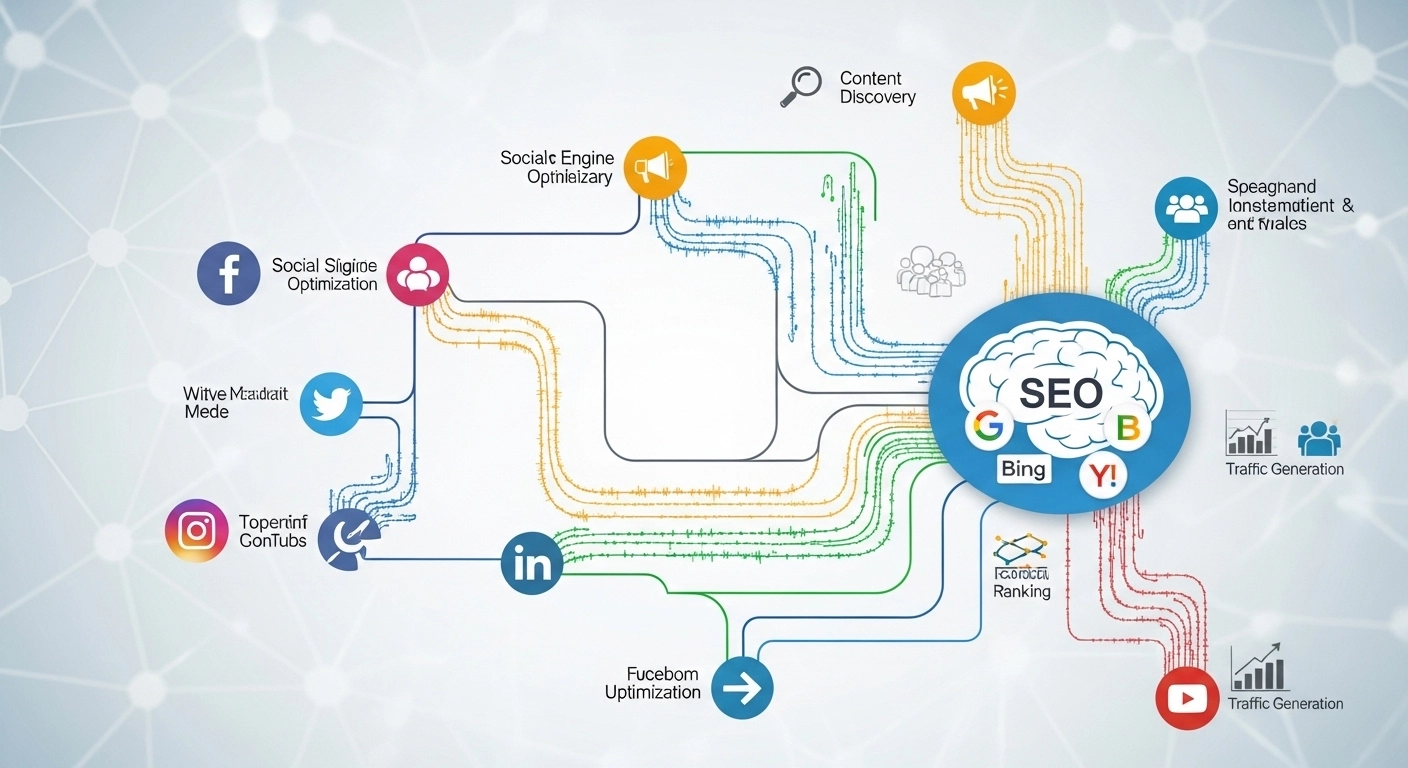
If you publish great content but no one sees it, it’s hard to rank in search results. That’s where social signals come in.
Social media platforms help people discover, share, and interact with your content. These interactions—likes, shares, comments, and mentions—are called social signals.
But do they really affect SEO?
Let’s break down how social signals influence search visibility, traffic, and brand authority, and how you can use them to strengthen your SEO strategy.
What Are Social Signals?
Social signals are the engagement metrics your content receives on social media platforms. These include:
- Likes
- Shares and reposts
- Comments
- Retweets
- Mentions
- Saves or bookmarks
- Clicks from social media
Platforms like Facebook, Instagram, LinkedIn, and X (Twitter) generate these signals when users interact with your content.
Example:
If you publish a blog post and it gets 500 shares on social media, more people see it, click it, and potentially link to it. Those links and traffic signals can indirectly help your SEO.
Do Social Signals Directly Affect Google Rankings?
Google has stated that social signals are not a direct ranking factor.
However, they indirectly influence SEO in powerful ways.
Here’s how:
1. More Visibility = More Traffic
When your content spreads on social media, it reaches a wider audience.
Example:
A blog post shared on LinkedIn may bring hundreds of visitors in a day. Increased traffic signals that your content is useful and relevant.
More visitors also increase the chance of:
- backlinks
- mentions
- brand searches
All of these help SEO.
2. Social Media Helps Content Get Indexed Faster
Search engines discover new content through multiple channels.
When your content is widely shared on social media:
- Google crawlers may discover it faster
- pages can be indexed sooner
This is especially helpful for new websites or fresh blog posts.
3. Social Sharing Can Generate Backlinks
Backlinks remain one of the most important ranking factors.
Social media helps your content reach:
- bloggers
- journalists
- content creators
- website owners
If they find your content useful, they may link to it in their own articles.
Example:
A marketing guide shared on Twitter gets noticed by a blogger, who later references it in their post and links to it.
That link improves your SEO authority.
4. Social Signals Strengthen Brand Authority
Search engines value trusted brands.
When your brand is active on social media and people engage with your content, it creates strong signals of credibility.
For example:
- many brand mentions
- consistent engagement
- high share counts
This increases brand awareness, which can lead to more branded searches in Google.
Branded searches are a strong trust signal.
Best Social Media Platforms for SEO
Different platforms help SEO in different ways.
Great for B2B content, professional audiences, and industry authority.
Useful for reaching large audiences and building communities.
X (Twitter)
Helps content spread quickly and reach journalists or influencers.
Excellent for visual content and long-term traffic, especially in niches like lifestyle, fashion, or DIY.
YouTube
Videos rank both on YouTube and Google search results.
How to Use Social Signals to Improve SEO
Here are practical strategies that work.
1. Share Every Blog Post on Social Media
After publishing a blog post:
- share it on multiple platforms
- write a compelling caption
- use relevant hashtags
This increases visibility immediately.
Example caption:
“New guide: How small businesses can improve SEO in 2026. Simple strategies anyone can apply.”
2. Create Shareable Content
Some content naturally attracts more shares.
Examples:
- step-by-step guides
- statistics and research
- infographics
- checklists
- industry tips
Content that solves problems gets shared more often.
3. Use Visual Content
Posts with images or graphics receive much higher engagement.
Examples include:
- infographics
- charts
- quick tips images
- short videos
Visual content increases share rate.
4. Encourage Social Sharing
Make it easy for visitors to share your content.
Add:
- social share buttons
- click-to-tweet quotes
- shareable images
The easier it is to share, the more people will do it.
5. Engage With Your Audience
Social media is not only about posting.
Reply to:
- comments
- questions
- mentions
Engagement encourages users to interact more with your content.
Higher engagement leads to stronger social signals.
Common Myths About Social Signals
Myth 1: More Likes = Higher Google Ranking
Not exactly.
Likes alone do not directly boost rankings.
But the exposure they create can lead to backlinks and traffic, which do help rankings.
Myth 2: Social Media Links Pass SEO Authority
Most social links are nofollow.
This means they usually do not pass traditional link authority.
However, they still bring visibility and referral traffic, which benefits SEO indirectly.
Myth 3: Social Media Is Optional for SEO
In today’s digital landscape, social media plays a huge role in content discovery and brand growth.
Ignoring it can limit your reach.
FAQ: Social Signals and SEO
Do social signals help SEO?
Yes, but indirectly. Social signals increase content visibility, traffic, brand awareness, and the chance of earning backlinks.
Which social platform is best for SEO?
There is no single best platform. It depends on your audience. LinkedIn works well for B2B, while Pinterest and YouTube can drive long-term traffic.
Can social media improve website traffic?
Absolutely. A single viral post can drive thousands of visitors to a website.
Do Google rankings consider social media likes?
Google does not use likes as a direct ranking factor, but the exposure from social media can indirectly support SEO performance.
Conclusion
Social signals may not directly change your Google rankings, but they play an important supporting role in modern SEO.
When your content gains attention on social media, it can lead to:
- more website traffic
- faster content discovery
- stronger brand awareness
- valuable backlinks
In other words, social media amplifies your SEO efforts.
The Smart Strategy
Create great content first, then use social media to promote, distribute, and amplify it.
The more people who see and share your content, the greater the chance it will succeed in search.
