
If you want to rank higher on Google, publishing good content alone isn’t enough. You also need to understand what your competitors are doing—and how they’re winning traffic.
That’s where SEO competitor analysis comes in.
By studying the websites already ranking for your target keywords, you can uncover valuable insights: what content works, which keywords drive traffic, and where opportunities exist for you to outperform them.
This guide breaks down how to perform SEO competitor analysis step-by-step so you can build smarter strategies and capture more search traffic.
What Is SEO Competitor Analysis?
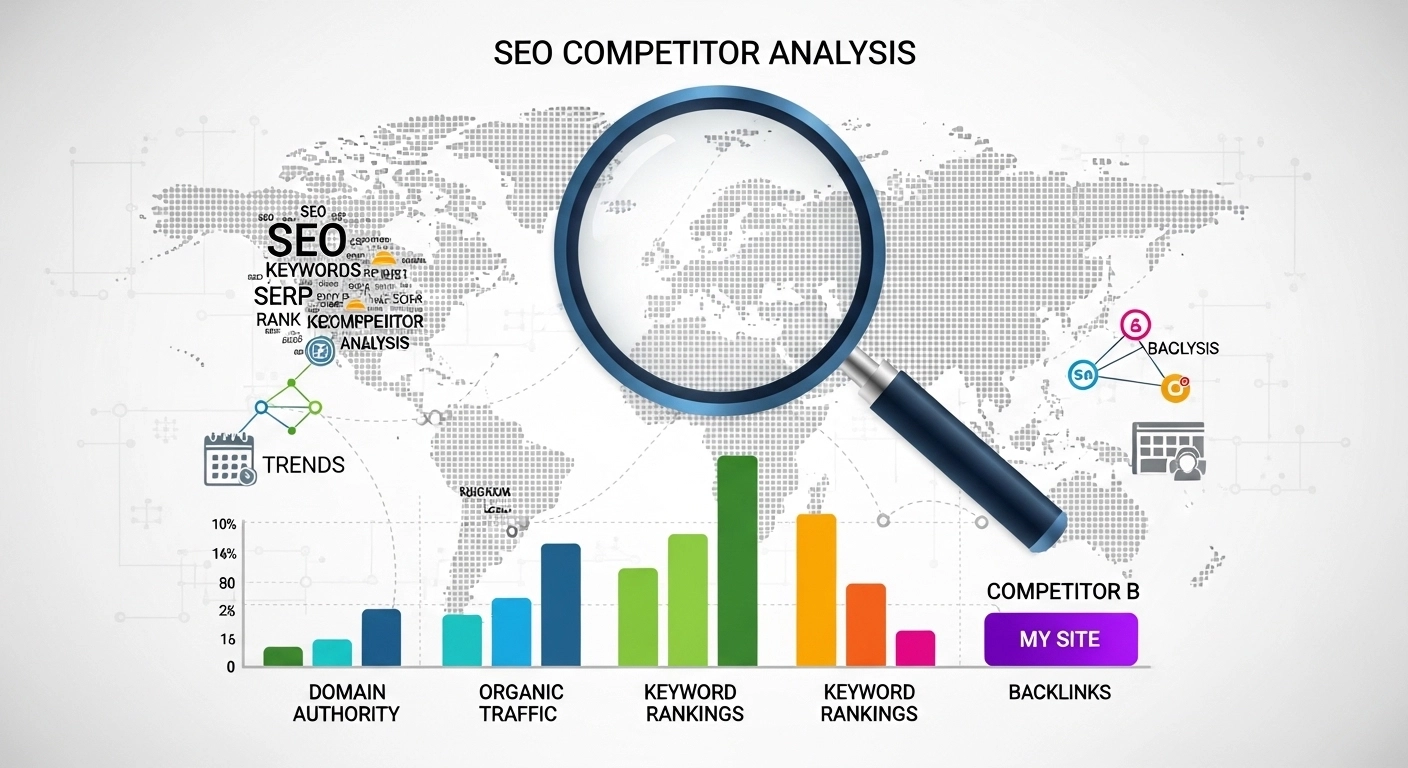
SEO competitor analysis is the process of identifying websites that rank for the same keywords as you and analyzing their strategies.
The goal is simple:
Learn what works for them, then create something better.
A solid analysis looks at several key areas:
- Keywords competitors rank for
- Content topics and structure
- Backlink profiles
- Technical SEO strengths
- User experience and engagement
Instead of guessing what Google likes, competitor analysis gives you data-backed direction.
Why SEO Competitor Analysis Matters
Without competitor research, you’re essentially building an SEO strategy in the dark.
Here’s why it’s crucial:
1. Discover High-Value Keywords
Your competitors have already done part of the work. By analyzing their rankings, you can uncover keywords that drive traffic.
2. Identify Content Gaps
You may find topics competitors rank for that you haven’t covered yet.
3. Understand Ranking Difficulty
Seeing who ranks—and how strong they are—helps you determine whether a keyword is realistic to target.
4. Improve Your Content Strategy
Competitor content reveals what search engines reward: depth, format, structure, and user intent.
Step 1: Identify Your True SEO Competitors
Your SEO competitors aren’t always your business competitors.
They are the websites ranking for your target keywords.
How to Find Them
- Search your main keyword in Google.
- Look at the top 10 results.
- Note which domains appear repeatedly.
For example, if your keyword is SEO competitor analysis, you might see:
- SEO blogs
- marketing platforms
- digital marketing agencies
These sites become your analysis targets.
Step 2: Analyze Competitor Keywords
Keyword analysis shows where your competitors get traffic.
Use tools like:
- Ahrefs
- SEMrush
- Ubersuggest
- Moz
Look for:
- Top organic keywords
- Keywords with high traffic
- Low-competition opportunities
Example
If a competitor ranks for:
- SEO competitor analysis tools
- competitor keyword research
- SEO gap analysis
Those are potential content ideas for your site.
Focus on keywords where you can realistically compete.
Step 3: Study Their Top-Performing Content
Next, analyze the pages bringing competitors the most traffic.
Look at:
- Article length
- Headings and structure
- Content depth
- Internal linking
- Visual elements
Ask yourself:
- Why is this page ranking?
- What value does it provide?
- How can I make something better?
The “Skyscraper” Approach
Create content that improves on competitors by:
- Adding updated information
- Including real examples
- Providing clearer explanations
- Improving formatting and readability
Better content often wins rankings.
Step 4: Evaluate Their Backlink Profile
Backlinks remain one of the strongest ranking factors.
Studying competitor backlinks helps you discover link opportunities.
Check:
- Referring domains
- Authority of linking sites
- Anchor text patterns
- Linkable content
Example Opportunity
If a blog links to multiple competitor guides about SEO tools, they may also link to your improved guide.
Backlink analysis reveals where to focus outreach.
Step 5: Check Their Technical SEO
Even great content can struggle if technical SEO is weak.
Review competitor websites for:
- Page speed
- Mobile friendliness
- URL structure
- Internal linking
- Schema markup
If your site provides a faster, smoother experience, Google may favor it.
Step 6: Find Content Gaps
Content gap analysis helps you discover topics competitors cover—but you don’t.
These gaps represent untapped traffic opportunities.
For example:
Competitors might have articles on:
- SEO audit checklist
- keyword gap analysis
- backlink analysis tools
If your site lacks those topics, they become immediate content priorities.
Best Tools for SEO Competitor Analysis
Several tools make competitor research easier.
Popular Options
Ahrefs
Excellent for backlink analysis and keyword research.
SEMrush
Powerful competitor insights and keyword gap tools.
Moz
Strong domain authority and keyword metrics.
Ubersuggest
Affordable option for beginners.
Even free tools like Google Search and Google Keyword Planner can provide useful insights.
Common Mistakes to Avoid
Many beginners approach competitor analysis the wrong way.
Avoid these mistakes:
Copying competitors exactly
Google rewards originality and better value.
Ignoring search intent
Ranking pages match what users want.
Focusing only on keywords
Backlinks, content quality, and UX matter too.
Analyzing too many competitors
Focus on the top 3–5 ranking domains.
Simple SEO Competitor Analysis Workflow
Here’s a quick workflow you can follow:
- Identify competitors ranking for your keyword
- Extract their top keywords
- Analyze their best content
- Review backlink sources
- Identify content gaps
- Create better, more comprehensive content
Repeat this process regularly to stay competitive.
Frequently Asked Questions
What is SEO competitor analysis?
SEO competitor analysis is the process of evaluating websites that rank for your target keywords to understand their content, keywords, backlinks, and strategies.
How often should I do competitor analysis?
Ideally every 3–6 months or whenever launching a new SEO campaign.
What tools help with competitor analysis?
Popular tools include Ahrefs, SEMrush, Moz, and Ubersuggest. These platforms provide keyword data, backlink analysis, and competitor insights.
Can small websites compete with big ones?
Yes. By targeting long-tail keywords, niche topics, and better content, smaller sites can rank effectively.
Final Thoughts
SEO competitor analysis is one of the smartest ways to improve your search rankings.
Instead of guessing what works, you learn directly from websites already succeeding in search results.
When you combine competitor insights with high-quality content, strong keyword targeting, and strategic backlinks, you create a powerful SEO advantage.
The key isn’t copying your competitors—it’s outperforming them.
