
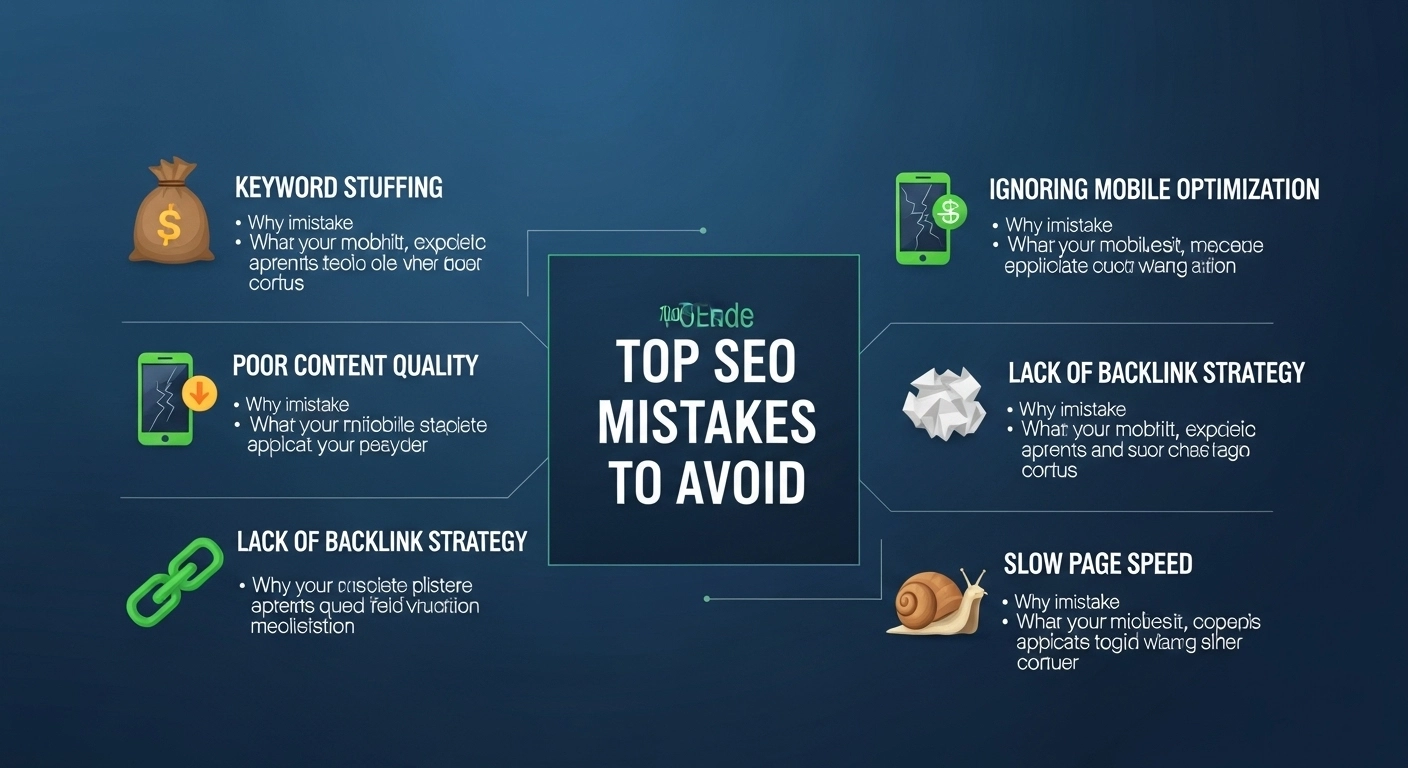
Search engine optimization (SEO) can dramatically improve your website’s visibility—but small mistakes can quietly destroy your rankings. Many websites struggle not because they lack content, but because they overlook basic SEO fundamentals.
If you want consistent traffic from search engines, you need to avoid the most common SEO errors that hold websites back. This guide explains the top SEO mistakes to avoid and provides clear, practical guidelines you can apply immediately.
1. Ignoring Search Intent
One of the biggest SEO mistakes is targeting keywords without understanding why people are searching for them.
Search intent generally falls into four categories:
- Informational (learning something)
- Navigational (finding a specific site)
- Commercial (researching before buying)
- Transactional (ready to purchase)
Example
If someone searches for “best laptops for students,” they expect a comparison or list—not a product page.
Guideline:
Always analyze the top-ranking pages for your keyword and match the same content style.
2. Poor Keyword Research
Many beginners either:
- Target extremely competitive keywords
- Or ignore keywords completely
Both approaches hurt your chances of ranking.
Common keyword research mistakes
- Choosing keywords with no search volume
- Ignoring long-tail keywords
- Stuffing the same keyword repeatedly
Better approach
Use keyword variations such as:
- SEO mistakes beginners make
- common SEO errors
- SEO optimization tips
- on-page SEO mistakes
Guideline: Focus on long-tail keywords with clear intent and moderate competition.
3. Keyword Stuffing
Years ago, repeating keywords dozens of times could boost rankings. Today, it can harm your SEO.
Example of keyword stuffing
“SEO mistakes are common SEO mistakes that people make when doing SEO. Avoid SEO mistakes to improve SEO.”
Search engines recognize unnatural writing.
Guideline:
Write naturally and include related terms instead of repeating the same phrase.
4. Weak or Missing Title Tags and Meta Descriptions
Your title tag and meta description directly affect click-through rates in search results.
Common mistakes
- Titles longer than 60 characters
- Missing keywords in titles
- Generic meta descriptions
Example of a strong title
Bad:
SEO Tips
Better:
Top SEO Mistakes to Avoid (Beginner-Friendly Guide)
Guideline:
Create compelling titles that include the primary keyword and encourage clicks.
5. Ignoring Mobile Optimization
Most internet users now browse on mobile devices. If your site isn’t mobile-friendly, search engines may rank it lower.
Signs of poor mobile optimization
- Text too small to read
- Buttons difficult to tap
- Slow page loading
Guideline:
Use responsive design and test your website on multiple screen sizes.
6. Slow Website Speed
Page speed is a confirmed ranking factor. A slow website increases bounce rates and reduces user satisfaction.
Causes of slow websites
- Large uncompressed images
- Too many plugins
- Poor hosting
Quick fixes
- Compress images
- Use browser caching
- Enable a CDN
Guideline:
Aim for a page load time under 3 seconds.
7. Publishing Thin or Low-Quality Content
Search engines prioritize useful, in-depth content.
Thin content includes:
- Short posts with little value
- Duplicate content
- Automatically generated text
Example
Bad:
A 300-word article that barely explains the topic.
Better:
A detailed guide with examples, headings, and actionable advice.
Guideline:
Focus on quality over quantity.
8. Ignoring Internal Linking
Internal links help search engines understand your site structure and distribute authority across pages.
Benefits of internal linking
- Improves crawlability
- Helps readers discover related content
- Boosts rankings of important pages
Example
If you publish a guide on SEO tools, link to related articles like:
- keyword research tips
- on-page SEO checklist
Guideline:
Add 3–5 relevant internal links in each article.
9. Not Optimizing Images
Images can drive traffic through image search—but only if optimized correctly.
Common image SEO mistakes
- Missing alt text
- Large file sizes
- Generic filenames like IMG1234.jpg
Better example
Bad:
IMG1234.jpg
Better:
seo-mistakes-checklist.jpg
Guideline:
Use descriptive filenames and alt text for every image.
10. Neglecting Technical SEO
Even great content struggles if technical SEO issues exist.
Common technical problems
- Broken links
- Duplicate pages
- Poor site structure
- Missing XML sitemap
Guideline:
Run regular technical audits to keep your site healthy.
Frequently Asked Questions (FAQ)
What is the most common SEO mistake?
The most common SEO mistake is ignoring search intent. Even well-written content will not rank if it doesn’t match what users are actually looking for.
How long does SEO take to show results?
SEO usually takes 3–6 months to show noticeable improvements, depending on competition and content quality.
Does keyword density matter in SEO?
Keyword density is no longer a primary ranking factor. Focus on natural language and topic coverage instead.
Can bad SEO hurt rankings?
Yes. Practices like keyword stuffing, duplicate content, and slow websites can lead to lower rankings or penalties.
Conclusion
SEO success doesn’t come from tricks—it comes from avoiding common mistakes and focusing on user experience.
To recap, make sure you:
- Match search intent
- Use smart keyword research
- Write high-quality content
- Optimize site speed and mobile usability
- Build strong internal links
- Maintain solid technical SEO
