
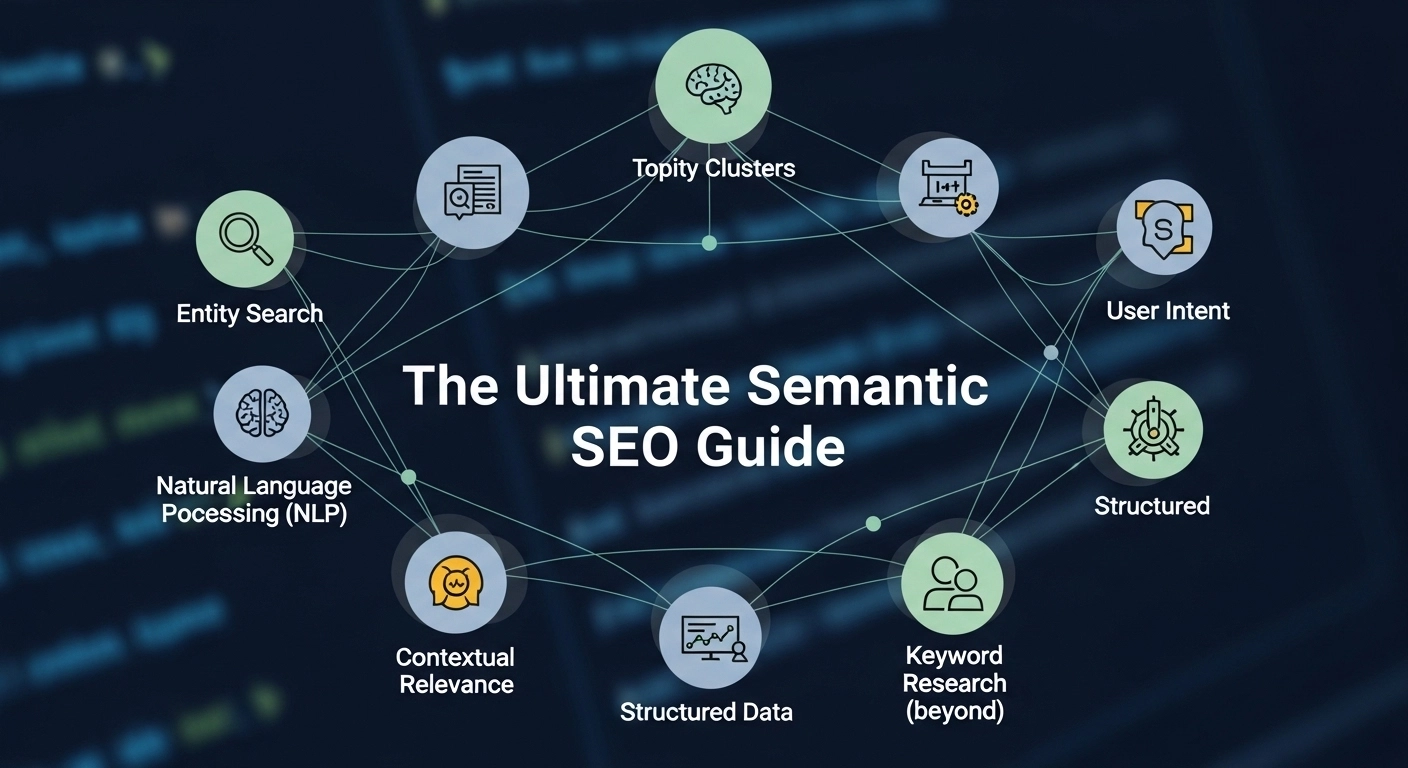
Search engines have evolved. Google no longer ranks pages based only on exact keywords—it tries to understand topics, context, and search intent. That’s where Semantic SEO comes in.
If you want to rank consistently in modern search results, you need to optimize for meaning, not just keywords. This guide explains what Semantic SEO is, why it matters, and how to implement it step-by-step.
What Is Semantic SEO?
Semantic SEO is the practice of optimizing content around topics and intent rather than focusing on a single keyword.
Instead of writing one page targeting only “SEO tips,” semantic SEO encourages you to cover the entire topic, including related questions, concepts, and subtopics.
Search engines use technologies like natural language processing (NLP) and knowledge graphs to understand:
- Context
- Relationships between topics
- User intent
- Content depth
When your content covers a subject comprehensively, Google sees it as authoritative and relevant, which improves rankings.
Example:
Keyword-focused SEO page:
- Only targets: “best running shoes”
Semantic SEO page includes:
- Types of running shoes
- Cushion vs stability shoes
- How to choose running shoes
- Best shoes for beginners
- Running shoe sizing tips
The second page clearly satisfies more search intent.
Why Semantic SEO Matters
Semantic SEO helps search engines fully understand your content, which leads to better rankings and broader keyword visibility.
Key benefits include:
1. Higher Search Rankings
Content that covers a topic in depth tends to outperform thin pages optimized for just one keyword.
2. More Keyword Coverage
A single semantic page can rank for hundreds of related queries, not just one phrase.
3. Better User Experience
Readers get complete answers in one place, which improves engagement and dwell time.
4. Stronger Topical Authority
Publishing comprehensive topic-based content helps your website build authority in a niche.
How Semantic SEO Works
Search engines analyze content using several signals:
- Contextual keywords
- Topic relationships
- Search intent
- Structured data
- Content structure
For example, if your page discusses “digital cameras,” Google expects to see related concepts like:
- megapixels
- lenses
- sensor size
- ISO
- shutter speed
If those concepts appear naturally, the algorithm understands the topic better.
Step-by-Step Semantic SEO Strategy
1. Start With Search Intent
Before writing, determine why users are searching.
Most searches fall into four intent categories:
- Informational – learn something
- Navigational – find a specific site
- Commercial – compare options
- Transactional – buy or take action
For example:
Search: “semantic SEO guide”
Intent: informational
Your content should teach the topic clearly.
2. Perform Topic-Based Keyword Research
Instead of collecting random keywords, group them into topic clusters.
Example cluster for semantic SEO:
Primary topic
- semantic SEO
Related terms
- semantic search
- topic clusters
- search intent
- NLP in SEO
- entity SEO
- topical authority
Tools that help include:
- Google autocomplete
- People Also Ask
- SEO keyword tools
- competitor analysis
3. Build Content Around Topic Clusters
A strong semantic structure often uses the pillar and cluster model.
Pillar page:
A comprehensive guide covering the main topic.
Cluster content:
Supporting articles exploring subtopics.
Example structure:
Pillar page
- Ultimate Semantic SEO Guide
Cluster articles
- What Is Search Intent
- How Topic Clusters Work
- Entity SEO Explained
- NLP and SEO
This structure helps search engines understand your content ecosystem.
4. Use Natural Language and Related Terms
Avoid repeating the same keyword over and over.
Instead, include semantic variations, such as:
- related phrases
- synonyms
- question-based queries
- contextual terminology
Example:
Instead of repeating “semantic SEO” 20 times, include:
- semantic search optimization
- topical SEO strategy
- context-based search
- entity-driven SEO
This makes the content feel natural and authoritative.
5. Structure Content Clearly
Search engines prefer well-organized pages.
Best practices include:
- clear H1, H2, and H3 headings
- short paragraphs
- bullet lists
- internal links
- structured sections
Well-structured pages also improve featured snippet chances.
6. Add Internal Links
Internal linking helps search engines connect related topics across your website.
For example:
Your article about semantic SEO could link to pages about:
- keyword research
- content clusters
- on-page SEO
- technical SEO
This strengthens topical authority.
7. Answer Common Questions
Adding question-based sections helps capture long-tail searches and voice queries.
Look at:
- Google “People Also Ask”
- forums
- Reddit
- customer questions
Then include clear answers in your content.
Example of Semantic Content Optimization
Let’s say you’re targeting the keyword:
“email marketing strategy”
A semantic page might include sections like:
- What is email marketing
- Types of email campaigns
- How to build an email list
- Email marketing tools
- Email open rate optimization
- Email automation tips
Because the page covers the entire topic, it can rank for dozens of related searches.
Common Semantic SEO Mistakes
Many websites misunderstand semantic optimization.
Avoid these common issues:
Keyword stuffing
Repeating the same keyword excessively.
Thin content
Covering topics superficially.
Ignoring search intent
Writing content that doesn’t answer user questions.
Poor internal linking
Leaving articles disconnected.
Over-optimization
Forcing keywords unnaturally into text.
Good semantic SEO always prioritizes clarity and usefulness.
FAQ: Semantic SEO
What is the difference between semantic SEO and traditional SEO?
Traditional SEO focuses heavily on exact keywords. Semantic SEO focuses on topics, intent, and context to help search engines understand the meaning of content.
Does Google use semantic search?
Yes. Google uses technologies like natural language processing (NLP) and machine learning to understand context and relationships between topics.
Do keywords still matter in semantic SEO?
Yes, but they’re part of a larger topic strategy. Instead of targeting one keyword repeatedly, you use related phrases and supporting concepts.
How long should semantic content be?
Length isn’t the main factor. The goal is to fully answer the topic. Many high-performing semantic guides range from 1,500 to 3,000 words, but depth matters more than word count.
Is semantic SEO good for new websites?
Absolutely. Building topic clusters early helps new websites develop topical authority faster.
Final Thoughts
Semantic SEO is no longer optional—it’s how modern search works.
Instead of creating dozens of thin pages targeting individual keywords, focus on comprehensive topic coverage, clear structure, and user intent.
When your content truly answers a subject in depth, search engines recognize it as valuable—and rankings follow.
