
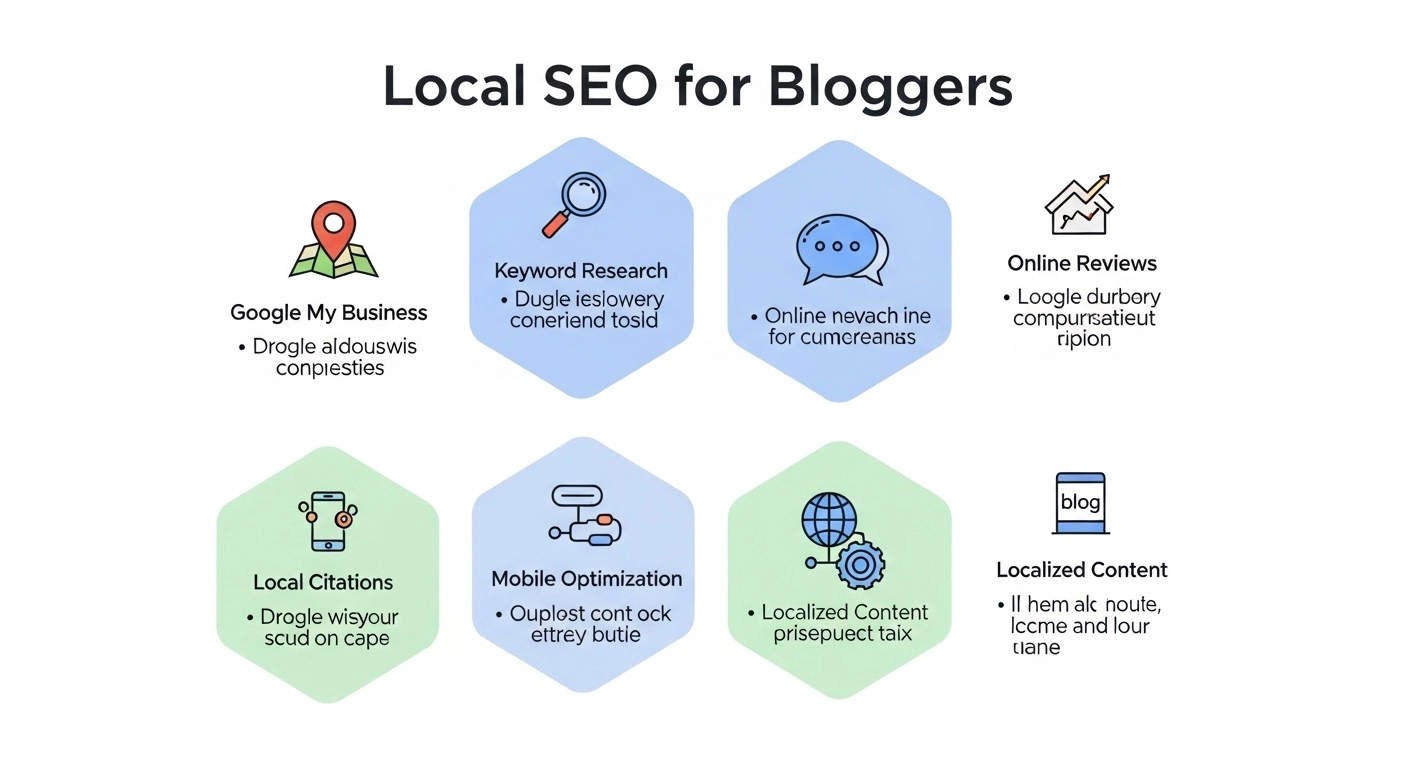
Blogging used to be global by default. But today, local visibility matters more than ever—especially if you want to attract nearby readers, clients, collaborations, or local business opportunities.
That’s where local SEO for bloggers comes in.
Local SEO helps your blog appear when people search for information within a specific location. Whether you write about food, travel, tech, lifestyle, or services, optimizing for local search can drive highly targeted traffic to your blog.
In this guide, you’ll learn how bloggers can use local SEO to increase visibility, grow local authority, and attract the right audience.
What Is Local SEO for Bloggers?
Local SEO is the process of optimizing your blog so it appears in location-based search results.
For example, someone might search for:
- Best coffee shops in Austin
- Freelance web designer in Chicago
- Travel blog about Bali
- Food bloggers in New York
Search engines use location signals—like keywords, business listings, and geographic relevance—to determine which content should appear.
For bloggers, local SEO helps you:
- Attract readers from a specific city or region
- Partner with local businesses
- Rank for geo-targeted keywords
- Build credibility within your niche and location
Why Local SEO Matters for Bloggers
Many bloggers ignore local SEO because they assume blogging is global. But local optimization opens new growth opportunities.
Key Benefits
1. Less Competition
Ranking for “best restaurants” is difficult. Ranking for “best restaurants in Dallas” is far easier.
2. More Targeted Traffic
Local visitors are more likely to engage, subscribe, or hire you.
3. Local Brand Authority
When your blog consistently appears for local searches, people begin to see you as a trusted voice in that area.
4. Business Opportunities
Local brands often search for bloggers in their city for collaborations, reviews, and sponsorships.
How Bloggers Can Optimize for Local SEO
1. Use Location-Based Keywords
Start by including geo-specific keywords in your content.
Examples:
- Local SEO tips for small businesses in Miami
- Best hiking trails near Denver
- Budget travel guide to Los Angeles
Place these naturally in:
- Titles
- Headings
- Meta descriptions
- URLs
- Image alt text
Example
Instead of writing:
“Best Coffee Shops”
Write:
“Best Coffee Shops in Portland for Remote Workers”
This immediately targets a local audience.
2. Create Local Content
One of the most powerful local SEO strategies is publishing location-specific blog posts.
Content ideas include:
- City guides
- Local event coverage
- Business reviews
- Neighborhood spotlights
- Local interviews
Example Topics
- “Hidden Food Gems in Austin Locals Love”
- “Top Weekend Trips from Seattle”
- “Best Co-Working Spaces in Toronto for Freelancers”
Search engines love content that directly answers local intent.
3. Optimize Your About Page for Location
Your About page should clearly mention where you are based.
Example:
“I’m a digital marketing blogger based in Austin, Texas helping small businesses grow online.”
This helps search engines associate your blog with a location.
You can also include:
- City and region
- Local experience
- Local collaborations
4. Set Up a Google Business Profile (If Relevant)
If your blog offers services, consulting, coaching, or freelance work, create a Google Business Profile.
This allows your blog or brand to appear in:
- Google Maps
- Local search results
- “Near me” searches
For example, a blogger offering SEO services could appear for:
“SEO consultant near me”
5. Get Local Backlinks
Backlinks remain one of the strongest SEO signals. Local backlinks are even more powerful.
Ways bloggers can earn local links:
- Guest posts on local websites
- Local directories
- Partnerships with local brands
- Event coverage
- Local podcasts or interviews
Example sources:
- City blogs
- Chamber of commerce websites
- Local news outlets
- Community event sites
These signals tell Google that your blog is relevant to a specific region.
6. Use Local Structured Data (Schema)
Structured data helps search engines understand your content better.
Bloggers can use schema for:
- Local business
- Reviews
- Events
- Articles
This can improve visibility in rich results and local search features.
Many SEO plugins automatically add basic schema markup.
7. Encourage Local Engagement
Search engines also consider user engagement signals.
Encourage interaction by:
- Asking readers about local experiences
- Allowing comments
- Sharing local polls or recommendations
Example:
“What’s your favorite brunch spot in Chicago? Share it in the comments.”
This creates community signals around your location.
8. Optimize for “Near Me” Searches
“Near me” searches have grown massively in recent years.
Examples include:
- Best pizza near me
- Local travel bloggers near me
- Digital marketing consultant near me
You can capture these by using phrases like:
- “near downtown”
- “in [city name]”
- “around [area name]”
These natural references help search engines understand your geographic relevance.
Example: Local SEO Strategy for a Food Blogger
Let’s say you run a food blog in Chicago.
Instead of generic posts like:
- Best burgers
- Top brunch spots
Create location-focused content:
- Best Burgers in Chicago’s West Loop
- 10 Must-Try Brunch Spots in Downtown Chicago
- Hidden Street Food in Chicago Locals Love
Add:
- Local photos
- Google Maps embeds
- Neighborhood details
This dramatically improves your chances of ranking locally.
Common Local SEO Mistakes Bloggers Make
Avoid these common errors:
Ignoring location keywords
Many bloggers write great content but never mention their location.
Targeting overly broad keywords
Generic keywords are extremely competitive.
No local backlinks
Without local authority signals, ranking locally becomes difficult.
Inconsistent location information
Your city name should be consistent across your site and profiles.
Frequently Asked Questions
Do bloggers really need local SEO?
Yes—especially if you want to attract local readers, brand collaborations, or freelance opportunities. Local SEO helps your blog stand out in geographic searches.
Can lifestyle or travel bloggers benefit from local SEO?
Absolutely. City guides, local recommendations, and destination content are perfect for local search optimization.
How long does local SEO take to work?
Most bloggers begin seeing improvements within 3–6 months, depending on competition and content consistency.
Is Google Business Profile necessary for bloggers?
Not always. But it’s highly recommended if you offer services, consulting, or freelance work through your blog.
Final Thoughts
Local SEO is one of the most underused growth strategies for bloggers.
By targeting location-based keywords, creating local content, building local backlinks, and optimizing your blog for geographic relevance, you can attract highly targeted readers and valuable local opportunities.
The best part? Local SEO often has less competition and faster ranking potential than broader search terms.
